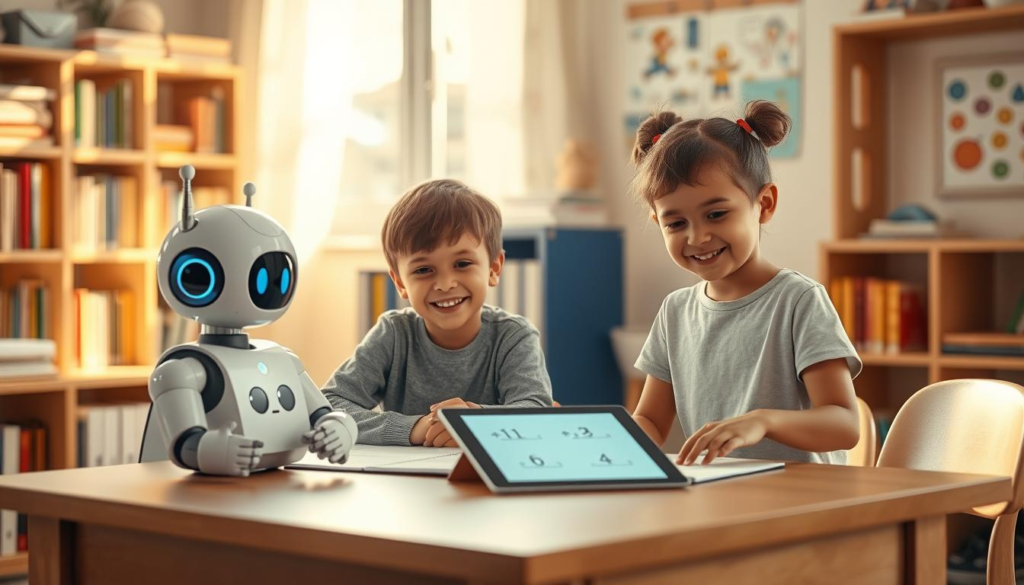
Did you know that nearly 60% of students from middle school to college use technology for help? This change shows how young learners are now studying. Tools like ChatGPT and Khanmigo are making AI in education more common.
But, this trend also raises big questions. Students often wonder how to use these tools right. The key is finding a balance. Technology can be a valuable ally in learning, but too much can stop kids from thinking for themselves.
As parents, it’s important to know when tech is good and when it’s not. This article will guide you with a flag system. It will help you decide when to use technology in your studies.
How Can Parents Tell If AI Is Helping With Homework?
Many parents wonder if AI really helps their kids with homework. With technology changing fast, it’s hard to tell if AI tools are helpful or not. Parents don’t have to be tech experts. They just need to watch how their child uses AI.
A child who does homework quickly but can’t explain the answers might be using AI too much. This could mean AI is giving quick answers but not helping them understand. If a student does better on homework but not in class, it’s worth looking into.
A RAND survey found that many students worry about AI’s effect on learning. This shows how important it is for parents and kids to talk about AI. Talking about their AI experiences can help parents see if it’s really helping.
Parents can see if AI is helping by watching their child’s confidence and independence. Do they ask for help less? Do they seem more sure when talking about school? These signs can show if AI is really helping their learning.
The main goal is to make sure AI helps, not hinders. By staying involved and curious, parents can help their child understand better. This way, AI becomes a useful tool, not just a shortcut.
When Does AI Homework Help Become Too Much?

It’s key to know when AI homework help goes too far. This helps parents guide their kids to better learning habits. We need to watch for when AI takes over a child’s thinking and when it’s used as a quick fix instead of a learning aid.
When AI Starts Replacing the Child’s Own Thinking
One sign AI homework help is too much is when it takes over a child’s thinking. For example, if a student quickly uses AI for a math problem, they miss learning. This constant use of technology can stop them from solving problems on their own.
Also, if a child uses AI to write an essay without brainstorming, they don’t care about their work. Productive struggle is key for learning, and AI can cut this out, slowing down a child’s growth.
When AI Becomes a Shortcut Instead of Learning Support
Another warning sign is when AI is just a quick way out, not a learning tool. For instance, a middle schooler might use AI for a science project without understanding it. Or a high school student might submit an AI-written book report without reading the book. These actions show the student isn’t really learning.
It’s vital to use AI to help learning, not replace it. The RAND American Youth Panel study shows AI should boost learning, not take its place. Spotting these signs is the first step to better AI use in your child’s education.
Green Flags: Signs AI Is Supporting Real Learning

Knowing how AI supports real learning helps parents guide their kids well. AI can make learning better for a child when used right. Here are signs AI is helping, not just doing the work.
One good sign is when a child uses AI to understand tough concepts. Then, they can solve similar problems on their own. This shows they’re really getting into the learning.
Another sign is when students use AI to test their vocabulary. It helps them remember what they’ve learned and think deeply about it. Also, if a child uses AI to make practice problems for a test, it shows they’re eager to learn.
AI can also help with essay drafts. If a child asks for grammar tips but keeps their ideas fresh, it’s a good sign. This way, they improve their writing without losing their unique voice.
Studies from 2025 show AI use changes with grade and gender. This means each student needs a special approach to AI learning support. Knowing this helps parents support their kids better.
In short, when kids use AI like a tutor, it boosts their confidence and understanding. By spotting these signs, parents can help their kids use AI in a way that really helps them learn.
Yellow Flags: When Parents Should Pay Closer Attention

It’s important for parents to watch for early signs of AI dependency in their kids. Some behaviors might seem okay at first but could mean a child needs more attention. Two key yellow flags are when a child uses AI before trying tasks alone and when they can’t do things without AI help.
Your Child Uses AI Before Trying the Task Independently
One red flag is when a child immediately turns to AI tools like ChatGPT for homework. They might do this without even looking at the assignment or trying to solve it themselves. This could mean they’re losing faith in their own problem-solving abilities.
Parents should talk to their kids about this. Start with a gentle question like, “I’ve noticed the AI is your first stop—let’s talk about why that might be.” This way, you can have a conversation without making them feel bad.
Your Child Struggles Without AI Support
Another yellow flag is when a child seems stuck during writing tasks or can’t solve problems without their device. This can make them anxious about their abilities. The RAND survey showed many students are unsure about using AI in school, just like at home.
Talking about these issues early can help prevent deeper problems. It’s all about keeping an eye out and stepping in when needed.
Red Flags: When AI Is Doing Too Much of the Work

The line between helpful AI and over-reliance is thin for students. It’s key for parents to spot when AI is taking over. Certain signs show a child might be leaning too hard on AI, which can hurt their learning.
Submitting AI Answers Without Understanding Them
One big worry is when students submit AI answers without getting the concepts. For example, they might ace math problems but can’t explain how they solved them. Or, they might write a great essay but can’t recall basic facts about the topic.
This shows they’re missing out on learning. It can harm their education in the long run.
Using AI to Complete Graded Assignments or Avoid Practice
Another warning sign is using AI for graded work or to skip practice. Students might use AI for quizzes, write lab reports, or even take exams. This can make grades less meaningful.
It can also lead to big knowledge gaps. This stops them from learning to think critically and solve problems.
The RAND report says many students worry about AI use. Parents and kids should work together to use AI wisely. This helps keep technology a helpful tool, not just a shortcut.
It’s important to tackle these issues early. This way, kids can get the most out of their learning.
| Red Flag | Behavior | Potential Consequences |
|---|---|---|
| Submitting AI Answers | Turning in work without understanding | Gaps in knowledge and skills |
| Using AI for Graded Work | Completing assignments with AI assistance | Meaningless grades and lack of practice |
| Over-reliance on AI | Using AI for quizzes and tests | Inability to think critically |
Where AI Homework Help Works Best

AI homework help can be very helpful when used right. Studies show it’s most useful in certain subjects and tasks. For example, an AI study assistant for children is great at making extra math problems. This helps students practice and feel more confident.
AI also helps with tough science concepts. If a child doesn’t get it, AI can explain it in a simpler way. In foreign languages, AI aids with vocabulary, making it easier to learn and use new words.
AI is also good for writing. It gives quick feedback on grammar and sentence structure. This helps students improve their writing skills fast. They learn from their mistakes quickly.
AI is a big help for kids who need special help. For instance, kids with dyslexia can use AI to read better. Kids with ADHD find it useful for breaking down big tasks into smaller ones. This makes things less overwhelming.
Here’s a summary of where AI homework help works best:
| Subject/Task | Benefits | Examples |
|---|---|---|
| Math | Extra practice problems | Generating quizzes |
| Science | Alternative explanations | Visual aids for concepts |
| Foreign Language | Vocabulary drills | Flashcards and quizzes |
| Writing | Instant feedback | Grammar check tools |
| Special Accommodations | Support for learning differences | Text-to-speech tools |
In summary, an AI study assistant for children can really help with learning. It’s best when it works with teacher help and encourages kids to learn on their own. Instead of banning AI, parents should use it wisely to help their kids learn.
Where Parents Should Set Limits on AI Homework Use
Parents should set clear rules for AI help in homework. This helps kids think critically and fully engage with their work.
It’s important to limit AI in tasks that need personal thought and original work. This includes creative writing, personal essays, and art projects. These tasks show a child’s unique understanding and creativity. They teach skills AI can’t match, like original thinking and creative problem-solving.
Parents can help kids face these challenges head-on. They might say, “No AI for creative writing” or “Do personal reflections on your own.” This makes kids feel more in control and boosts their confidence.
It’s also key to know the school’s rules on AI in homework. Schools are starting to make or update their AI policies. Parents should check these policies to make sure their home rules match.
For example, some schools let AI check answers but not give them. Others might say, “No AI for the first 20 minutes of homework.” These rules help families set their own ai homework rules that work for their child and follow school guidelines.
A Simple Parent Decision Guide: Allow, Sit Together, Pause, or Ask the Teacher

Deciding on AI homework help can be easy with a simple guide for parents. This guide offers four clear options for when kids want to use AI for studying. Each option helps parents support their child’s learning in different ways.
Allow: When AI Helps the Child Learn
Parents can trust AI when it really helps their child understand better. For example, if AI makes a tough concept clear or creates study flashcards, it’s a great tool. These moments show AI is more than just a tool; it’s a learning partner.
Sit Together: When the Child Needs Guidance
When kids are new to AI or face a tough assignment, sitting together is helpful. This lets parents show how to use AI wisely and have important talks. Asking, “Does that answer make sense to you?” helps kids think critically and understand the information.
Pause: When AI Is Replacing Effort
It’s important to stop using AI when it takes over a child’s work. For instance, if a child wants to use AI for an entire essay or during a timed test, it’s a sign to pause. Taking a break from AI helps kids develop their skills and solve problems on their own.
Ask the Teacher: When School Expectations Are Unclear
If parents are unsure about AI rules at school, it’s best to ask the teacher. This step can clear up what’s okay and what’s not, making sure the child meets school standards. Knowing these rules helps parents make smart choices about AI use in studying.
How Parents Can Know If AI Homework Help Is Working
Knowing if AI homework help for kids is working is key for parents. They should look for signs that show if it’s really helping their child learn. Two main signs can help figure out if AI is making a difference.
Your Child Becomes More Confident With the Subject
One big sign is when a child starts to feel more confident. For example, if a child who used to hate math now enjoys it, AI is likely helping. This confidence comes from really understanding the material, not just getting by with AI’s help.
Your Child Can Complete Similar Tasks Without AI
The best way to know if AI is working is if a child can do similar tasks on their own. If a student can solve math problems with AI’s help and then do them on their own, AI has done its job. But if they can’t do them without AI, it might mean AI is just helping too much.
Parents can check progress at home. Ask your child to explain a concept or solve a problem on a whiteboard. The RAND report also shows that using AI wisely can help kids learn better. It’s better to use AI sometimes, when it’s really needed, than all the time.
Remember, progress is slow. Celebrating small wins, like a child choosing not to use AI because they feel confident, is important. It helps them keep moving forward in their learning.
When Should Families Pause AI Homework Use?
Deciding when to pause AI homework help can be tough for families. It’s key to know when a break is needed. There are two main times when families might need to step back from AI support.
When AI Creates Frustration or Dependence
AI can sometimes cause frustration or dependence in kids. If a child gets anxious without AI tools, it’s time to think about their use. For example, if they struggle with AI explanations or if it causes tension, these are signs.
Dependence shows when a child won’t try homework without AI or gets scared before tests. This can stop their learning and hurt their confidence.
When a Child Needs More Human Support
There are times when kids need more human help than AI can offer. This is true for kids with learning disabilities or those with test anxiety. They need human support for emotional help and understanding.
Also, some subjects need emotional intelligence and human connection that AI can’t give. Families should think about these needs when deciding.
The RAND survey shows many students worry about AI’s impact on learning. Talking about pausing AI help can be seen as a chance to reset, not a punishment.
Here are some ideas for families thinking about pausing AI help:
| Suggestion | Description |
|---|---|
| One-Week AI Break | Take a short break from AI tools to see how it affects learning. |
| Switch to Human Tutoring | Try human tutoring for subjects where the child struggles. |
| Limit AI Use | Use AI only for non-school activities during the reset. |
Stepping away from AI help takes courage. But it can help kids feel more in control and confident in their skills.
Conclusion
As families explore AI homework help, finding a balance is key. AI should help with learning, not replace it. Parents can use the green-yellow-red flag framework to guide their child’s AI use.
Teaching kids to use AI wisely is important. Encouraging them to ask questions and solve problems helps them grow. This active learning is a big part of using AI well.
As technology changes, so should family rules. Talking openly with kids about AI helps set clear expectations. Parents who use technology wisely teach their kids valuable lessons.
The RAND American Youth Panel report says AI should make learning better. Parents who stay curious and involved are leading the way. This conversation is about raising kids who can succeed in a digital world.
FAQ
How can parents tell if AI is helping with homework?
Parents can check if their child can explain what they learned from AI. They should also see if the child uses AI to finish tasks without understanding them. Watching how confident and independent they are is important.
When does AI homework help become too much?
AI becomes a problem when it takes over a child’s thinking. This happens when they ask AI for answers right away instead of trying it themselves. It’s also a problem when they use AI to do all their homework without really learning the material.
What are green flags that indicate AI is supporting real learning?
Green flags include when a child uses AI to understand a concept and then does the work on their own. They might also ask AI to quiz them or check their grammar while keeping their own ideas.
What are yellow flags that suggest parents should pay closer attention?
Yellow flags include when a child always turns to AI before trying to do something on their own. Or when they struggle to do homework without AI, showing they might rely too much on technology.
What are red flags that indicate AI is doing too much of the work?
Red flags include when a child submits answers from AI without understanding them. Or when they use AI to do all their graded homework, which can hurt their learning and skills.
Where does AI homework help work best?
AI works best for extra practice problems, explaining tough concepts, helping with vocabulary, and giving feedback on writing.