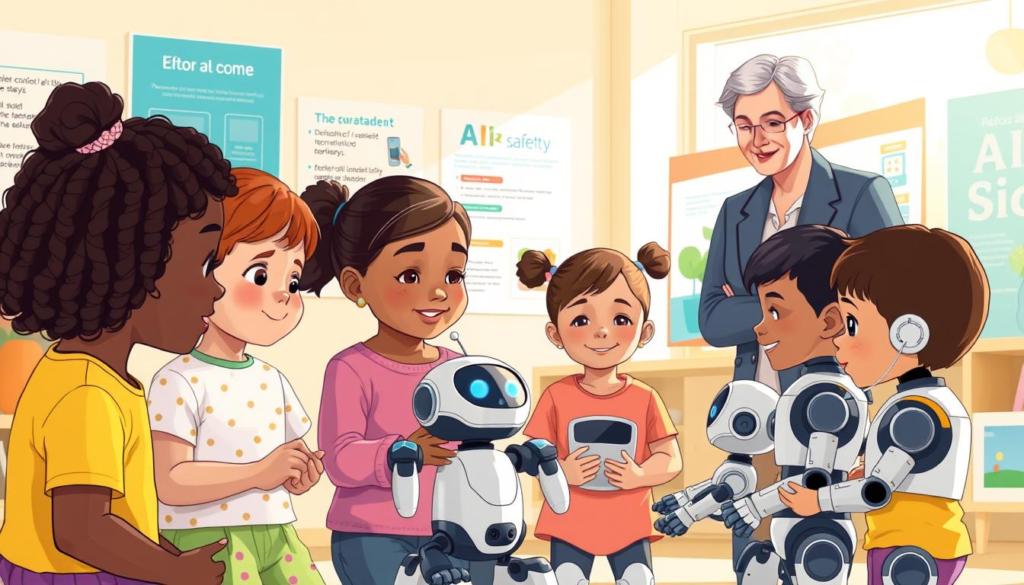
Technology is changing fast, and AI safety for children is a big concern. Today, most American kids aged 9 to 17 use AI tools like search engines and chatbots. This changes how they learn and interact.
Parents face a big challenge: figuring out how much tech is safe for their kids. It’s not just about if it’s good or bad. It’s about making smart choices based on a child’s age and maturity.
In this article, we’ll talk about a simple way to handle AI in kids’ lives. We’ll look at allow, watch, and block. This helps parents make good choices for their kids’ digital safety.
What Does AI Safety Mean for Kids?
AI safety for kids depends on their age, maturity, and how they use AI. Parents need to know that safety changes with each child. Every kid is unique, and how they handle AI is different.
Studies show that even safe AI tools can fail to protect young users. A Common Sense Media study found Google’s AI search often misses risky content. This is a big worry for younger kids, who might not know what’s real and what’s not.
“Prohibition without education creates the exact dynamic parents are trying to avoid—kids using powerful tools without any framework for understanding them.”
So, parents should set clear rules for AI use instead of just saying no. This helps kids learn to use AI wisely. Talking openly about AI’s good and bad sides helps kids have a better tech relationship.
Guiding and setting expectations helps kids use AI safely. This way, they’re ready for a future where AI is part of everyday life.
What AI Uses Are Usually Safe for Kids?

AI can be a great help for kids when used right. Parents can let their kids use AI tools that help with learning, creativity, and practice. These tools can make learning more fun and effective.
Using AI for Learning, Creativity, and Practice
AI is great at helping kids get past creative blocks. It can come up with cool ideas for science fair projects, making it fun to brainstorm. Also, AI lets kids practice speaking foreign languages without fear of making mistakes.
AI also speeds up learning to code by giving instant feedback. Kids can try coding projects and get answers right away. This helps them learn by doing. For kids with learning challenges, AI can help them keep up with their peers.
Using AI With Parent Guidance and Clear Boundaries
Even though AI has many safe uses, parents need to stay involved. Setting clear rules helps kids use AI tools well. This way, AI helps them learn more, not less.
Parents can encourage kids to use AI for growth. Whether it’s for ideas or practicing new skills, AI can be a big help in their education. It’s all about using it the right way.
What AI Uses Need More Supervision?

Some AI uses need parents to keep a close eye on kids. It’s important to know the risks when kids use AI. Sharing personal info and talking to AI chatbots are two areas that need watchful eyes.
Sharing Personal Information or Private Details
Children might not understand the dangers of sharing personal info online. They could share sensitive details without knowing the risks. This can lead to privacy issues because they don’t know how their data is used.
For example, kids might share their names, where they live, or personal thoughts without thinking about the risks. Parents should teach kids about AI privacy for kids and why keeping personal info safe is important. Talking about what’s okay to share online can help them understand.
Using AI Chatbots That Create Personal or Emotional Conversations
AI chatbots can make conversations feel personal and engaging. For instance, if a child says “nobody understands me,” the AI might say “I hear you.” This might seem comforting, but it’s not real empathy.
As one expert noted, “AI gives no frustration, like eating sugar all the time. It feels good but doesn’t help with emotional or intellectual growth.” This can be very tempting for teens, whose brains are changing a lot.
Parents should watch for signs that their child is using AI for emotional support instead of talking to people. Talking openly about their chatbot experiences can help make sure AI is used for learning, not as a replacement for real connections.
What AI Activities Should Parents Avoid or Block?

Parents need to know which AI activities are harmful to their kids. As AI technology grows, so do the risks. Knowing these risks helps parents decide what’s best for their children’s AI use.
Unsafe Content and Inappropriate Responses
AI can sometimes create unsafe content. Common Sense Media found that AI tools often miss serious issues. For example, they fail to spot 29% of suicide references.
When kids talk about substance abuse, AI only helps 63% of the time. This means kids might see harmful info. Parents should block AI tools that don’t keep kids safe.
Using AI to Bypass School Rules or Complete Work Dishonestly
AI can also be used to cheat on schoolwork. It can solve math problems and write essays. This can hurt the learning process.
Using AI for homework means kids miss out on important skills. It’s not just about missing out on education. It also raises questions about honesty and responsibility. Parents should stop AI cheating and block tools that help.
How Parents Can Decide If an AI Tool Is Right for Their Child

Parents have a big role in deciding if an AI tool is good for their child. It’s important to know why the AI tool exists. Is it to help learn or just for fun? This matters because it affects how kids use the tech.
Check the Purpose: Learning Tool or Entertainment Tool?
First, parents should think about what the AI tool is for. Tools made for learning help kids grow, while fun tools might not teach much. This choice can really shape a child’s growth.
Learning tools usually have games and quizzes that make kids think. Fun tools might just have games or videos that don’t help kids learn. Parents should ask:
- Does this tool help kids learn?
- Will using it make my child smarter or more knowledgeable?
- Is it just a way to distract or is it really useful?
Check the Child’s Age, Maturity, and Ability to Make Good Choices
It’s also key to think about the child’s age and how mature they are. Young kids might not know how to use AI well. They might think the AI’s answers are always right, which can lead to mistakes.
Experts say,
“AI sounds most confident when it’s most wrong, which can mislead young users.”
This can be hard for kids who are learning to tell real from fake.
Parents should think if their child can use AI wisely. Ask yourself:
- Can my child think critically about what they see online?
- Does my child know how to stay safe and private online?
- Can my child use tech without needing me all the time?
Thinking about these things helps parents choose the right AI tools for their kids. Using child friendly AI use can help kids grow and learn in a good way.
What Family Rules Should Parents Set Before Kids Use AI?

Setting clear rules about AI is key to keeping kids safe and responsible. These rules help them understand AI better and feel accountable. Parents can start with three simple steps to guide AI use.
Deciding What Information Kids Should Never Share
Keeping certain info private is a big part of AI safety. Kids should never share:
- Full names
- Addresses
- School details
- Family financial information
- Private photos
These rules are essential for privacy and safety. By explaining why, parents teach kids to make smart choices with AI.
Setting Expectations for Honest and Responsible AI Use
To teach kids to use AI wisely, parents can follow these steps:
| Protocol | Description |
|---|---|
| Show Your Work | This rule promotes openness. Kids should show their AI work, like homework, to understand it better. |
| Human First | AI should be a backup for big decisions, not the main guide. |
| Citation Needed | Kids should check facts from AI, teaching them to think critically. |
These steps help kids use AI responsibly and thinkfully.
By seeing these rules as helpful, not limiting, parents can help kids have a good relationship with AI. This way, kids can enjoy technology while staying safe and responsible.
How AI Safety Rules Change as Kids Grow Older

As kids get older, the rules for AI safety change too. The way kids use technology, like AI, changes as they grow. Knowing these changes helps parents set the right AI boundaries for children.
Young kids need more help and should use AI tools together with parents. They might not understand the full impact of their online actions. So, parents should use AI with their kids to watch what they see and talk about it.
Younger Children Need More Guidance and Shared Use
For younger kids, shared accounts and watching them use AI are key. Parents can:
- Make sure the content is right for their age.
- Talk about keeping personal info private.
- Ask questions to help them think critically about AI.
By being involved in their AI use, parents help kids learn about technology in a good way.
Older Children Need More Independence and Accountability
Teenagers want more freedom as they get older. They can handle more complex ideas and take on more responsibility. But, their brains are not fully grown, affecting how they make decisions and handle feelings.
For teens, it’s important to trust them more but also hold them accountable. Parents should:
- Check in regularly to talk about AI use.
- Encourage them to share their experiences and challenges.
- Set clear rules and consequences for misuse.
This approach helps teens use AI safely and responsibly.
“The problems Common Sense Media found with Google’s AI search functions land hardest on the youngest users.”
As kids grow, so should the AI boundaries for children. Changing these rules keeps them useful and helps kids become tech-savvy and responsible.
Signs an AI Tool Is Not a Good Fit for Your Child

Knowing when AI isn’t right for your kid is key. As they use AI, watch for signs of trouble. Look out for secrecy and too much dependency.
Your Child Hides AI Use or Avoids Explaining What They Did
If your kid starts hiding their AI use or won’t talk about it, that’s a big warning sign. They might:
- Delete chat histories often.
- Get nervous when asked about AI use.
- Feel upset when they can’t use AI.
This hiding usually means they’re not using AI the right way. It’s important to talk openly about their AI use.
Your Child Depends on AI Instead of Trying First
Another red flag is when your kid always turns to AI first. This can show up in many ways, like:
- Using AI for homework instead of trying it themselves.
- Feeling stressed when AI isn’t around.
- Choosing AI over spending time with friends and family.
This over-reliance can hold back their growth in thinking and feeling skills. As one expert said,
“Using AI for everything is like giving kids a self-driving car while they’re learning to drive.”
When Should Parents Pause AI Use and Ask for Help?
There are times when parents should stop using AI and ask for help. Knowing when is key for keeping kids safe. Parents must watch what their kids see and how it affects them.
One important time to stop AI is when kids see something unsafe or confusing. For example, if they talk to AI and get answers about harming themselves, drugs, or violence, parents need to act. It’s important to talk calmly and help them understand what happened.
Also, if AI causes problems at school, parents should talk to teachers. If AI leads to cheating or messes with class rules, it’s time to get educators involved. Experts say some AI risks need big solutions, not just what parents can do.
By knowing when to step in, parents can help their kids with AI. Getting help when needed keeps kids safe and guides them through tech.
A Simple Parent Decision Guide: Allow, Watch, or Block?
Parents can use a simple guide to decide how to handle AI tools. This guide helps sort AI tools into three groups. Each group is based on how the tool affects learning and safety for kids.
Allow: When AI Supports Learning and Creativity
Parents should let kids use AI tools that help with learning and creativity. For example, AI can be great for:
- Brainstorming ideas for school projects.
- Language practice through interactive apps.
- Coding education that boosts problem-solving skills.
- Help for kids with learning differences.
- Research tools that make finding information easier.
Watch: When AI Needs Supervision and Conversations
Some AI tools need parents to keep an eye on them. If not watched, they might lead to bad habits. Parents should talk about:
- Using AI for homework—Is it helping or cheating?
- Talking to AI chatbots and how it affects real-life relationships.
- Content that’s not right for their age, and what’s okay.
Block: When AI Creates Safety or Responsibility Concerns
Parents should block AI tools that are risky or teach bad habits. This includes:
- AI that shows unsafe content or gives wrong answers.
- Tools that let kids break rules or cheat on homework.
- AI that makes kids too dependent and can’t think for themselves.
These categories can change as kids grow. What’s good for a twelve-year-old might not be right for a sixteen-year-old. This guide helps parents make smart choices about AI for their kids.
| Category | Examples | Action |
|---|---|---|
| Allow | Language apps, coding platforms | Encourage use |
| Watch | AI chatbots, homework helpers | Monitor and discuss |
| Block | Unsafe content tools | Restrict access |
Conclusion
Parents do not need to decide whether AI is completely good or bad for their child. A better question is whether a specific AI use is helping the child learn, communicate, or create.
Before allowing a new AI tool, sit with your child and agree on three things: what they can use it for, what information they should never share, and what they should do when AI gives an answer they are unsure about.
These small conversations matter more than having a long list of rules. A child who understands why a rule exists is more likely to make better choices when using AI independently.
The best family AI rules will change over time. What needs close supervision for a younger child may become a conversation and shared responsibility as they get older.
FAQ
Is AI safe for children to use?
The safety of AI for kids is not simple. It depends on the child’s age and maturity. Also, how AI is used matters. Parents need to think about these things to make good choices.
What does AI safety mean in a family context?
AI safety means protecting kids based on their age and emotional level. It’s about parents being involved and setting rules. This approach is better than just saying no to AI.
What are some safe uses of AI for kids?
AI can be safe for kids in educational ways. For example, it can help with learning languages or brainstorming. It also supports kids with learning differences. These uses help kids learn and think more.
What AI uses require more parental supervision?
AI uses that involve personal info or emotional talks need more watch. Kids might not get how sharing data or using AI for feelings is risky.
What activities should parents avoid or block when it comes to AI?
Parents should block AI that shows kids bad stuff or helps with cheating. This includes using AI for homework or finding bad content.
How can parents decide if an AI tool is suitable for their child?
Parents should check if the AI tool is for learning or fun. They should also think about their child’s age and if they can use AI wisely.