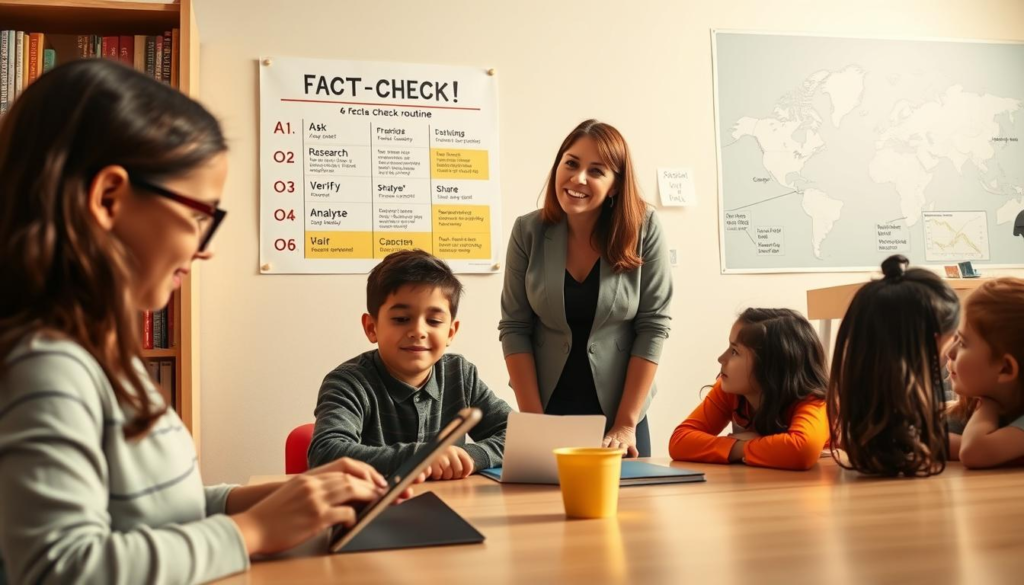
“The greatest danger in times of turbulence is not the turbulence; it is to act with yesterday’s logic.” This quote by Peter Drucker is very relevant today. Technology is changing how we learn, and it’s key to teach kids how to handle this change.
In the 1960s, teachers worried about calculators making math too easy. Now, we’re debating the role of advanced tech in schools. Just like calculators helped with harder math, AI can too. But, we need a way to check if the info is right.
Kids are already using AI tools at home and in school. It’s important to make them feel in control. By teaching them a simple five-step routine, they can think more critically. This helps them learn better and make sure the info they get is trustworthy.
What Should Kids Check Before Trusting an AI Answer?
Kids should think carefully before accepting an AI answer. They need to understand what the answer is saying. For example, if an AI says a historical event happened on a certain date, kids should ask, “What exactly is this answer claiming?”
Start by Asking: What Exactly Is This Answer Claiming?
Teaching kids to break down the information is key. They should ask, “Is this a fact or an opinion?” or “Does this seem too good to be true?” This helps them think critically and not just trust the AI.
Help Kids Notice Answers That Need Extra Checking
It’s important for kids to know when answers need more checking. If an answer seems too sure, lacks sources, or goes against what they know, it’s a warning sign. For instance, if an AI claims a scientific fact without evidence, kids should dig deeper.
Parents and teachers can help by asking questions. Saying, “What do you think about this answer?” or “Can you find another source that agrees?” helps kids know when to question. This way, they learn that doubting AI is smart, not bad.
The 5-Step AI Fact-Check Routine Kids Can Remember

Kids can easily check if AI info is true with just five steps. This routine boosts their AI research skills for students and sharpens their critical thinking. Here’s how they can do it:
Step 1: Check the Claim — Does This Sound Reasonable?
First, kids should trust their gut when AI gives an answer. If it sounds too good (or bad) to be true, they should verify it. For example, if AI says a dog can fly, they should question it.
Step 2: Check the Source — Where Can I Verify This?
Next, kids should find out where the info came from. They can ask themselves, “Where did this come from?” They should look for the same fact in books, trusted websites, or encyclopedias. This step is vital for their research skills.
Step 3: Check the Details — Are Names, Dates, and Facts Correct?
Details are important! Kids should check the specifics in the answer. Are the names, dates, and stats right? For example, if AI gives a date for an event, they should check it against reliable sources. This focus on details is essential for fact-checking.
Step 4: Check What Is Missing — What Part of the Story Is Not Included?
Lastly, kids should think about what’s missing. What parts of the story are left out? This skill helps them understand the whole story. It’s important to remember that AI might not share everything.
By following these steps, kids can confidently deal with AI info. This routine not only boosts their AI research skills for students but also empowers them to think critically and make informed choices.
How Parents Can Practice the Routine at Home

Teaching kids to fact-check can make them think more critically. Parents can help by creating a place where curiosity grows. This can happen through simple talks, not just formal lessons.
Parents can start by asking everyday questions. Instead of saying, “Let’s have a lesson on fact-checking,” they can ask, “What do you think is the answer to this question?” This makes kids think more about what they hear. Here are some ways to do this:
- Ask your smart speaker a question and discuss the answer together.
- Look up a recipe online and verify the ingredients listed.
- Check homework facts with AI tools and evaluate their accuracy.
These digital literacy activities for kids make learning fun. When kids see parents curious, they want to be too. For example, a parent might say, “Hmm, I’m not sure if that’s right—let’s check together.” This boosts confidence and encourages teamwork.
It’s also good to use AI mistakes as learning chances. When AI gives a wrong answer, it’s a chance to teach. Parents can celebrate these moments, showing that even adults verify information. This teaches kids that mistakes are part of learning.
In short, parents don’t have to be tech experts to help their kids. By learning together, they can teach important digital skills.
How Students Can Use the Routine for Schoolwork
Students can use the fact-checking routine to boost their schoolwork. It’s not just steps; it’s a way to feel more confident in their studies. This routine helps make sure the info they find is trustworthy and correct.
When doing research, AI can be a good starting point. It might give summaries, suggest sources, or provide background info. But, students should always check this info against primary sources or teacher-approved materials.
Checking AI Help for Research Assignments
For instance, if AI gives a summary of the American Revolution, students should check it against their textbooks. This makes sure they don’t miss important details. Also, when working on a science project, checking AI explanations with trusted sites can help them understand better.
Checking AI Explanations for Difficult Subjects
AI can help with tough subjects like algebra or chemistry. But, students need to be careful. Sometimes, AI explanations can be wrong or too simple. They should always double-check these explanations with their class notes or textbooks.
It’s also good for students to ask their teachers for help. This not only helps them understand better but also teaches them to be honest and curious in their studies.
| AI Output | Verification Method | Example Source |
|---|---|---|
| Summary of the American Revolution | Cross-check with textbook | History Textbook |
| Scientific explanation of photosynthesis | Confirm with educational website | Khan Academy |
| Algebra problem-solving method | Review class notes | Teacher’s Guide |
By using the fact-checking routine in their schoolwork, students not only do better on homework. They also get better at thinking critically. This skill helps them tackle future challenges and keeps them learning for life.
The Parent-and-Child AI Fact Check Checklist

Creating a simple checklist can empower kids to verify AI answers. This tool serves as a practical guide for families. It helps children learn to assess the information they receive from AI. With a focus on critical thinking, this checklist can be a fun and engaging way to promote the habit of questioning.
Printable Checklist Kids Can Use Before Accepting an Answer
The printable checklist is designed to be user-friendly and visually appealing. It includes essential prompts such as:
- Does this answer sound reasonable?
- Can I find this fact somewhere else?
- Are the names and dates correct?
- What might be missing?
This checklist can easily be stuck on a fridge, tucked into a homework folder, or kept near the family computer. It serves as a constant reminder for kids to practice kids verifying information before accepting AI-generated answers.
A Short Family Conversation Script for Checking AI Answers
In addition to the checklist, having a short conversation script can help parents guide their children in checking AI answers. This script promotes a collaborative and non-judgmental approach:
“Let’s see what the AI said. What do you think—does that sound right? Where could we check that?”
This dialogue encourages children to think critically and feel comfortable discussing their thoughts. By incorporating these tools into daily routines, families can foster a culture of verification and curiosity.
Common Fact-Checking Mistakes Kids Make

Many kids think that polished AI answers are always right. But, this belief can lead to big misunderstandings. AI can make answers look professional, but they might not be true. It’s key to know this for good fact-checking.
Kids often confuse a professional look with being correct. They get impressed by AI’s confident language and neat formats. But, AI can make up information that sounds real. For example, it might create fake book titles or wrong quotes, making kids think it’s true.
Another mistake is when kids check facts but miss the big picture. They might confirm a historical event’s date but not get why it matters. This can give them a wrong view of the topic.
| Mistake | Description | Example |
|---|---|---|
| Trusting Appearance | Assuming that polished answers are accurate. | Believing a fabricated quote because it looks official. |
| Fact Verification | Checking facts without understanding their context. | Confirming a date of an event but missing its significance. |
| Overlooking AI Limitations | Not recognizing that AI can make errors. | Accepting invented statistics as true. |
When Should Kids Pause and Ask an Adult?

There are times when kids should ask an adult for help with AI information. Knowing when to ask for help helps them deal with AI’s complex answers. It boosts their confidence and shows the value of human judgment.
When Information Affects Important Decisions
Kids should talk to an adult when AI info might change their decisions. This includes health tips, safety rules, or money matters. For instance, if AI suggests a cold remedy, it’s best to check with a parent. Asking for help in these cases shows wisdom, not weakness.
When Sources Disagree and the Child Is Unsure
When AI answers don’t match what they’ve read elsewhere, kids should seek advice. A simple rule is: if two sources disagree, ask a trusted adult. This could be a parent, teacher, or librarian.
By knowing when to ask for help, kids understand AI’s limits. Adults offer experience and context that AI can’t. This teaches kids about teaching children AI literacy and critical thinking.
Conclusion
AI technology has changed how kids get information. It’s important to teach them to fact check AI answers. This skill helps them think critically, which is key for their future.
Teaching kids to question and verify information is vital. It prepares them for making complex decisions in life. The aim is to make them thoughtful tech users, not just doubters.
Parents have a big role in this. Talking about AI and its answers helps kids grow. Every time they check a fact, they build a valuable skill.
As kids learn to fact-check, they’ll grow into adults who use AI wisely. They’ll keep their creativity and judgment while using technology. This future is bright, starting with teaching kids to fact check AI.
FAQ
Why is it important for kids to fact-check AI answers?
Fact-checking AI answers helps kids think critically. It teaches them to be careful with information. This prepares them for the digital world.
What are some signs that an AI answer might be incorrect?
Look for answers that seem too sure or lack sources. If they contradict what you know or are too simple, they might be wrong. These signs mean you should check again.
How can parents help their children develop AI literacy?
Parents can start by questioning AI answers together. This turns everyday moments into learning chances. Talking about verifying information helps kids think critically.
What are the steps in the 5-step AI fact-check routine?
First, check if the claim makes sense. Then, verify the source. Next, check the details for accuracy. Lastly, see what’s missing. This helps kids think carefully about AI info.
How can students apply the fact-checking routine to their schoolwork?
Students can use it to check AI summaries and explanations. It helps ensure their understanding matches reliable sources like textbooks. This is important for schoolwork.
What should kids do when they encounter conflicting information from AI and other sources?
If AI and other sources disagree, pause and ask a trusted adult or teacher. This helps make smart choices and shows the value of human judgment.
What tools can families use to support the fact-checking routine?
Families can use a checklist to guide questions about AI answers. A conversation script helps make discussions easier. These tools make fact-checking fun and collaborative.
How can parents turn AI mistakes into learning opportunities?
Celebrate AI mistakes as chances to practice fact-checking. This shows that verifying information is a valuable skill for everyone.
What common mistakes should kids avoid when evaluating AI information?
Don’t assume professional-looking answers are always right. Make sure to understand the context of the information. Avoiding these mistakes improves fact-checking skills.