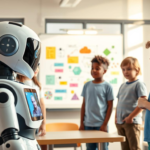
Did you know that 85% of kids aged 9 to 17 use AI for schoolwork? This fact from Common Sense Media shows how big a role tech plays in their studies. Many use these tools every week, showing AI’s big impact on learning.
Parents might worry about AI’s effects. They might think it’s cheating or hurts thinking skills. But teachers say it can really help learning if used right.
This article is here to help parents understand AI in school. We’re not saying ban these tools. Instead, we’ll show how to use them wisely in your child’s studies. We’ll talk about setting limits and finding good uses, aiming to help parents guide their kids through this new world.
Let’s explore how to make tech a learning aid, not a replacement. We want your child to grow important skills and enjoy new tech tools.
What Types of Homework Help Can AI Provide?
AI can be a big help for students with tough homework. It offers many ways to improve learning and understanding. With AI, kids can face hard subjects with more confidence and creativity.
Using AI to Explain Difficult Topics
AI is great for making hard topics easier. For example, if a child finds fractions or history hard, AI can make them simpler. It’s like having a patient tutor who explains things in easy words.
Studies from Stanford University show AI’s benefits. Students who used AI with traditional tutoring did much better. They were 14 percentage points more likely to pass their work. This shows AI can really help with learning.
Teachers like AI for explaining hard ideas, making practice questions, or checking grammar. By asking AI to explain answers, students learn more deeply. This helps them understand better.
Using AI to Brainstorm Ideas and Practice Skills
AI is also good for brainstorming and practicing skills. Kids can use AI like ChatGPT to get ideas for essays or outlines. It helps them think deeply while AI supports them.
But AI doesn’t do the thinking for kids. It helps them learn more by being a supportive tool. With the right help, students can grow more confident and understand subjects better.
What Should Kids Do Before Asking AI for Help?

Kids should try to solve problems on their own before asking AI for help. This helps build confidence and improves problem-solving skills. The SchoolAI guide suggests that elementary students should spend at least five minutes trying to solve a problem by themselves.
Research shows that too much AI can make kids less interested in reading and homework. Students who rely too much on AI might get shorter, less thoughtful prompts. It’s important for kids to understand that AI isn’t always right.
Parents can help kids ask better questions for AI. This improves their communication skills. For example, parents can ask, “What have you tried so far?” or “Let’s figure out what to ask the AI together.” This makes parents supportive learning partners.
It’s good for kids to struggle with a problem for a few minutes. This helps them find where they’re stuck. It’s important for developing critical thinking skills, even if it’s hard.
What Parents Should Check When Kids Use AI for Homework

Parents have a big role in making sure AI helps with homework. With technology in schools, it’s key for parents to see how kids use AI. Here are some ways to help their learning:
Making Sure the Child Understands the Final Answer
First, ask your child to explain the answer in their own words. This shows if they really get it. You might ask:
- “How did you get this answer?”
- “Can you teach this concept to a younger sibling?”
- “What steps did you take to solve the problem?”
If they can’t explain it, AI might be doing all the work. Teachers say students do well on homework but struggle on tests. This shows AI might not be helping them learn.
Checking Whether AI Replaced Thinking
Look for patterns in your child’s homework. If it’s done too fast or sounds different, they might be relying too much on AI. Don’t just rely on AI detectors, as they’re not always right.
It’s important to create a safe space for kids to talk about AI use. The U.S. Department of Education says kids are more likely to talk about AI if they feel safe. This builds trust and helps them open up about their learning.
Safe Ways to Use AI for Different School Subjects

AI brings new ways to learn, making school more fun. Parents can help kids use AI tools right. This way, learning gets better without losing the importance of thinking for themselves.
Using AI Support for Writing Assignments
AI is a great study assistant for kids when it comes to writing. It’s key for kids to write their first draft. Then, they can ask AI for feedback, not a full rewrite.
Teachers say it’s okay to use AI for:
- Coming up with essay ideas
- Making outlines
- Checking grammar and clarity
Using AI Support for Maths, Science, and Revision
In math and science, AI can be like a tutor. It can make practice problems, explain steps, and test students on important terms. For example, AI can help make flashcards for studying.
Platforms like SchoolAI help teachers guide how AI is used. This way, students learn more deeply.
Parents should:
- Watch over younger kids with AI tools
- Keep devices in open areas of the home
- Pick educational platforms made for students
| Subject | AI Use Cases | Benefits |
|---|---|---|
| Writing | Feedback on drafts | Improved clarity and argument strength |
| Math | Practice problems | Enhanced problem-solving skills |
| Science | Flashcards for revision | Better retention of key concepts |
Homework AI Rules Families Can Agree On
Families can create a positive homework space by setting rules for AI help. These rules help manage expectations and teach responsibility. It’s key to set limits that fit the child’s age and make sure AI tools help learning, not replace it.
Parents can start by having a family meeting to talk about AI use. They can use UNESCO’s guide to ask important questions. This helps kids understand AI better and promotes open talks.
Creating Simple Boundaries for AI Use
Boundaries should match the child’s age and maturity. Young kids might need supervised AI sessions that are short and focused. Teenagers should be expected to be honest and original in their work.
Here are some rules to consider:
- “AI can help you study, but not do the work for you.”
- “You should always be able to explain what you turn in.”
Teaching Honesty About AI Assistance
Honesty is key when using AI. If kids fear getting caught, they might hide their AI use. Parents should encourage honesty and see mistakes as chances to learn.
By making these rules together, families can work through homework challenges. This turns conflicts into chances to solve problems together. Here’s a table with some rules families might find helpful:
| Rule | Description | Age Group |
|---|---|---|
| AI Assistance | AI can help with explanations and brainstorming. | All Ages |
| Supervised Use | Young children should use AI under supervision. | Elementary |
| Original Work | Teens must submit original work and disclose AI use. | Teens |
| Explainability | Students should explain AI-assisted answers. | All Ages |
How to Tell If AI Homework Help Is Actually Working

One way to see if AI homework help is working is by looking at the questions your child asks. When kids use AI tools like ChatGPT, they dive deeper into their studies. This is a good sign they’re not just looking for answers but are really interested in the subject.
According to Mommy Poppins, kids who use AI well ask more thoughtful questions. They go beyond just asking for answers. They might ask, “Can you explain why this is the answer?” This shows they’re thinking deeply about their homework.
Your Child Asks Better Questions
When your child starts asking better questions, it shows they’re really getting into the material. This is a big step in their learning. Teachers say students who ask good questions do better in class. They remember more and understand things better.
Your Child Can Explain the Answer Without AI
Another sign of success is when your child can explain answers on their own. If they can clearly explain their answers, it means they really get the material. This skill is key for kids to learn on their own.
But, remember, just because homework is good doesn’t mean tests will be too. If your child does well on homework but not on tests, it might mean AI isn’t helping them learn. Check in regularly and ask them to teach you something they learned from ChatGPT.
| Indicator | Positive Sign | Next Steps |
|---|---|---|
| Asking Better Questions | Increased curiosity and engagement | Encourage open discussions about homework |
| Explaining Answers Independently | Demonstrates genuine understanding | Promote teaching back to reinforce learning |
| Homework Quality vs. Test Scores | High homework quality, low test performance | Evaluate AI usage and understanding |
When Should Kids Stop Using AI for Homework?

It’s important for kids to know when to stop using AI for homework. AI can be helpful, but there are times when it gets in the way. It’s key to recognize these moments to help kids learn on their own.
One sign is when AI becomes a quick fix instead of a helper. If a child just copies answers without getting the material, it’s time to pause. This can make them miss out on learning to solve problems. The SchoolAI guide says too much AI can lead to shallow questions.
Parents should encourage kids to try problems by themselves first. Then, they can use AI for help. This way, AI supports learning, not replaces it.
Also, certain assignments should be done without AI. Personal essays and creative projects need a child’s own thoughts and feelings. If they can’t explain their answers, it means AI is taking over. Teachers want to see what kids think for themselves.
Parents should remember that sometimes struggling is good. It helps kids learn and grow. By limiting AI use, families can make sure it helps, not hinders, learning. Knowing when to stop using AI is a valuable skill for kids.
Conclusion
AI can be a great help in education if used wisely. Parents should see AI as a tool to support learning, not replace it. By letting kids explore AI, families can help them learn responsibly.
Encouraging kids to try things on their own boosts their confidence and problem-solving skills. It’s important to set rules for AI use. This helps kids know what’s okay and what’s not.
Parents should check if kids understand the answers AI gives. This makes sure they learn the concepts, not just the answers.
It’s key to keep talking about AI with kids. This helps parents guide them through the changing world of technology. The Common Sense Media report shows many kids need help with AI safety talks.
In today’s education, parents should show interest in AI. It’s not about being perfect but about being open. By focusing on learning, families can help their kids succeed in an AI-rich world.
FAQ
Is using AI for homework considered cheating?
Not necessarily. AI can be a helpful study tool, like calculators or spellcheck. The important thing is for kids to understand and think deeply about the material.
How can parents ensure their child is using AI safely?
Parents should watch over AI use by keeping devices in open areas. They should also set clear rules and talk openly about AI. This helps kids feel safe to use AI.
What are some effective ways for kids to ask AI for help?
Kids should try to solve problems on their own first. Then, they should ask AI specific questions. This helps them get better answers and improves their communication skills.
How can parents check if their child understands the material after using AI?
Parents can ask their child to explain the answer in their own words. If they struggle, it might mean AI did all the work.
What are some subject-specific ways to use AI for homework?
For writing, AI can help with brainstorming or feedback on drafts. In math and science, it can be a tutor, giving explanations and practice problems.
How can families set effective rules for AI use in homework?
Families should make rules together, based on the child’s age. Younger kids might need short, supervised sessions. Teens should know the rules about original work and disclosure.