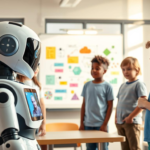
Have you ever wondered how much trust we should place in artificial intelligence when it comes to our children’s learning? As technology grows each day, parents need to prepare their children for this changing future.
Teaching children to become smart and responsible online users is important. This guide helps parents teach their children how to check facts, spot incorrect information, and think critically about what they find online.
We want to help children question what they see and understand the information they receive. It is not just about using technology; it is about teaching them to value honesty, safety, and fairness online.
Why Do Kids Need to Check AI Answers?
In today’s world, it’s key for kids to learn to question AI answers. Many see AI as a trustworthy source of info. But, it’s vital to know AI can sometimes give wrong answers. This part talks about why fact-checking is important for kids when using AI.
AI Can Sound Correct Even When It Makes Mistakes
AI systems are made to sound like they know what they’re talking about. They give info in a way that sounds right, but can be wrong. For example, a kid might ask AI a question and get a clear answer. If they don’t know how to check it, they might think it’s true without asking more.
Teaching kids to think critically about AI answers is important. It helps them learn to verify info. By doing this, they can tell real info from fake.
Children Need Judgment Skills, Not Just Information
Today, having facts isn’t enough. Kids need to learn to judge the info they get. This means checking if the info is true and where it comes from.
AI learns from data made by humans, which can have biases. For example, asking AI about history might get answers with stereotypes instead of facts. Teaching kids to doubt AI answers helps them think better. This skill will help them all their lives.
Teaching kids to be child-friendly fact checkers empowers them to think for themselves. This not only makes learning better but also prepares them for a future full of info.
| AI Strengths | Potential Weaknesses | Critical Thinking Skills |
|---|---|---|
| Fast Information Retrieval | Can Provide Incorrect Answers | Questioning Sources |
| Wide Range of Knowledge | May Reflect Biases | Comparing Information |
| Accessible Anytime | Lacks Human Judgment | Evaluating Validity |
Teach Kids a Simple AI Fact Checking Process

Teaching kids how to fact-check AI is key. It helps them think critically about what they learn. By using a simple three-step method, they can better use AI technology.
Step 1: Ask Where the Information Came From
First, kids should ask, “Where did this information come from?” AI answers often don’t show their sources. This question helps them spot when answers lack proof. It teaches them the value of reliable information.
Step 2: Compare AI Answers With Trusted Sources
Then, kids should check AI answers against trusted sources. This could be school books, library databases, or sites like National Geographic Kids. By doing this, they become active learners, not just passive receivers. They learn to judge the trustworthiness of sources.
Step 3: Look for Missing Details or Strange Claims
Lastly, kids should watch for red flags in the info they get. They should check if details are missing or if claims seem too good to be true. Explaining AI answers in their own words helps them understand better. Asking the same question twice or using different AI tools can also clarify things.
By following these steps, kids improve their fact-checking skills. Parents can show them how by fact-checking themselves. This way, they learn to think critically about information.
| Step | Action | Purpose |
|---|---|---|
| 1 | Ask about the source | To recognize the origin of information |
| 2 | Compare with trusted sources | To verify accuracy and reliability |
| 3 | Look for inconsistencies | To identify red flags in the information |
Real Examples of Kids Checking AI Answers

Real-world examples show why it’s key for kids to check AI answers. Seeing how others fact-check helps them learn. This makes learning more fun and valuable.
A Homework Example: Checking an AI Science Explanation
A child is doing science homework. She uses an AI to explain photosynthesis. The AI gives a detailed answer, but something seems wrong.
She remembers to check a school science book. There, she finds that plants absorb carbon dioxide through tiny pores in their leaves, not roots. This shows AI answers can be wrong, even if they sound right. A quick check with a reliable source for young learners can spot the error.
A Curiosity Example: Verifying a History Answer
A curious child asks an AI about the first airplane flight. The AI gives a date and some details. But the child wants to make sure it’s right.
She checks a trusted children’s encyclopedia. She finds the AI’s answer was mostly right but missed some important details. This shows that different sources can give different views. It’s why fact-checking is so important.
These examples make fact-checking seem normal and even fun. They show that reliable sources for young learners—like school books, library resources, and good educational websites—are key. They help kids learn to fact-check well.
How Parents Can Practice Fact Checking at Home

Parents are key in teaching kids to fact-check AI info. By doing this, they help kids learn to navigate the digital world. This section will show how families can turn AI mistakes into learning chances.
Turning AI Mistakes Into Learning Opportunities
When AI gives a wrong or silly answer, it’s a great chance to teach. Parents can say,
“Let’s see if we can figure out what the AI got wrong here!”
This turns errors into puzzles to solve, not reasons to distrust tech.
Make fact-checking fun by setting aside time during homework. Families can also make it a challenge to find AI mistakes. This makes fact-checking important and strengthens family bonds through learning together.
Asking Children How They Know Something Is True
Parents should ask their kids, “How do you know that’s true?” This question helps kids think critically about what they see. It teaches them to examine evidence and consider sources, which is key today.
When kids learn that just because a computer says so isn’t enough, they become more careful with info. Parents can show this by saying,
“Hmm, I’m not sure if that’s right, let me check another source.”
This teaches important lessons without needing formal lessons.
| Practice | Description | Benefits |
|---|---|---|
| Fact-Checking Together | Spend time verifying AI answers as a family. | Encourages teamwork and critical thinking. |
| Family Challenges | Make it a game to find AI mistakes. | Increases engagement and makes learning fun. |
| Questioning Truth | Ask children how they know something is true. | Promotes critical thinking and source evaluation. |
By using these strategies, parents can teach kids to use AI wisely. This not only boosts critical thinking but also makes kids smarter and more careful with educational tech.
Fact Checking Mistakes Kids Often Make

Kids often fall into common traps when checking facts from AI. Understanding these pitfalls can help them become better online accuracy verifiers. Two significant mistakes are trusting AI because it sounds professional and checking only one source.
Trusting AI Because the Answer Sounds Professional
One major mistake children make is assuming that if an AI response uses sophisticated vocabulary and a confident tone, it must be correct. AI is designed to sound authoritative, similar to a smooth-talking classmate who always seems convincing, even when they’re wrong. It’s essential for kids to recognize that the way something is said does not guarantee its accuracy.
Encourage children to think critically. For example, when an AI provides an answer, ask them questions like, “Does this sound right to you?” or “What do you think could be wrong with this?” This approach helps them separate the sound of an answer from its truthfulness.
Checking Only One Source
Another common error is verifying an AI answer against just one other website. Kids might think they have done their job, but this isn’t enough. The second source could contain the same error or even be AI-generated itself. Children need to develop the habit of checking multiple, genuinely independent sources.
To illustrate this, parents can guide their children to compare answers from different platforms. For instance, they could ask AI the same question twice and discuss which response makes more sense. This practice helps them see the value in cross-referencing information.
Remind kids about confirmation bias. They might stop searching once they find an answer that aligns with their beliefs or what the AI stated. Teach them to actively seek out information that challenges the AI’s claims. This way, they become more thorough and thoughtful in their fact-checking.
| Common Mistakes | Description | Solutions |
|---|---|---|
| Trusting AI’s Professional Sound | Assuming answers are correct based on their delivery. | Encourage critical questioning and discussion. |
| Checking Only One Source | Verifying facts against just one additional source. | Promote checking multiple independent sources. |
| Confirmation Bias | Stopping research when finding a matching answer. | Encourage looking for contradicting information. |
By understanding these common mistakes, parents can guide their children toward becoming more effective online accuracy verifiers. With practice, kids will learn to navigate the digital world with a critical eye.
When Should Kids Stop Using AI and Ask a Human?

Kids need to know when to ask for help from adults when using AI. AI is useful, but there are times when talking to a trusted adult is better. This helps kids learn more and stay safe.
Situations Where Adult Guidance Matters
There are certain times when kids should ask an adult for help:
- Feeling Uncomfortable: If an AI answer makes a child feel weird or unsure, they should talk to an adult.
- Personal Safety: Topics like health, safety, or family secrets should always be discussed with a parent or guardian.
- Original Thinking Required: For school assignments that need creativity or personal thoughts, AI shouldn’t replace human ideas.
- Overwhelmed by Information: If kids get mixed-up information, they should ask an adult to clear things up.
Knowing When AI Is Not the Right Helper
It’s important for young fact checkers to know when AI is not enough. Here are some key points:
- Balance Screen Time: Encourage kids to do real-world activities, like playing outside or hanging out with friends.
- Set Clear Guidelines: Parents should make rules about when and how to use AI for schoolwork.
- Use Timers: For kids who find it hard to stop using screens, timers can help manage time better.
- Recognize Learning Support: Kids should know the difference between using AI as a tool and relying on it too much.
Conclusion
Teaching kids to use AI wisely is key in today’s world. With the right help, they can see AI as a tool for learning. AI can help us think better, but it should never replace our own thoughts.
Children should see AI answers as a starting point, not the end. This way, they stay curious and keep exploring. It’s important for them to understand AI’s role.
Families and teachers are vital in guiding how kids use AI. Working together, they can teach kids to use AI safely. It’s about teaching them to think critically and be confident online.
As kids learn to question and check facts, they grow in their ability to navigate the internet. Parents should encourage these moments. It’s a journey, and becoming good at fact-checking takes time.
As AI gets better, the tools will change, but the need to question and verify will stay the same. The aim is to raise a generation that is both curious and skeptical about digital tools. Parents don’t need to be tech experts; just being curious and involved is what matters.
FAQ
Why is it important for kids to fact-check AI answers?
It’s key for kids to fact-check AI answers because AI can seem right even when it’s wrong. Teaching them to question and verify helps them think critically. It also makes them better at using information wisely.
How can parents help their children learn to fact-check AI?
Parents can help by showing how to fact-check. They can turn AI mistakes into learning chances. Encouraging kids to question what they find online helps them think critically.
What are some common mistakes kids make when checking AI answers?
Kids often trust AI too much because it sounds official. They might only check one source. It’s important to teach them to look at many reliable sources and not just trust a confident tone.
When should children seek adult help instead of relying on AI?
Kids should ask for help when they’re unsure or uncomfortable. This includes topics about safety or personal issues. They should also get help with original thinking for school.
What are some practical ways to incorporate fact-checking into daily life?
Parents can make fact-checking a part of homework time. They can ask kids to explain why they trust certain information. Making it a family challenge to find AI mistakes is also a good idea.
How can children build confidence in their own thinking abilities?
Kids can build confidence by practicing fact-checking. Celebrating their small wins helps too. Learning to ask questions that spark curiosity is also important.
What resources can kids use for reliable information?
Kids can use trusted sources like school books and library databases. Websites like National Geographic Kids and Britannica Kids are also good for verifying AI information.
How does fact-checking AI answers benefit children’s overall learning?
Fact-checking AI answers boosts kids’ research skills and judgment. It also builds their confidence in thinking for themselves. These skills are vital for lifelong learning and success.