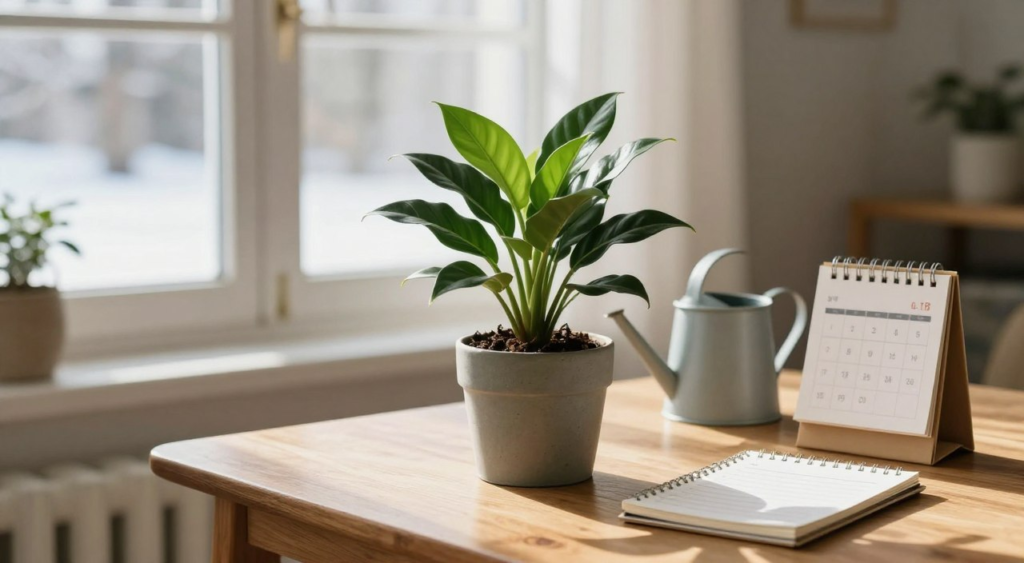
ZZ plants (Zamioculcas zamiifolia) are famous for “forgiving” care, but winter is where most people accidentally kill them with kindness. When light levels drop and indoor temperatures fluctuate, the plant’s growth slows, so it uses water much more slowly. In other words: your normal routine can become overwatering.
The safest winter approach is not “water every X days.” It’s “check on a schedule, water only when the pot is truly dry.” That idea lines up with long-running botanic garden guidance: ZZ plants prefer to dry between waterings and dislike wet soil. Missouri Botanical Garden
Quick answer: the simple 3-week check
In winter, set a repeating reminder every 3 weeks. On that day, do the moisture checks below. Only water if the soil is dry. Many healthy ZZ plants in winter end up being watered roughly every 4–6 weeks (sometimes longer) depending on light, pot size, and room temperature. Country Living
- Week 3: check the soil (don’t auto-water).
- If still damp: wait 7 days and re-check.
- If dry: water once, then fully drain.
Why ZZ plants need less water in winter
ZZ plants store moisture in thick rhizomes and fleshy roots. When winter light is weaker and days are shorter, the plant’s growth slows, so that stored water lasts longer. The biggest winter risk isn’t underwatering—it’s water sitting in the pot long enough to suffocate roots and invite rot. A “dry-down” cycle is exactly what ZZ plants prefer. Missouri Botanical Garden
Do this on your 3-week check day
Use at least two checks so you don’t get fooled by a dry surface and wet soil underneath.
Check 1: finger depth test
Push your finger into the potting mix about 5–7 cm (2–3 in). If you feel coolness or moisture, don’t water.
Check 2: skewer test (more accurate)
Insert a wooden skewer or chopstick all the way down, leave it 30–60 seconds, then pull it out. If it comes out dark or damp with soil sticking, wait.
Check 3: pot weight test (fast once you learn it)
Lift the pot. A dry ZZ pot feels noticeably lighter. If it still feels heavy for its size, there’s usually moisture left in the lower half.
When it’s dry: how to water the right way in winter
When your checks say “dry,” water thoroughly once, then let excess drain completely. The goal is even moisture, not a constantly damp pot.
- Carry the pot to a sink/shower or place it on a tray where it can drain.
- Water slowly until you see steady drainage from the bottom holes.
- Wait 5–10 minutes, then empty the saucer/cachepot so the pot never sits in water.
- Put it back in its spot and don’t water again until the next check day (or later if it’s still damp).
If your ZZ is in a decorative pot with no drainage: keep it in a plastic nursery pot with holes inside the decorative cover. Water in the sink, let it drain, then return it to the outer pot. This single habit prevents most winter root-rot situations.
What changes the schedule in real homes
The 3-week system is a check rhythm, not a “must-water” rule. Use this table to adjust expectations without guessing.
| Factor | What you’ll notice | What to do |
|---|---|---|
| Low light (far from window) | Soil stays damp longer | Expect longer gaps between waterings |
| Bright indirect light (near window) | Soil dries faster | Still check first; you may water a bit more often |
| Warm room / near radiator | Top dries quickly but bottom may stay wet | Use the skewer test before watering |
| Large pot | Holds moisture for a long time | Water less often; overwatering risk is higher |
| Terracotta pot | Dries faster than plastic/ceramic | Check as normal; it may need water sooner |
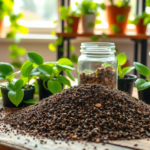
| Heavy, peat-rich mix | Stays wet, compacts over time | Let it dry fully; consider a chunkier mix at next repot |
Common winter mistakes and quick fixes
Mistake 1: “A little splash” every week
Small frequent sips keep the lower soil wet, which is exactly what ZZ plants dislike. Fix: switch to “dry then drench,” and always drain the saucer.
Mistake 2: Watering because the top looks dry
The top 1–2 cm can dry while the bottom stays wet for weeks. Fix: use the skewer test before winter watering decisions.
Mistake 3: Ignoring early rot signals
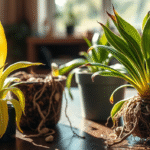
Yellowing that spreads quickly, soft stems at the base, or a sour smell from the pot can indicate staying too wet. Fix: stop watering, move to brighter indirect light, and if the soil is soggy for days, consider repotting into fresh, well-draining mix.
Mistake 4: Cold drafts + wet soil
Cold windowsills or drafty doors slow drying even more. Fix: keep ZZ plants in a stable indoor spot and avoid very cold locations. Missouri Botanical Garden
FAQ
Q: Should I water my ZZ plant exactly every 3 weeks in winter?
A: No—check every 3 weeks. Water only if the mix is dry down in the pot. Many homes land closer to every 4–6 weeks (or longer) in winter. Country Living
Q: How dry should the soil be before watering?
A: For winter, aim for “mostly dry.” If the skewer comes out dry and the pot feels light, it’s usually safe to water. ZZ plants prefer drying between waterings rather than staying damp. Missouri Botanical Garden
Q: Is bottom watering better for ZZ plants?
A: Either method works if you don’t leave the pot sitting in water. Bottom watering can reduce mess and helps evenly moisten the mix, but drainage and “no standing water” matter most.
Q: My ZZ plant is wrinkling—should I water immediately?
A: Wrinkling can mean thirst, but confirm with a soil check first. If the soil is still damp, don’t water—improve light and warmth slightly and re-check in a week.
Sources
- Missouri Botanical Garden: Zamioculcas zamiifolia (ZZ plant) care notes
- Country Living: ZZ plant basics and infrequent watering guidance
About the author
Mohammed Zandar (yup.work90) writes practical, apartment-friendly plant care guides focused on simple routines that prevent common mistakes—especially overwatering in low-light seasons.