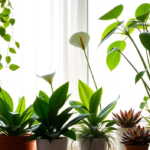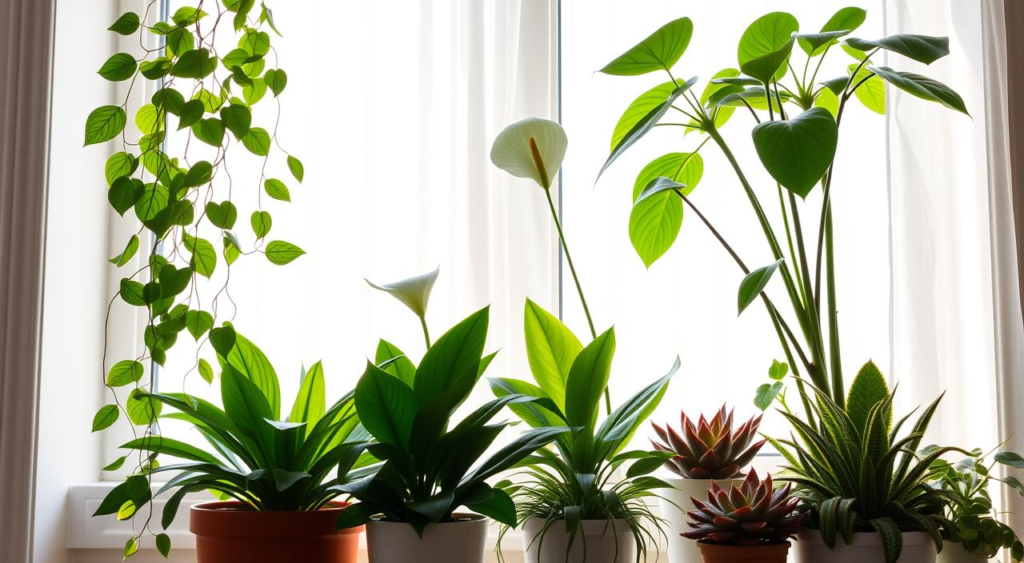
An east-facing window is one of the most pleasant spots in a home to grow plants — and one of the most underappreciated. The morning sun comes in cool and gentle, lasts for a few hours, and then softens into bright indirect light for the rest of the day. It’s a forgiving rhythm that suits a surprisingly wide range of plants, from tough drought-tolerant succulents to fussier tropical foliage.
That said, placing a plant in front of an east window doesn’t guarantee it will thrive. Light is only part of the equation — you also need to match the plant to your home’s humidity level, your watering habits, and the specific quality of light your window actually delivers. This guide covers 12 reliable choices, organized by care style, with honest notes on what each plant really needs and how to spot problems early.
Quick Answer: The best plants for east-facing windows are those that enjoy gentle morning sun followed by bright indirect light for the rest of the day. Excellent choices include the ZZ Plant, Snake Plant, Jade Plant, Fiddle Leaf Fig, and Pothos. Keep sun-loving plants close to the glass, and pull delicate tropicals slightly back to prevent leaf burn.
Best for: Indoor plant owners with gentle morning sun and bright indirect light
Time needed: 5–10 minutes to check your window and choose the right plant group
Main skills: Reading morning light, matching plants to humidity, adjusting distance from the glass
Best method: Put tougher plants closer to the window and pull delicate tropicals slightly back from direct morning sun
Important: East-facing windows are gentle, but summer morning sun can still burn delicate leaves. If you see faded patches or crispy brown spots, move the plant 30–60 cm back from the glass or use a sheer curtain.
Table of contents
- Understanding the east window microclimate
- Best picks for dry homes and forgetful waterers
- Best picks for humid homes and frequent waterers
- Pet-safe east window plants
- Troubleshooting light and leaf issues
- Final Thoughts on East-Facing Windows
- FAQs
- Sources and further reading
Understanding the East Window Microclimate
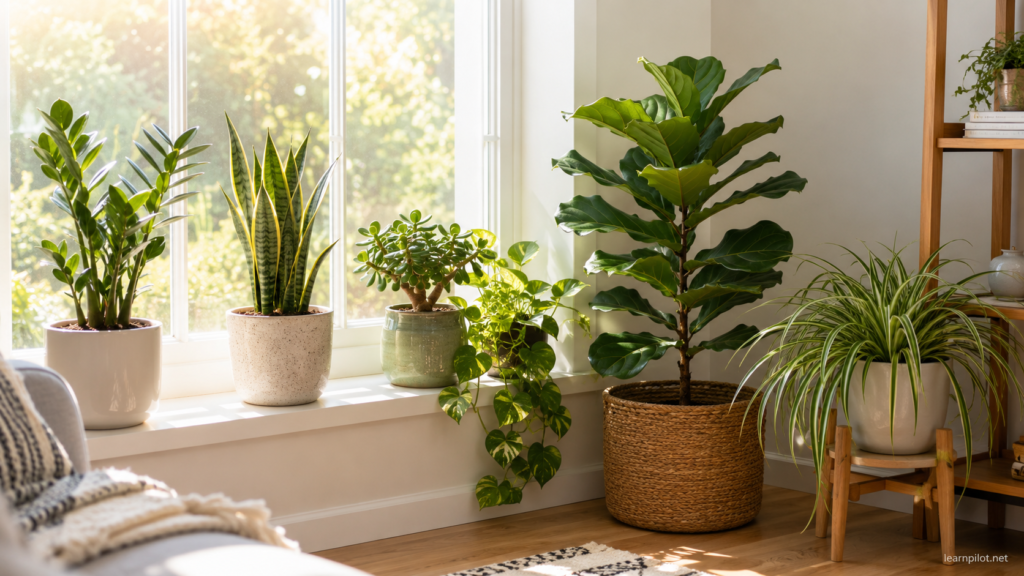
An east window typically delivers around 2–4 hours of direct morning sun, followed by softer ambient brightness for the rest of the day. That morning light is cool and relatively low-intensity compared to afternoon western sun, which is why so many tropical plants — naturally adapted to growing beneath a forest canopy — do well in this exposure.
But not all east windows are equal. Before buying plants, it’s worth spending a few minutes understanding what your specific window actually delivers.
A simple light test: the 9 AM shadow check
On a clear morning, stand at your east window at around 9 AM and hold your hand about 30 cm above a piece of white paper. What does the shadow look like?
- Sharp, well-defined shadow: you have genuine direct morning sun — suitable for the drought-tolerant plants in the section below
- Soft, fuzzy shadow with blurry edges: a tree, building, or overhang is filtering your light; you effectively have bright indirect light, which is still excellent but worth knowing about before placing sun-hungry plants there
Other factors that affect your east window
- Distance from the glass: light drops off quickly as you move back into a room — a plant 60 cm from the sill can receive significantly less light than one sitting directly on it
- Season: in winter, the sun sits lower in the sky and hours of useful light shorten considerably; a plant that was happy 50 cm from the glass in July may need to be moved onto the sill in December
- Window cleanliness: dusty or dirty glass reduces light transmission noticeably — a clean window is free, and it genuinely makes a difference
Best Picks for Dry Homes and Forgetful Waterers
If your home runs dry from central heating or air conditioning, or you travel regularly and can’t keep a consistent watering schedule, start here. These plants use morning light efficiently and handle dry spells without drama.
ZZ Plant (Zamioculcas zamiifolia)
ZZ plants are often sold as “low light plants,” which is technically true — they survive in dim corners. But put one in an east window and you’ll see a noticeably different plant: thicker stems, glossier leaves, and much faster growth. The thick underground rhizomes store water, so missing a watering by a week or two rarely causes problems.
- Water: allow the soil to dry most of the way through before watering again
- Watch for: yellowing, which in low-light conditions usually means too much water, not too little
- Pet safety: mildly toxic to cats and dogs if ingested
Snake Plant (Dracaena trifasciata)
Snake plants tolerate dim conditions, but morning sun visibly improves them — the yellow leaf margins on variegated varieties stay bright and defined rather than fading. They’re one of the most drought-tolerant houseplants available and recover well from occasional complete neglect.
- Water: let the soil dry completely to the bottom of the pot before watering; overwatering is by far the most common way to lose one
- Good for: narrow sills, minimal maintenance, and beginners
- Pet safety: toxic to cats and dogs if ingested
Jade Plant (Crassula ovata)
Many succulents struggle indoors because they need more direct sun than most windows can provide. The jade plant is an exception — it maintains its compact, tree-like shape beautifully in an east window without needing the intense southern exposure that other succulents require. Given gritty soil and infrequent deep waterings, it’s remarkably low maintenance.
- Water: thoroughly but infrequently — allow the soil to dry completely between waterings
- Soil: a cactus/succulent mix, or standard potting mix with added perlite, works well
- Pet safety: toxic to cats and dogs if ingested
Pothos (Epipremnum aureum)
Pothos will survive in almost any indoor light, but an east window is genuinely where they look their best — vines trail long, leaves come in larger, and growth is noticeably faster without the risk of the bleaching or burning you’d get from intense afternoon sun. Variegated varieties need a bit more light than solid green ones to maintain their markings.
- Water: when the top 2–3 cm of soil dries out
- Tip: if variegated leaves are reverting to plain green, move the plant slightly closer to the glass
- Pet safety: toxic to cats and dogs if ingested
Best Picks for Humid Homes and Frequent Waterers
If your home naturally runs humid, you use a humidifier, or you’re the kind of plant owner who genuinely enjoys checking on plants every day or two, these tropical plants will reward that attention. They appreciate consistent moisture and warm, stable conditions — and the gentle morning light of an east window suits them far better than the harsh afternoon rays of a west or south exposure.
One personal observation worth sharing: the most common mistake with moisture-loving tropicals isn’t underwatering — it’s inconsistency. Going from bone dry to waterlogged and back again is harder on most of these plants than a steady routine of checking the soil and watering when it’s partially dry. A regular habit of checking rather than a fixed schedule tends to work better in practice.
Fiddle Leaf Fig (Ficus lyrata)
Fiddle leaf figs have a reputation for being difficult, and some of that is deserved — they drop leaves when moved, dislike drafts, and are sensitive to inconsistent watering. But their light requirements are actually specific rather than extreme: they need bright light to support their large leaves, but harsh afternoon western sun scorches them. The cool, consistent energy of an east window is often exactly the balance they need.
- Water: when the top 3–5 cm of soil dries; avoid both soggy soil and allowing it to dry completely
- Warning: once they settle into a spot that’s working, avoid moving them unnecessarily — they respond badly to change
- Pet safety: toxic to cats and dogs if ingested
Chinese Evergreen (Aglaonema)
Chinese evergreens come in a wide range of leaf colours — deep green, silver, pink, and red. The brighter, more colourful varieties benefit from the morning light of an east window to maintain their vibrancy; placed in deeper shade, the foliage can fade to a duller, more washed-out version of itself. They like warm, ambient conditions and soil that stays slightly moist rather than drying out completely.
- Water: moderately — avoid letting the soil stay dry for extended periods
- Tip: darker-leaved varieties handle lower light; choose those if your east window is partially obstructed
- Pet safety: toxic to cats and dogs if ingested
Calathea and Prayer Plants (Maranta family)
These plants have some of the most striking patterned leaves you’ll find in a houseplant — but those patterns fade and the leaf edges turn brown if conditions aren’t right. Harsh direct afternoon sun washes out the markings quickly; gentle morning light followed by bright indirect conditions through the day is much closer to their natural forest-floor habitat. A sheer curtain over the window during the sunniest part of the morning protects the most delicate varieties.
- Water: keep soil consistently damp but not waterlogged; dry soil causes crispy leaf edges fast
- Humidity: higher humidity reduces browning — a pebble tray with water beneath the pot helps in drier homes
- Pet safety: non-toxic to cats and dogs
Rubber Tree (Ficus elastica)
Rubber trees want the brightest indirect light possible indoors, and a few hours of morning sun helps keep their stems upright and sturdy rather than reaching and leaning toward the window. The burgundy and dark-leaved varieties are particularly striking, and they’re somewhat more tolerant of inconsistent watering than fiddle leaf figs.
- Water: when the top half of the soil dries out; tolerates slightly more drought than a fiddle leaf fig
- Tip: wipe large leaves occasionally — dust reduces light absorption and the leaves are glossy enough to clean easily
- Pet safety: toxic to cats and dogs if ingested
Pet-Safe East Window Plants
If you have cats that chew on leaves or dogs that dig in pots, plant toxicity matters. Many popular east-window plants are not pet-safe, but the options below are listed by the ASPCA as non-toxic to cats and dogs and still do well in gentle morning light.
| Plant | Watering needs | Why it suits east windows |
|---|---|---|
| Boston Fern (Nephrolepis exaltata) | Keep soil consistently moist; requires higher humidity | In nature, ferns grow under forest canopies — morning sun provides energy without scorching their delicate fronds |
| Spider Plant (Chlorophytum comosum) | Allow the top layer of soil to dry before watering | Gentle morning light encourages steady growth and the production of trailing “spiderettes” on long arching stems |
| Peperomia (Peperomia obtusifolia and similar) | Allow soil to dry almost completely between waterings | Semi-succulent leaves store water; morning sun keeps growth compact and the foliage glossy |
| Blue Star Fern (Phlebodium aureum) | Keep soil lightly moist | The blue-green fronds need bright indirect light to hold their colour; direct afternoon sun fades them to yellow |
Troubleshooting Light and Leaf Issues
Even a good east window produces different light in June than it does in November, and plants respond visibly when conditions shift. Here’s how to read what they’re telling you.
The plant is stretching or leaning toward the window
Long gaps between leaves on a trailing vine, or an upright plant leaning heavily toward the glass, both indicate insufficient light. The plant is physically searching for more. Fixes to try, in order of effort: move the plant closer to the window, clean the window glass, rotate the pot a quarter turn each time you water, or add a small grow light on a timer during winter months.
Faded, washed-out leaves or crispy brown patches
If leaves look bleached, or have dry brown patches in the centre of the leaf surface rather than just at the tips, the morning sun is more intense than the plant can handle. This is more common in peak summer when the sun rises earlier and higher, and it’s more likely to affect plants positioned directly on the sill. Move the plant 30–60 cm back from the glass, or hang a sheer curtain to diffuse the light without blocking it.
The plant stalls in winter
In winter, the sun sits lower in the sky and the hours of usable morning light shorten considerably. A plant that was doing well 50 cm from the glass in summer may need to sit directly on the windowsill by December. If growth has stalled despite careful watering and feeding, try moving the plant closer to the glass first before adjusting anything else. A small grow light can also bridge the gap during the darkest weeks without needing to move plants permanently.
Brown leaf tips on moisture-loving plants
On plants like calathea, prayer plants, and ferns, brown tips are almost always a humidity or watering consistency issue rather than a light problem. If the tips are brown but the centre of the leaf is healthy, increase humidity around the plant — a pebble tray, a small humidifier nearby, or grouping plants together all help. If browning is spreading from the edges inward, check watering: inconsistent cycles of very dry to very wet cause this pattern more often than low humidity does.
Final Thoughts on East-Facing Windows
East-facing windows are a genuinely excellent starting point for indoor gardening — the light is bright enough to support a wide range of plants without being harsh enough to scorch most of them. The key is matching the plant to your home’s specific conditions rather than picking purely based on light alone.
If you’re just starting out, the drought-tolerant group — ZZ plant, snake plant, jade plant, and pothos — gives you the most margin for error while you find your rhythm. Once you’re comfortable, the tropical foliage plants and pet-safe options in this guide open up a lot more variety. Check on your plants regularly, watch for the signs above, and adjust position before adjusting care habits. Most east-window problems turn out to be a matter of moving the plant a foot closer or further from the glass.
FAQs
Is an east-facing window good for most houseplants?
Yes — east windows are among the most versatile exposures for indoor plants. The gentle morning sun and bright indirect afternoon light suit a wide range of tropical and semi-tropical species. The main plants that won’t do well are those that specifically need intense all-day sun, like most cacti and desert succulents, which typically perform better near an unobstructed south window.
How many hours of light does an east window provide?
Most east windows provide roughly 2–4 hours of direct morning sun, followed by several hours of bright indirect light as the sun moves across the sky. The total amount of usable light shifts with the seasons — significantly more in summer, less in winter. Obstructions like buildings or trees can reduce direct sun hours further, effectively turning a direct-sun east window into a bright indirect one.
Can succulents grow in an east-facing window?
Some can, but not all. Jade plants are a reliable choice for east windows because they tolerate lower light than most succulents. Standard desert cacti and many other succulents need more intense, all-day sun than an east window can provide — they’ll survive but typically become stretched and weak-looking. If you want succulents, the jade plant is the safest bet for an east exposure.
Do I need to move my east-window plants in winter?
Often yes, at least closer to the glass. In winter, shorter days and a lower sun angle mean the usable light reaching plants 30–60 cm back from a window can drop noticeably. If a plant that was growing steadily in summer starts to stall, lean more aggressively toward the glass, or produce smaller new leaves, try moving it directly onto the windowsill first. That adjustment alone resolves most winter slumps without needing to change anything else.
Are there any east-window plants that are safe for cats and dogs?
Yes — the ASPCA lists Boston fern, spider plant, peperomia, and blue star fern as non-toxic to cats and dogs, and all four do well in east-window conditions. Calathea and prayer plants are also non-toxic and handle the gentle morning light well. Always verify pet safety on the ASPCA’s database before buying, as toxicity information occasionally gets updated.
Why is my east-window plant getting brown spots in summer?
In peak summer, morning sun through an east window can be more intense than at other times of year — the sun rises earlier, higher, and with more energy. Brown patches in the centre of leaves, or a washed-out bleached appearance, usually indicate the plant is getting more direct sun than it can comfortably handle. Moving the plant a foot back from the glass, or adding a sheer curtain, typically resolves it without sacrificing the bright indirect light the rest of the day provides.
Sources and Further Reading
- ASPCA – Toxic and Non-Toxic Plant List
- University of Georgia Extension – Growing Indoor Plants with Success
- Clemson Cooperative Extension – Indoor Plants and Lighting