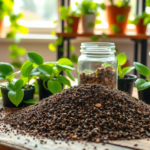
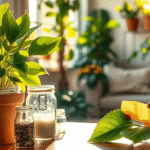
Quick recipe (works in most homes): Use any scoop you have (cup, mug, yogurt container). “Parts” are volume.
- 2 parts quality houseplant potting mix
- 1 part perlite or pumice
- 1 part orchid bark or medium-grade LECA
- Optional: 10–15% worm castings (only if your base mix is not already rich)
Extension guidance is consistent: use a well-drained potting mix and let the soil dry between waterings so roots don’t stay constantly damp. SDSU Extension Wisconsin Extension
If your pothos keeps throwing yellow leaves, smelling “swampy,” or attracting fungus gnats, the cause is usually boring: the pot stays wet too long. This guide helps you build a mix that drains, stays airy, and still holds enough moisture to grow steady vines in a normal home.
1) What pothos roots actually need (and what they hate)
Pothos is forgiving, but roots still need two things at the same time: air and even moisture. Most indoor “pothos problems” happen when one of those disappears.
- Air pockets: Roots need oxygen. When a mix compacts, roots struggle and rot organisms take over.
- Thorough watering, then drying: Guidance from multiple extensions is the same: water well, then let the medium dry out between waterings. Constant damp soil promotes rotting roots. SDSU Extension Penn State Extension
- Structure that lasts: A good pothos mix stays springy and “chunky” for months instead of collapsing into sludge.
60-second soil audit (before you blame pests or fertilizer):
- Water the pot until it runs out the drainage hole.
- Set a timer. You should see drainage within seconds, not minutes.
- Lift the pot: it should feel heavy. Check again in 2–4 days. If it’s still heavy and cold/wet, your mix is holding too much water for your light and temperature.
RHS also advises letting the top 2cm (about 1 inch) of compost dry out between waterings. RHS
2) Choose your mix in 30 seconds (environment + pot type)
There isn’t one “best” soil for every house. Your light, temperature, humidity, pot material, and watering habits decide how chunky the mix should be.
| Your situation | What to change | Why |
|---|---|---|
| Low light, cool room, high humidity, or you tend to overwater | Increase chunky aeration (more bark/LECA + perlite/pumice) | Soil dries slower; more air protects roots from staying oxygen-starved |
| Bright indirect light, warm room, terracotta pot, or you forget watering | Keep the base mix higher (slightly less bark/LECA) or add a small coir/peat component | These conditions dry pots faster; you want a little moisture buffer |
| Self-watering pot or a decorative cachepot setup | Go chunkier than normal and don’t keep the reservoir constantly full | These systems stay wetter; oxygen becomes the limiting factor |
| You often buy “moisture control” potting soil | Avoid using it straight; cut it with perlite + bark/LECA | Moisture-control mixes can stay wet too long indoors, especially in low light |
RHS cautions against overpotting because compost can remain wet for too long, increasing root rot risk. RHS epipremnum growing guide
3) The best soil mix for pothos (exact ratios you can copy)
Option A (most homes): “Chunky houseplant mix”
- 2 parts houseplant potting mix
- 1 part perlite (or pumice)
- 1 part orchid bark (or medium-grade LECA)
- Optional: 10–15% worm castings
Option B (stays wet too long): “Extra drainage”
- 1.5 parts potting mix
- 1 part perlite/pumice
- 1 part bark/LECA
- 0.5 part extra bark or coir chips
Option C (dries too fast): “Moisture-buffered”
- 2 parts potting mix
- 1 part perlite/pumice
- 0.5 part bark/LECA
- 0.5 part coir or a coir/peat-based mix
A UK-friendly reference mix from RHS
RHS suggests an “open, moisture-retentive but well-drained and slightly acidic compost” and gives a practical blend: three parts ericaceous (acidic) peat-free compost, one part grit, one part medium orchid bark. If you don’t keep ericaceous compost, swap in a quality houseplant mix and keep the “grit + bark” idea. RHS epipremnum growing guide
Mixing method (clean, consistent, less mess)
- Pre-moisten your base mix until it’s evenly damp (not wet). Dry peat/coir can repel water later if you pot it bone-dry.
- Add perlite/pumice, then bark/LECA, and mix until the chunky bits are evenly distributed.
- Squeeze test: It should clump lightly, then crumble when tapped. If it stays like a wet sponge, you need more chunk.
If your mix becomes hard to re-wet (hydrophobic), Clemson recommends watering thoroughly and evenly rather than “sipping,” and some growers use a brief soak to rehydrate the medium. Clemson HGIC: Indoor Plants – Watering
4) Ingredient guide: what each component actually does
| Ingredient | Why it helps pothos | Notes so you don’t buy the wrong thing |
|---|---|---|
| Houseplant potting mix (soilless) | Base structure, moisture holding, and root contact | Use potting mix (soilless), not outdoor garden soil (compacts and drains poorly in pots). WSU Extension |
| Perlite / pumice | Air pockets, drainage, less compaction | Pumice is heavier and doesn’t float; rinse dusty perlite if it irritates you. |
| Orchid bark / LECA | Chunky airflow that keeps roots oxygenated | Choose medium pieces, not bark dust. Rinse LECA to remove grit. |
| Coir or peat component (optional) | Moisture buffer in hot, bright, dry conditions | Use small amounts if your pots dry extremely fast; too much can slow drying in low light. |
| Worm castings (optional) | Gentle nutrient support | Keep it modest; overly rich, constantly moist surfaces can encourage gnats. |
Simple rule: If your bagged mix looks very fine (mostly peat/coir with few chunky bits), plan to add roughly 25–40% aeration by volume (a blend of perlite + bark/LECA).
What I would skip (unless you have a specific reason)
- Outdoor topsoil: heavy, compacting, and often brings pests indoors.
- Large amounts of sand: can increase density and reduce air space in many container mixes.
- “Compost-only” blends: often stay wet too long in typical indoor light.
5) Drainage rules (and the rock-at-the-bottom myth)
Rule #1: Drainage holes are not optional
Even a perfect recipe can’t save a pot with no way to drain. Pothos does best in well-drained potting soil and should dry between waterings. SDSU Extension
Rule #2: Don’t add rocks/gravel at the bottom “for drainage”
This tip survives because it sounds logical. WSU Extension explains the problem: water does not readily move from a fine-textured medium into a coarse layer until the fine layer is saturated. The result is a wetter zone above the rocks (exactly what you were trying to avoid). WSU Extension (Chalker-Scott) PDF
Rule #3: Use a screen, not a stone layer
If soil washes out, cover the drainage hole with a small mesh square or a coffee filter. You keep full root space and you avoid creating a tricky wet layer.
Rule #4: Water to runoff, then empty the saucer
When you water, water thoroughly until excess runs out. Clemson notes this helps wash out excess salts and ensures the whole root zone gets moisture, but the pot should not sit in drainage water. Clemson HGIC
6) Soil pH + nutrients (what matters, what doesn’t)
For pothos, structure beats “perfect pH”. If the roots have oxygen and the mix dries between waterings, pothos is usually happy. RHS describes epipremnum compost as slightly acidic. RHS epipremnum growing guide
If you like a target: Clemson’s general indoor “plant mix” is adjusted to around pH 6.0 for foliage plants, which is a practical “slightly acidic” reference point. Clemson HGIC: Indoor Plants – Soil Mixes
Feeding: simple, safe, and realistic
- During active growth: RHS suggests feeding about once a month in the growing season (April to October) with a general houseplant fertilizer. RHS epipremnum growing guide
- Avoid salt buildup: Proper thorough watering helps leach salts. Penn State also notes it may be necessary to periodically flush the soil to leach soluble salts from fertilizer over time. Penn State Extension
- Don’t vary water volume: Oklahoma State notes thorough watering helps keep excess fertilizer salts leached out of the medium. Oklahoma State Extension
When “leaf tip burn” is actually a soil issue
If you see white crust on the soil surface or pot rim plus crispy tips, salts may be concentrating as water evaporates. Flushing (watering to runoff, letting it drain, then watering again after a few minutes) is a common extension-backed approach. Clemson HGIC
7) Store-bought mixes (and how to upgrade them fast)
You don’t need a “pothos-only” bag. You need a good-quality soilless mix that drains well, then you tune it for your home. Penn State Extension
What to look for in a bag
- A mix labeled indoor/houseplants (usually lighter and cleaner than outdoor garden mixes).
- Visible aeration (perlite, bark, coarse fibers). If it looks like fine cocoa powder, expect compaction.
- If you’re in the UK/EU, peat-free mixes are widely available and RHS-aligned.
Fast upgrade formula (works with most bags)
For every 3 liters (or quarts) of potting mix: add 1 liter perlite and 1 liter orchid bark (or LECA). Mix thoroughly.
If you want a “classic” houseplant substrate ratio
Oklahoma State gives a general example mix that suits many houseplants: about 50% peat, 35% bark, and 15% perlite (as a reference for what “airy but moisture-holding” looks like). Oklahoma State Extension (PDF)
8) Troubleshooting: what the soil is telling you
| Symptom | Soil clue | What usually fixes it |
|---|---|---|
| Yellow leaves + soil stays wet for days | Mix too dense, pot too large, or drainage is poor | Pause watering, check roots, repot into a chunkier mix; avoid overpotting. SDSU Extension RHS |
| Fungus gnats | Top layer stays consistently moist | Let the surface dry, improve aeration, use yellow sticky traps for adults. UC IPM |
| Soil dries in 24–48 hours | Very airy mix, hot/bright spot, terracotta, or rootbound | Check if rootbound; repot one size up; slightly increase the base mix or add a small coir/peat component. |
| Slow growth, small leaves | Often low light or exhausted medium | Move to brighter indirect light and refresh medium; pot in well-aerated mix and water only when the surface is dry. Wisconsin Extension |
Root rot warning signs (and what to do quickly)
- Warning signs: sour smell, black/mushy roots, stems that feel soft near the soil line, and soil that never seems to lighten up.
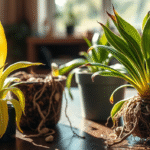
- Fast response: remove the plant, trim mushy roots, and repot into fresh airy mix in a pot with a drainage hole.
Clemson’s pothos care guide also emphasizes potting in an airy, well-draining soil mix and repotting when roots are visible through drainage holes. Clemson HGIC
9) Repotting + long-term soil maintenance
Repot pothos when roots circle the pot, appear through drainage holes, or the medium breaks down and stays wet too long. Fresh medium restores structure and makes watering predictable again.
Repotting checklist (avoids the common mistakes)
- Go only one size up: RHS warns against overpotting because the compost can remain wet too long, risking root rot. RHS
- Use a quality soilless mix: Penn State recommends good-quality soilless potting mixes for potted plants. Penn State Extension
- Don’t reuse broken-down fines: You can keep a few clean chunky pieces, but discard the compacted sludge.
- After repotting: water once to settle, then wait until the surface dries before watering again.
Long-term maintenance (simple habits that keep soil “open”)
- Every few months, gently loosen the top layer to reduce surface crusting (be careful around roots).
- When you water, water thoroughly to runoff and empty the saucer to prevent “wet feet.” Clemson HGIC
- If the mix shrinks from the pot edge and water runs straight down the sides, pre-wet by bottom-soaking briefly or watering twice. Clemson HGIC
10) Pet & skin safety
Pothos (Epipremnum aureum) is toxic to cats and dogs if chewed/ingested and can irritate mouths due to insoluble calcium oxalates. ASPCA
RHS also advises wearing gloves when handling or pruning epipremnum because it’s toxic and can irritate skin. RHS epipremnum growing guide
FAQs
1) What kind of soil does pothos like?
Pothos likes a well-draining, airy potting mix that can dry slightly between waterings. Extensions commonly recommend a well-aerated medium and letting it dry out a bit rather than keeping it constantly damp. SDSU Extension Wisconsin Extension
2) Can I use regular potting soil for pothos?
Yes, but it usually performs better when amended. Straight potting soil can compact and stay wet too long indoors. Add perlite/pumice and bark/LECA to keep it breathable.
3) Do pothos like wet or dry soil?
Neither extreme. Water thoroughly, then let the surface dry before watering again. Continuous damp soil can promote rotting roots. SDSU Extension
4) Do I need rocks at the bottom of the pot for drainage?
No. It’s a persistent myth. WSU Extension explains that drainage layers can hinder water movement and keep the soil above wetter than expected. Use drainage holes and a chunky mix instead. WSU Extension (PDF)
5) Is cactus/succulent soil good for pothos?
It can work if you’re a heavy waterer or your home is humid, but many cactus mixes dry too fast for pothos in average indoor conditions. If you use cactus mix, blend it with a regular houseplant mix so moisture stays more even.
6) How do I get rid of fungus gnats without harsh chemicals?
Start with moisture control: fungus gnats thrive in moist conditions. Let the surface dry between waterings, improve aeration, and use sticky traps for adults. UC IPM
Sources
- South Dakota State University Extension – Pothos (Devil’s Ivy, Golden Pothos): House Plant How-To
- Penn State Extension – Pothos as a Houseplant
- Penn State Extension – Repotting Houseplants
- Penn State Extension – Caring for Houseplants (soluble salts leaching)
- University of Wisconsin–Madison Division of Extension – Pothos
- RHS – How to grow epipremnum (devil’s ivy)
- RHS – Epipremnum (general care: let top layer dry)
- Washington State University Extension – The Myth of Drainage Material in Container Plantings (PDF)
- Clemson HGIC – Indoor Plants: Watering
- Clemson HGIC – Indoor Plants: Soil Mixes (pH reference)
- Clemson HGIC – How to Grow Pothos Indoors
- Oklahoma State Extension – Houseplant Care (leaching salts)
- Oklahoma State Extension (PDF) – Houseplant Care (example potting medium ratio)
- UC Statewide IPM Program – Fungus Gnats
- ASPCA – Golden Pothos toxicity (cats & dogs)
- Missouri Botanical Garden – Plant Finder: Epipremnum aureum