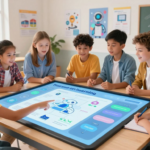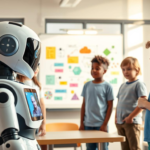
Did you know that by December 2025, 62% of middle school students will use artificial intelligence for schoolwork? This is a big jump from 48% just months before. It shows how technology is changing education fast.
Parents now face a big challenge as technology becomes part of learning. Not all tech use leads to real understanding. A study from Stanford’s HAI Education Lab found that students who used interactive tools learned twice as much. This is compared to those who just got answers from simple platforms.
This difference is key. The tools kids use can either help them learn deeply or lead to shortcuts that harm their education. Knowing the difference helps parents make sure their kids are really learning, not just looking for quick answers.
We will share useful tips for parents in this complex world. It’s important to know what to look for. This way, kids can use technology to their advantage, not get caught in its traps.
What Does Helpful AI Homework Support Look Like?
Effective AI homework support helps students think deeply and critically. It doesn’t just give answers. Instead, it guides them to discover things on their own. HeyOtto’s Homework Helper is a great example, using a Socratic method.
This method makes students explore questions and break down problems. It helps them develop their reasoning skills.
Helpful AI tools don’t just give answers. They ask students to share their thoughts first. For example, if a student is stuck on a math problem, the AI might say, “What do you think the first step should be?” This way, students learn to think critically and understand their mistakes.
Studies from Stanford HAI show that guided AI can lead to twice the learning outcomes as traditional methods. This is because of retrieval practice. When students solve problems on their own, they remember better and build important skills. AI that does the work for them doesn’t help as much.
To see the difference, look at this table:
| Feature | Helpful AI Support | Less Effective AI Support |
|---|---|---|
| Method | Socratic questioning | Direct answers |
| Focus | Process and reasoning | Final answers |
| Learning Outcome | Enhanced understanding | Surface-level knowledge |
| Engagement | Active participation | Passive reception |
In short, good AI homework support is like a patient tutor. It focuses on the learning process, not just getting answers. By picking AI tools that encourage exploration and reasoning, parents can really improve their child’s learning.
What Does Copy-Paste AI Homework Look Like?

When kids use AI to do their homework, it can hide how much they really get. This homework often doesn’t let them connect with the learning in a real way. Parents should watch for two main signs that show a child might be using AI for their homework.
Asking AI to Write the Entire Assignment
When a child asks an AI to do their whole assignment, they miss out on learning. For example, if they ask for an analysis of “To Kill a Mockingbird” and get three paragraphs, they might just copy it. This is AI cheating in homework, showing no effort or understanding from the student.
GPTZero shows AI content often lacks critical thinking. It can be done in seconds, making it easy to submit without really learning. This is a big worry for parents: how can they make sure their kids are really learning?
Submitting Answers the Child Cannot Explain
Another sign of AI homework is when a child can’t explain their answers. If a parent asks about the main points or examples, and the child can’t answer, it means the AI did the work. This is a big problem and shows the need for parents to talk about homework.
As one expert said, “It’s not just about finishing the homework. It’s about understanding it too.” By making kids talk about their homework, they can learn more and think better.
How Parents Can Tell the Difference

Parents often wonder how to tell if their child really understands homework. Talking openly about homework is a good way to check. It lets parents see if their child really gets the material.
Asking Your Child to Explain the Answer
Begin by asking questions like, “What is the main argument here?” or “Why did you choose this example?”. These questions help kids share their thinking. A child who really gets it can explain their answers, even if it takes a bit.
Understanding can show up in different ways. If a child can talk about the tough parts of the homework, it means they’re really involved. This approach creates a supportive space where learning is key, not just doing homework.
Looking at the Learning Process Not Only the Final Homework
Parents should also look at the whole learning journey, not just the end result. Tools like Google Docs can show how a child’s work has changed over time. Looking at planning notes, drafts, and research can show real effort.
Comparing recent homework to past work can highlight big changes. If a child’s homework suddenly gets much better, it’s worth looking into. Using tools like GPTZero’s Writing Replay can also help track the writing process.
These methods are about supporting a child’s learning, not just checking their work. By encouraging curiosity and teamwork, parents can help their kids grow their skills.
Real Examples of Good AI Use and Bad AI Use

It’s important for parents to know how AI can help with homework. It’s not just about getting answers. It’s about how those answers are found.
Writing Assignment Example: Brainstorming Versus Full Essay Generation
Using AI to brainstorm ideas can boost creativity and critical thinking. For example, a student might ask HeyOtto to help outline their thoughts. This can lead to a structured approach, helping them think deeply about their subject.
They might get a list of points, an outline, and clarify their ideas. This builds essential writing skills.
But if a child asks HeyOtto to write a full essay, they miss out. The AI might produce a polished piece, but it’s not their work. This method skips the learning process, leaving them unprepared for future assignments.
As one expert said,
“The real value of education lies in the journey, not just the destination.”
Math Homework Example: Learning Steps Versus Copying Solutions
In math, the approach matters a lot. Using AI like HeyOtto, a child can learn the steps to solve a problem. The AI explains concepts in a way kids can understand and guides them through the process.
It checks for understanding and corrects any mistakes. This helps the child grasp the underlying concepts.
But if a child asks ChatGPT for the solution to a math problem, they might get the answer without understanding it. This doesn’t help them learn the concepts. The difference is clear: good AI use enhances understanding, while bad AI use can lead to gaps in knowledge.
What Kids Should Do Before Using AI for Homework
Before using AI for homework, kids should try to solve problems on their own. This helps build confidence and understanding. Parents can encourage them to wrestle with the problem, write a draft, or try the math steps first.
It’s important to remember that AI should be a tutor, not a ghostwriter. Kids can use AI to explain concepts, help understand problems, or check their work. But they should not let AI do their homework for them. This way, they learn to use AI responsibly and keep their own voice in their work.
Many teachers worry about AI’s growing use in schools. The National Literacy Trust says over 40% of teachers are concerned. They think students should learn to use AI critically. A department head said,
“We notice your voice and we want to cultivate it, and when you don’t write in your own voice, we care enough to notice.”
AI should help deepen understanding, not avoid hard work. Kids should see AI as a tool to grasp tough concepts. When they face hard material, AI can help clear up doubts, not just skip over them.
Parents can set rules for AI use at home. They should teach kids to tell their school if they use AI. Also, kids should explain every sentence they submit. This shows they’re actively learning and not just submitting work without understanding.
Teaching kids to use AI responsibly is a chance for parents to teach good habits. By guiding them to approach homework thoughtfully, parents prepare them for future challenges.
Common AI Homework Mistakes Parents Should Watch For

Parents need to watch for signs of unhealthy AI study habits. Many students use AI for homework, but not all ways are good. Knowing these mistakes helps parents guide their kids to better learning.
Letting AI Become the First Step Every Time
One big mistake is letting AI be the first thing students turn to for homework. This means they don’t get to really work on the assignment. They might not even understand what’s hard for them.
For example, a child might not even read the homework before asking AI for help. This habit stops them from learning to think critically. Instead, they rely too much on AI.
Focusing Only on Finishing Homework Faster
Another mistake is focusing too much on finishing homework fast. Students often use AI to get answers quickly. But this way, they don’t really understand the material.
They might think they’re being efficient, but they’re not learning as much. They might not even know what they’re submitting. This is because AI is so easy to use, they forget the value of their own effort.
To show the difference, here’s a table comparing good AI use with common mistakes:
| Aspect | Productive AI Use | Common Mistakes |
|---|---|---|
| Approach to Homework | Read and understand the assignment first | Use AI immediately without reading |
| Learning Focus | Emphasizes understanding concepts | Prioritizes finishing quickly |
| Engagement Level | Active engagement with material | Passive reliance on AI for answers |
By spotting these patterns early, parents can help their kids develop better AI study habits. It’s important to balance AI use with independent learning for effective education.
When Should Kids Stop Using AI for Homework?

Knowing when to stop using AI for homework is key for kids’ learning. As AI tools get more common in school, parents must watch how much kids use them. The aim is to help AI, not replace it.
Stanford’s AI Index report shows over 80% of U.S. high school and college students use AI for homework. Yet, only half of middle and high schools have rules about AI. This makes parents’ role even more important.
Here are signs it’s time to limit AI use:
- If a child can’t explain their work, they might be relying too much on AI.
- Without independent effort before using AI, it shows a lack of engagement.
- When a child’s writing sounds like AI, it means AI is doing too much.
- Using AI for every problem can hurt critical thinking and problem-solving.
AI is here to stay, and banning it is not the answer. Kids need to know when to stop using AI and think for themselves. This way, parents can help them develop skills that last a lifetime.
5 Advices for parents
To help your child learn well, you need to be involved in their homework use of AI. Here are five tips to help you:
- Be Curious About the Learning Process: Don’t just look at the final work. Ask your child about their planning, drafting, research, and revisions. This helps them understand their learning better.
- Compare Current Work with Past Assignments: Check for big changes in writing style or structure. This can show if AI was used wrong, helping you see how your child’s writing has grown.
- Understand the School’s AI Policy: Schools have different rules about AI use. Knowing these rules helps you guide your child right and make sure they follow school rules.
- Teach Disclosure: Teach your child to be open about using AI. This builds trust and teaches them about honesty in school.
- Approach Concerns Calmly: Talk to your child about your worries, but do it calmly. Accusing them without proof can hurt your relationship. Remember, good writing doesn’t always mean cheating.
Also, many parents, about 84%, want AI tools made just for kids. This shows they’re looking for ways to help learning, not hurt it.
Conclusion
It’s important for parents to know the difference between AI homework help and just copying answers. AI tools can really help in school if used right. They should make learning better, not just easier.
AI homework help helps kids think and solve problems better. But copying answers can hold them back. Parents should help their kids use AI to learn more.
Parents need to talk to their kids about AI. This helps figure out when it’s helpful and when it’s not. Looking at old work can show how much they’ve improved.
The main goal is to make learning fun. Parents should guide their kids through the world of AI homework help. With the right approach, kids can do well in school and beyond.
FAQ
What is the difference between helpful AI homework support and copy-paste answers?
Helpful AI homework support is like having a tutor. It guides students through learning by asking them to explain their answers. This way, students understand complex problems better.On the other hand, copy-paste answers use AI to do all the work. This method doesn’t help students learn and can be dishonest.
How can parents identify if their child is using AI responsibly for homework?
Parents can check if their child can explain their homework. If they can, it shows they’re using AI right. Also, looking at drafts and changes can show how they learned.
What are some examples of good AI use in homework?
Good AI use helps with brainstorming and making outlines. It also helps in math by guiding students through problems step by step. This way, students learn the concepts, not just the answers.
What should kids do before using AI for their homework?
Kids should try to solve problems on their own first. This means they should make an effort to understand the assignment. Then, AI can help with tough parts, not the whole thing.
What are common mistakes parents should watch for regarding AI homework use?
Parents should watch for kids using AI too much. This means relying on it for the first step or focusing on speed over understanding. These habits can hurt critical thinking skills.
When should kids stop using AI for homework?
Kids should stop using AI when they can’t explain their work. Or when there’s no sign of their own effort. It’s also when AI is their go-to for every problem. Setting limits is key for good study habits.
What advice can parents follow to navigate AI use in homework?
Parents should focus on the learning process, not just the results. They should compare current work with past assignments. Understanding school rules on AI is also important.Encourage kids to be honest about AI use. Approach the topic with curiosity, not accusations. This helps create a supportive learning space.