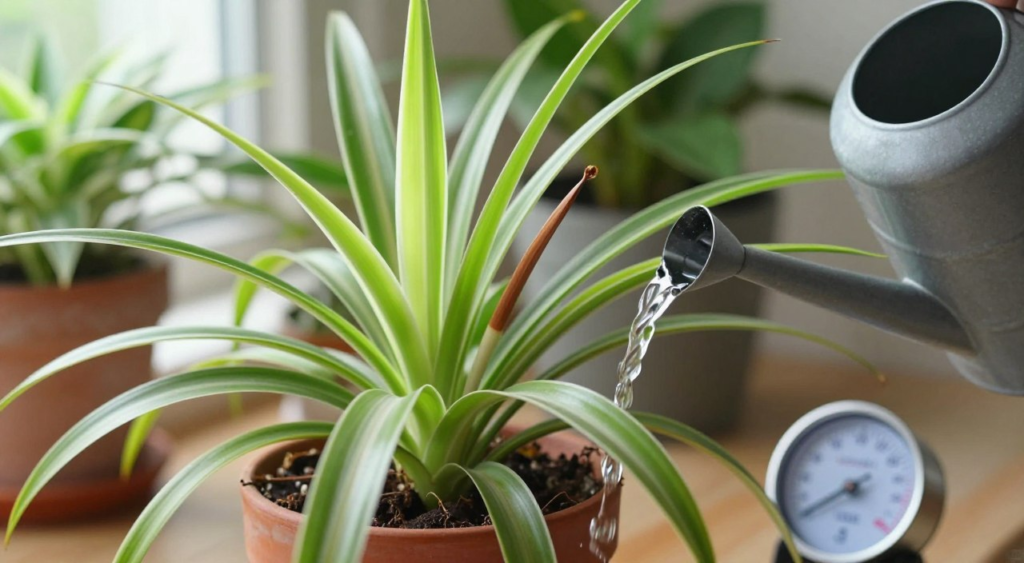
Brown tips on a spider plant (Chlorophytum comosum) are extremely common. The good news: in most homes, it’s a care tweak, not a “your plant is dying” situation. The bad news: trimming alone won’t fix it. The tips brown for a reason (usually water quality, dry air, salt buildup, or inconsistent watering), and if you don’t address the cause, the new growth will start crisping too.
Spider plants are known to be sensitive to chemicals and minerals that can build up from tap water, especially fluoride, which often shows up as browning tips over time. :contentReference[oaicite:0]{index=0}
Quick diagnosis in 60 seconds
- New leaves are green, only old tips are brown: usually water quality, mild low humidity, or normal aging.
- Many tips browning fast + white crust on soil/pot rim: salt/mineral buildup (fertilizer or hard water).
- Leaf tips brown + leaf edges curl and feel dry: underwatering swings or very dry air.
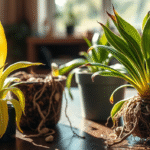
- Brown tips + yellowing + soggy soil: overwatering or poor drainage (check roots).
Why spider plants develop brown tips
There are two big buckets:
- Cosmetic/normal: older leaves slowly age out, and the very ends can dry first.
- Preventable stress: water chemistry (fluoride/chlorine/chloramine), mineral/salt buildup, low humidity, inconsistent watering, or too much fertilizer.
| What you see | Most likely cause | Best first move |
|---|---|---|
| Brown tips on otherwise healthy leaves | Water quality or dry air | Switch water + raise humidity slightly |
| White crust on soil/pot + brown tips | Salt/mineral buildup | Flush the pot thoroughly |
| Brown tips + limp/yellowing + wet soil | Overwatering/root stress | Let soil dry, check drainage |
Water quality: the most common long-term cause
If your spider plant slowly develops brown tips even though you “water correctly,” water chemistry is often the missing piece. Many municipal supplies contain disinfectants and additives that are safe for people but can build up in potting mix over time. Some houseplants (including spider plants) are more sensitive, especially to fluoride. :contentReference[oaicite:1]{index=1}
Best water options (in order)
| Water type | Why it helps | Good to know |
|---|---|---|
| Rainwater | Low minerals, usually no additives | Use a clean container; don’t collect from dirty roofs |
| Distilled / RO water | Very low mineral content | Great for sensitive plants; costs more long-term |
| Filtered tap water | Can reduce some impurities and taste/odor | Effect depends on filter type and your local water |
| Plain tap water | Often fine for many plants | Spider plants can show fluoride-related tip browning over time :contentReference[oaicite:2]{index=2} |
Simple “tap water upgrade” (if you can’t change water yet)
- Flush monthly: take the plant to a sink/shower and run water through the pot for 1–2 minutes so it drains freely. This reduces salt and additive buildup in the soil. :contentReference[oaicite:3]{index=3}
- Don’t fertilize on dry soil: always water first, then feed (or feed very diluted).
- Avoid softened water: water-softeners can add salts that contribute to tip burn.
Humidity: keep it “comfortable,” not tropical
Spider plants handle normal indoor humidity, but very dry air (winter heating, strong AC, drafty windowsills) makes tips dry faster. If your home sits dry most of the year, raising local humidity around the plant can reduce new tip browning.
Low-effort humidity fixes that actually help
- Group plants together: they create a slightly more humid pocket of air.
- Pebble tray: set the pot on pebbles above the waterline so the base isn’t sitting in water.
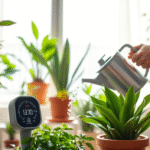
- Humidifier: best option if your home is consistently dry.
Tip: misting is short-lived. It can be useful before photos, but it usually doesn’t change humidity long enough to fix browning by itself.
Watering routine: consistency beats frequency
Brown tips can come from both underwatering and overwatering, but spider plants hate extremes more than they hate a specific schedule.
- Water when the top 2–3 cm (about 1 inch) of soil feels dry.
- Water thoroughly until you see drainage, then empty the saucer.
- If the pot feels “heavy” and stays wet for days, back off and improve drainage/aeration.
If you tend to splash the crown or keep leaves wet, try bottom watering occasionally: place the pot in a shallow tray of water for 10–15 minutes, then let it drain fully.
Fertilizer and salt buildup: the quiet tip-burn trigger
Even a “good” fertilizer can cause brown tips if it builds up as salts in the potting mix. Leaf-tip burn is a common symptom of excess soluble salts, and regular flushing is one of the simplest fixes. :contentReference[oaicite:4]{index=4}
Safer feeding rules for spider plants
- Feed only in spring/summer when growth is active.
- Use half-strength liquid fertilizer every 4–6 weeks (or follow your product label but err on the weak side).
- Flush the pot monthly if you fertilize at all. :contentReference[oaicite:5]{index=5}
Trimming brown tips the right way (so it looks natural)
Trimming won’t heal the leaf, but it improves appearance immediately and helps you judge whether the problem is continuing on new growth.
How to trim
- Use sharp scissors (or pruners) and wipe blades with alcohol first.
- Trim following the leaf’s natural pointed shape (a gentle V), not a straight flat line.
- Leave a hairline of brown if possible. Cutting into healthy tissue can sometimes cause a fresh brown edge.
After trimming, focus on prevention. If your new leaves stay clean, you’ve fixed the cause.
When to repot (and when not to)
If you see roots circling heavily, soil drying out too fast, or the plant needing water every couple of days, repotting can help. Spider plants often tolerate being a bit snug, but they still benefit from fresh mix and better drainage. A practical guideline is to refresh soil and move up slightly when the pot is clearly crowded. :contentReference[oaicite:6]{index=6}
- Pot size: go one size up (not a huge jump).
- Soil: use a light, well-draining houseplant mix; add perlite if your mix stays wet.
- After repotting: hold fertilizer for 3–4 weeks.
What “success” looks like (so you don’t over-correct)
- Old leaves keep their trimmed ends (they won’t re-green).
- New leaves emerge clean, flexible, and bright.
- The rate of new browning slows over 2–4 weeks once water quality and salts are addressed.
FAQ
Will the brown tips turn green again?
No. Trim them for appearance, then fix the cause so new growth stays clean.
Is tap water always bad for spider plants?
Not always, but spider plants can be sensitive to fluoride and other additives that may build up over time. If you see recurring tip browning, switching water or flushing regularly is usually the turning point. :contentReference[oaicite:7]{index=7}
How often should I flush the pot?
If you fertilize or have hard/treated water, monthly flushing is a solid routine to prevent soluble salt buildup. :contentReference[oaicite:8]{index=8}
Should I mist my spider plant?
Misting can temporarily wet leaves but usually doesn’t raise humidity for long. A pebble tray, grouping, or a humidifier is more effective for consistently dry homes.
About the author
Mohammed zandar (yup.work90) writes practical, apartment-friendly houseplant guides focused on simple routines, troubleshooting, and realistic plant care that works in everyday homes.