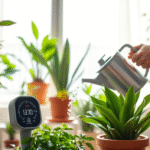
Indoor plants don’t follow the calendar as much as they follow light. When days get longer and brighter, most houseplants grow faster and can use extra nutrients. When light drops (typical autumn/winter windows), growth slows and unused fertilizer can build up as salts in the potting mix. That’s why a “simple monthly guide” works best when it’s built around one question: is your plant actively growing right now?
The calm rule: If you don’t see new growth (new leaves, longer vines, fresh shoots), don’t feed—or feed at a very reduced rate only if the plant is under strong grow lights. Many plant care guides recommend little to no fertiliser in winter for most houseplants because growth is minimal. RHS Clemson HGIC
Quick seasonal schedule (most common houseplants)
This is a safe baseline for pothos, philodendron, monstera, peace lily, spider plant, dracaena, rubber plant, and most “green foliage” houseplants in typical home light.
| Season | What your plant is doing | How often to fertilize | How strong |
|---|---|---|---|
| Spring (Mar–May) | Waking up, new growth starts | Every 4 weeks | Half-strength (or follow label and start low) |
| Summer (Jun–Aug) | Fastest growth for most plants | Every 2–4 weeks | Half-strength for most; full-strength only if your plant is truly thriving and you’re confident |
| Fall (Sep–Nov) | Slowing down as light drops | Every 6–8 weeks, then stop | Quarter- to half-strength |
| Winter (Dec–Feb) | Resting/quiescent in low light | Usually none | If still growing under strong light: quarter-strength every 6–8 weeks |
University and extension guidance commonly emphasizes reducing or skipping fertilizer in winter unless plants are under high light and actively growing. University of Maryland Extension (Maryland Grows) Cornell Cooperative Extension (Delaware County)
Simple monthly guide (use this like a checklist)
This calendar assumes typical Northern Hemisphere indoor conditions (brighter spring/summer, darker autumn/winter). If you use grow lights 10–14 hours/day and your plant keeps pushing new growth in winter, follow the “active growth” months longer.
| Month | What to do | Notes that prevent mistakes |
|---|---|---|
| January | Usually don’t fertilize | If no new growth: skip. If growing under strong lights: quarter-strength once. |
| February | Optional “wake-up” feed late month | Only if you see new growth or you’ve increased light. |
| March | Start spring feeding | Half-strength once this month is enough for most. |
| April | Continue feeding | Watch watering: more light = faster drying. |
| May | Continue feeding | Great month to resume a consistent routine. |
| June | Peak feeding window | Every 2–4 weeks depending on growth. |
| July | Peak feeding window | If tips brown and soil crusts white, ease off and flush salts. |
| August | Start tapering if light drops | If your home stays bright/hot, keep normal feeding. |
| September | Taper | Quarter- to half-strength; longer gaps. |
| October | Last feed for many homes | If plant still growing, one light feed is fine. |
| November | Stop for most plants | Low light + fertilizer is how salt builds up fast. |
| December | Usually don’t fertilize | Exceptions: winter-bloomers and plants under strong lights. |
How to pick a fertilizer without overthinking it
Start with a complete, balanced fertilizer. The three numbers on the label (N-P-K) are the percentage of nitrogen, phosphorus, and potassium. A “balanced” product has similar numbers (for example 10-10-10 or 20-20-20). University of Minnesota Extension
- Foliage plants: Balanced fertilizer is usually fine; prioritize consistency over chasing “perfect” numbers.
- Flowering plants: Many do well with a formulation that supports blooming, but only if the plant is actively producing buds/flowers.
- Micronutrients matter: If your plant lives in the same pot for a long time, a fertilizer that includes micronutrients can help.
How to fertilize (the way that avoids root burn)
- Water first (or fertilize on already-moist soil). Fertilizing bone-dry mix is a common way people burn roots.
- Dilute more than you think you need. “Less is more” is a real indoor-plant rule—small pots concentrate salts quickly. Clemson HGIC
- Apply, then let excess drain. Don’t let pots sit in runoff.
- Flush salts occasionally. If you see a white crust on soil or the pot, that can be fertilizer salts. Excess fertilizer salts can damage roots and cause browning/yellowing and wilting. Iowa State University Extension
If you prefer a simple habit: many gardeners use a “low dose, more often” approach (for example, half the label rate twice as often) to reduce spikes in nutrients. University of Minnesota Extension
Plant type exceptions (so you don’t follow the wrong schedule)
Not every plant wants the same routine. Use these adjustments to stay safe.
| Plant group | What to do differently |
|---|---|
| Succulents & cacti | Feed less often (often once in spring and once in summer, or monthly at very low strength while actively growing). Overfeeding can cause weak, soft growth. |
| Fast tropical growers (many aroids) | If they’re in bright light and growing constantly, they can handle more regular feeding in spring/summer (still start at half-strength). |
| Winter-bloomers (some seasonal indoor plants) | Feed only while they are actively growing/blooming, and stop when they naturally rest. RHS notes some winter houseplants benefit from feeding when in growth. RHS |
| Freshly repotted plants | Wait 3–4 weeks before fertilizing if you used fresh potting mix (many mixes already include fertilizer). |
Signs you should change your fertilizer routine
Plants don’t read schedules. Use these signals to adjust.
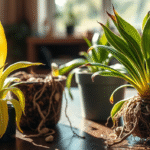
- Possible over-fertilizing: brown tips/edges, leaf drop, limp growth, white crust on soil or pot, plant looks thirsty even when soil is moist (damaged roots). Iowa State University Extension
- Possible under-fertilizing: slow growth during bright months, pale new leaves, smaller leaves than usual (after you’ve confirmed light and watering are good).
- If your plant isn’t growing in winter: that’s often normal; reduce fertilizer before you “fix” something that isn’t broken. Clemson HGIC
FAQ
Should I fertilize indoor plants every month?
In bright spring/summer conditions, many houseplants do well with monthly feeding at reduced strength. In fall/winter, most plants need less or none unless they’re actively growing under high light. Cornell Cooperative Extension RHS
Is it okay to fertilize in winter?
Only if the plant is clearly growing (new leaves) and getting strong light (bright window or grow lights). Otherwise it’s usually safer to pause. University of Maryland Extension (Maryland Grows)
What’s the safest fertilizer strength for beginners?
Half-strength is a safe starting point for many liquid fertilizers; quarter-strength if you’re nervous, the plant is sensitive, or light is moderate. Clemson notes indoor plants often need less fertilizer in low light and during slow growth. Clemson HGIC
What do I do if I think I over-fertilized?
Stop feeding for a while and flush the pot thoroughly (let plenty of water run through and drain). Watch new growth (old damage won’t “heal,” but new leaves should improve). Excess fertilizer salts are a known cause of root damage and leaf symptoms. Iowa State University Extension
About the author
Mohammed zandar (yup.work90) writes practical indoor plant guides focused on repeatable routines—light, watering, soil, and simple seasonal care. His goal is to help new plant owners avoid the two biggest mistakes: overwatering and overcorrecting.