Watering a snake plant in low light can feel weirdly stressful for such a “tough” houseplant. One person says “every two weeks,” another swears by “once a month,” and your plant sits in a dim corner ignoring both.
Here’s the truth: snake plants (Sansevieria / Dracaena trifasciata) are drought-tolerant because their leaves store water. In low light they grow slowly, so they drink slowly. That’s why the safest, most consistent advice is simple: avoid overwatering and let the compost dry out between waterings (especially in winter). Royal Horticultural Society (RHS)
This guide gives you a simple schedule you can actually follow—without guessing or killing roots with “just in case” watering. You’ll learn how to confirm dryness, adjust for seasons, and spot early warning signs before rot starts.
Start Here: The Simple Low-Light Watering Schedule
If you want one routine that works in real homes, use this:
- Set a reminder to CHECK every 14 days (not to water).
- Only water when the pot passes the dryness tests (below).
- When you water, water thoroughly and let excess drain—never leave it standing in water. RHS
Typical low-light range (use as a starting point): many snake plants end up needing water about every 3–6 weeks in low light, with the longest gaps in winter. If you forget for a month, they usually cope better than if you overwater. Penn State Extension (snippet)
| Low-light condition | What to do | Typical watering rhythm (starting point) |
|---|---|---|
| Cool room + low light (winter, north window, hallway) | Wait for deeper dryness | About every 5–8+ weeks |
| Average room + low light (most homes) | Check every 2 weeks, water only when dry | About every 4–6 weeks |
| Warm room + low light (near radiator/heat vent) | Soil may dry unevenly; rotate pot | About every 3–5 weeks |
Important: those ranges are not rules. Your pot size, soil mix, and humidity can stretch or shrink them. The next section is how you confirm “dry enough” with confidence.
What “Low Light” Actually Means for Snake Plants
Snake plants tolerate low light, but “tolerate” isn’t the same as “grow fast.” In low light, water use drops because growth slows. That’s exactly why overwatering is so common in dim rooms.
A practical definition: if you can comfortably read a book there in daytime without turning on a lamp, it’s usually medium light. If you need a lamp to read, it’s typically low light. In low light, assume longer drying times and use soil checks instead of dates.
Understanding Snake Plants and Their Water Requirements
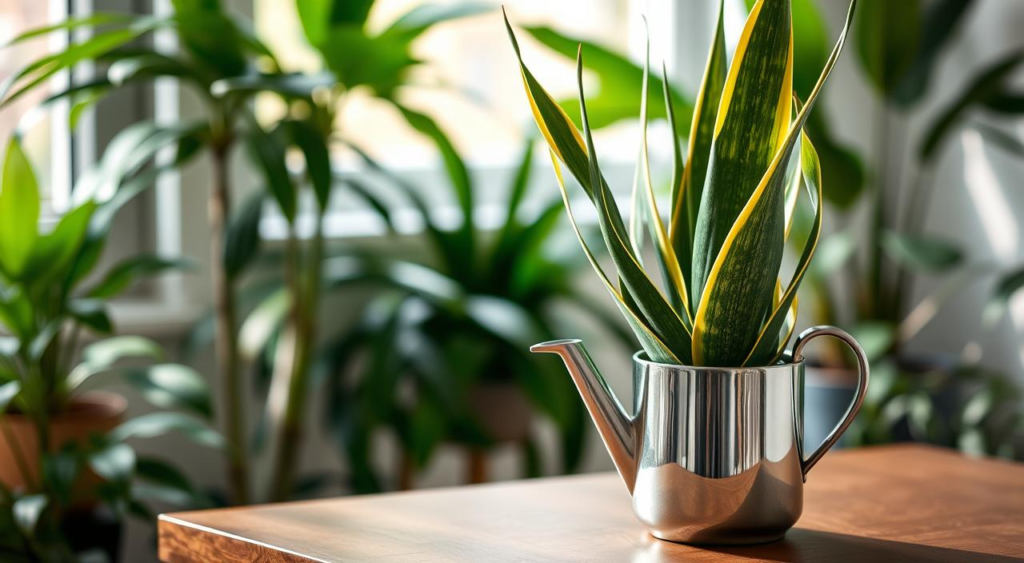
Snake plants are drought-tolerant, with fleshy leaves that store water. They come from hot, dry regions and are built to handle dry spells—so they do best when the potting mix dries between waterings. RHS
Botanic garden guidance is consistent: grow them in a well-draining potting mix, water during the growing season, and reduce watering significantly from fall to late winter. Also, avoid pouring water into the center of the rosette. Missouri Botanical Garden
The 3 Dryness Tests That Prevent Overwatering
Use at least two of these tests before you water. This is the easiest way to stay consistent (and Ads-safe, beginner-friendly advice that reduces plant loss).
1) Finger test (fast)
Push your finger into the soil up to your first knuckle (2–3cm). If it’s cool or damp, wait. If it’s dry and crumbly, move to test #2.
2) Chopstick test (more accurate for deeper soil)
Insert a wooden chopstick or skewer all the way down, leave it for 10 seconds, then pull it out. If it comes out dark/damp with soil stuck to it, the root zone is still moist. If it comes out mostly clean and dry, you’re close.
3) Pot-weight test (best once you learn it)
Lift the pot right after watering (heavy) and again when it’s dry (surprisingly light). Over time you’ll know the difference in two seconds.
Moisture meters: helpful, but don’t treat the number like truth. Use them as a second opinion, and always confirm with soil feel/weight.
How Often to Water Snake Plant in Low Light Conditions
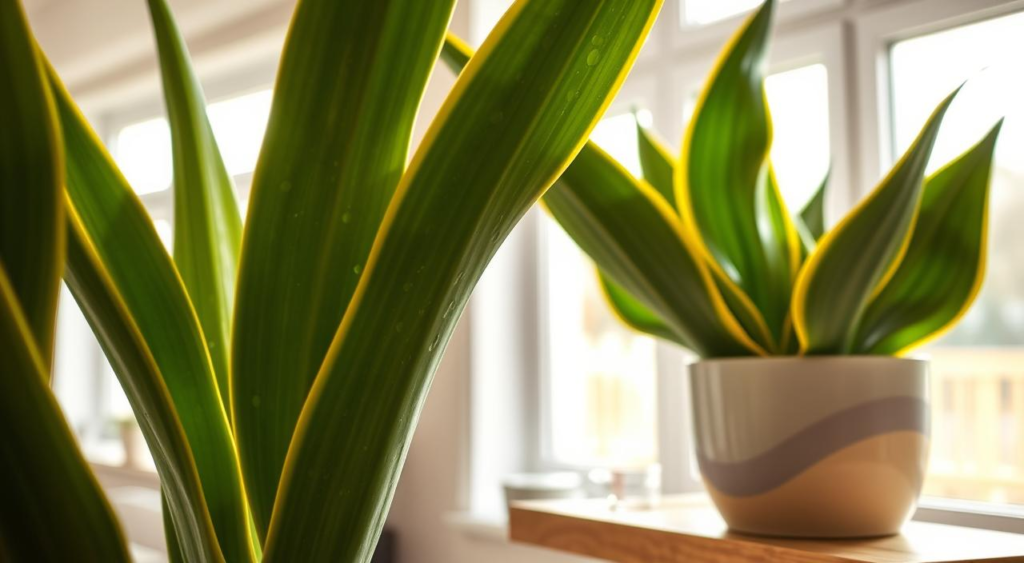
In low light, don’t aim for a strict “every X days.” Aim for: dry potting mix + thorough watering + full drain.
If you want a starting range, begin around every 4–6 weeks for low light, then adjust based on soil tests. Snake plants are commonly damaged by overwatering, so it’s safer to wait than to rush. RHS
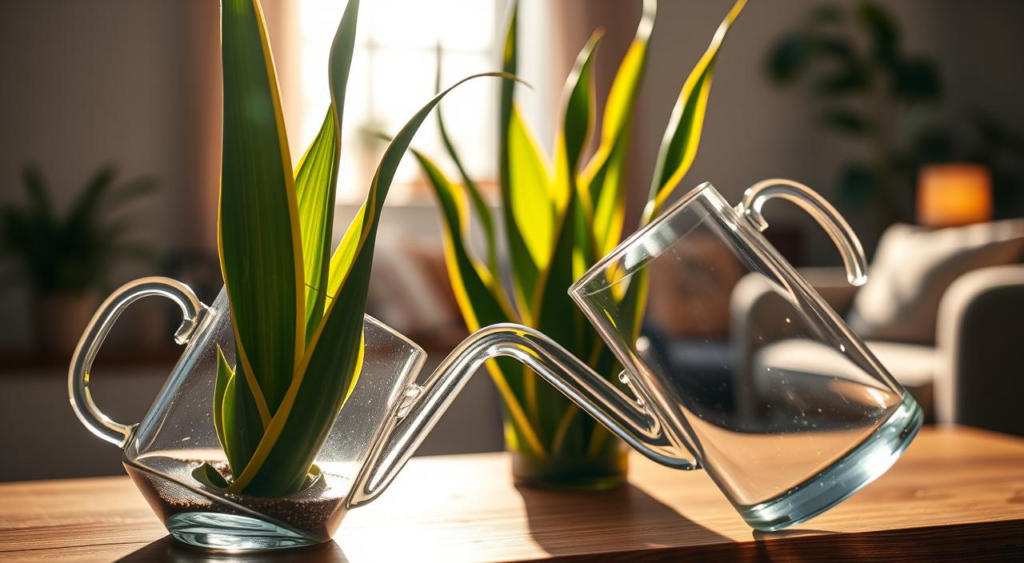
Low light vs bright light (why the schedule changes)
In brighter light, snake plants use water faster and may need more frequent watering. In low light, water sits longer in soil—so the risk flips from “thirst” to “rot.” This is why the same plant can need water every few weeks near a bright window but far less often in a dark corner.
| Light condition | What changes | Watering approach |
|---|---|---|
| Low light | Slow growth, slow drying | Wait longer; confirm deeper dryness |
| Bright indirect light | Faster growth, faster drying | Check more often; still let mix dry |
Seasonal Adjustments (Without Overthinking It)
Season matters because light and indoor temperature change. A good rule: reduce watering from fall to late winter and never “compensate” with extra water for low light. Missouri Botanical Garden
Winter
In winter (short days), your snake plant may only need water every 5–8+ weeks in low light. Always confirm by soil dryness. The RHS specifically warns to let compost dry out between waterings, especially in winter. RHS
Spring and summer
In spring/summer, growth usually increases and drying speeds up. Many low-light snake plants settle into something like every 3–6 weeks, depending on pot and soil. Use the 14-day “check” reminder so you don’t forget, but still only water when dry.
Best Watering Technique (So Roots Don’t Sit in a Swamp)
- Water at the soil line, not into the leaf rosette. Missouri Botanical Garden
- Water thoroughly until it drains from the bottom.
- Empty the saucer/cachepot so the plant never stands in water.
If your container has no drainage hole, treat it as a decorative cachepot: keep the plant in a nursery pot inside, water at the sink, let it drain fully, then return it.
Pot and Soil Choices That Change How Often You Water
This is where “my friend waters monthly and it works” becomes real: pots and soil change drying speed more than people expect.
Terracotta vs plastic
Terracotta breathes and dries faster. Plastic/glazed ceramic holds moisture longer. If your snake plant is already in low light, moisture-holding pots increase the risk of staying wet too long.
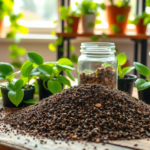
Use a free-draining mix
A cactus/succulent-style mix is usually ideal. The RHS recommends using a free-draining cactus compost and avoiding overwatering. RHS
If your soil stays wet for weeks, amend the mix at repotting time with extra perlite/pumice to improve airflow around roots.
Signs of Overwatering (Most Common Low-Light Problem)
Overwatering is the fastest way to lose a snake plant. Watch for:
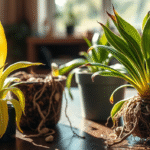
- Yellowing leaves that feel soft or mushy
- Soil that never dries, or a sour/musty smell
- Leaves collapsing at the base
Botanic garden guidance is blunt: overwatering often causes root rot. Missouri Botanical Garden
How to rescue an overwatered snake plant
- Stop watering immediately.
- Slide the plant out and inspect roots: healthy roots are firm; rotting roots are dark and mushy.
- Trim rot with clean scissors, let cuts dry briefly, repot into fresh, dry, free-draining mix.
- Wait a few days before watering again, then return to the dryness-test routine.
Signs Your Snake Plant Needs Water (Less Common in Low Light)
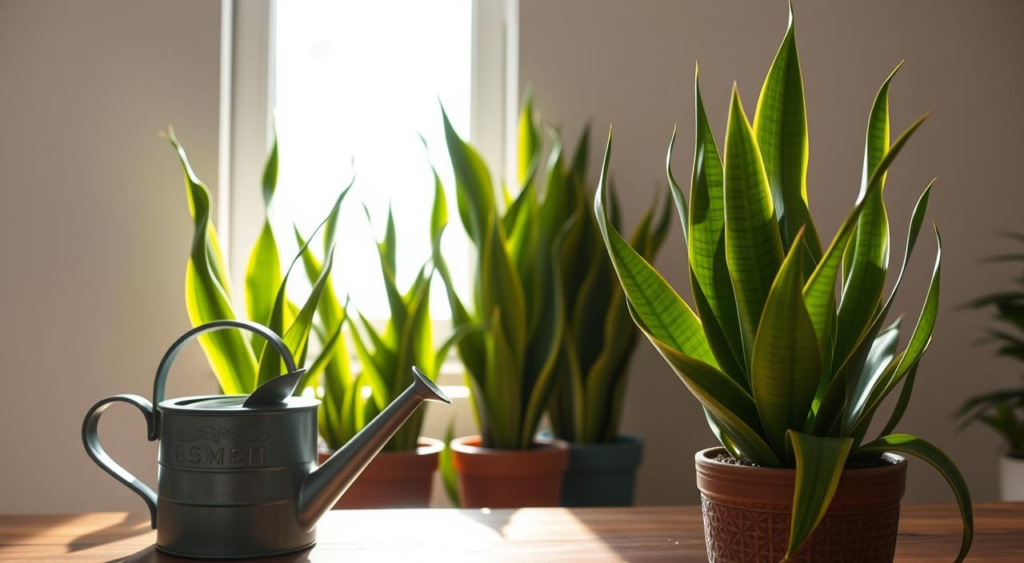
Underwatering is usually slower and easier to fix than overwatering. In low light, you’ll most often see:
- Wrinkling or slight folding along the leaf
- Very dry soil pulling away from the pot edges
- Pot feels extremely light
Fix: water thoroughly once, let it drain, then return to your check-every-14-days routine. Don’t “make up for it” with repeated watering.
Quick Safety Note for Pets
If you have cats or dogs that chew plants, place snake plants out of reach. The ASPCA lists snake plant (Sansevieria trifasciata / mother-in-law’s tongue) as toxic to cats. ASPCA Animal Poison Control (Cats Plant List)
Conclusion
In low light, snake plants aren’t “hard” so much as they’re slow. Slow growth means slow watering. If you want a calm, foolproof routine, remember this:
- Check every 14 days (but don’t automatically water).
- Water only when soil is truly dry using the finger + chopstick/weight tests.
- Use a draining pot + free-draining mix and never leave it sitting in water. RHS
Do that, and your snake plant will stay stable and healthy even in a dim corner—without watering anxiety.
FAQs
1) How often should you water a snake plant in low light?
Most low-light snake plants land around every 3–6 weeks, and often longer in winter. Use it as a starting range, then let the soil tests decide. The RHS recommends letting compost dry out between waterings, especially in winter. RHS
2) How do I know when my snake plant needs water?
Confirm dry soil (finger/chopstick) and a lighter pot. In low light, don’t rely on drooping—snake plants may look “fine” even when soil is still wet.
3) Do snake plants prefer wet or dry soil?
They strongly prefer drying between waterings. Overwatering is the most common cause of decline and can lead to root rot. Missouri Botanical Garden
4) Is tap water okay for snake plants?
In many homes, yes. If you see white mineral crust on soil or repeated brown tips, try filtered water or occasionally flushing the pot with plenty of water (then draining fully) to reduce salt buildup.
5) Should I mist my snake plant?
Usually no. Snake plants tolerate typical home humidity and care far more about not staying wet in the pot than about extra moisture in the air.
About the Author
Mohammed Zandar (yup.work90) writes practical, Ads-safe plant care guides designed for real homes and real schedules. His focus is simple: reduce guesswork, prevent the most common beginner mistakes, and help indoor plants survive long-term with routines people actually follow.