“The garden is a love song, a duet between a human being and Mother Nature.” – Jeff Cox. If you’ve ever stared at a north-facing window and thought, “Nothing will grow here”, you’re not alone. North light is real light—just softer and more consistent—so the right plants can absolutely thrive.
In this guide, you’ll get 14 reliable north-facing window plants (foliage + flowering), plus practical tips to match a plant to your exact window conditions so you avoid slow growth, yellow leaves, and wasted money.
Understanding north-facing windows and their light conditions
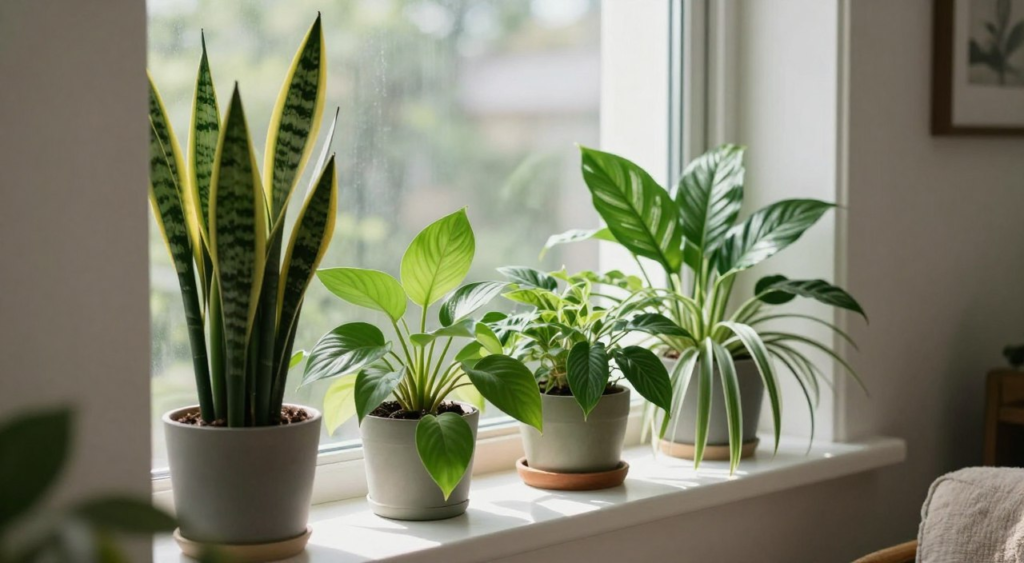
North-facing windows usually deliver indirect, low-intensity light for most of the day (especially in the Northern Hemisphere). It’s gentle and less likely to scorch leaves, but it can be too dim for sun-loving plants. A helpful rule: north windows are typically “low light”, while east/west are often “medium,” and south is often “bright/high” (with plenty of variation). University of Minnesota Extension explains common indoor light levels and window direction.
What “low light” actually means (simple numbers)
Light labels can be confusing, so here’s a practical way to think about it:
- Low light: roughly 50–250 foot-candles (common near many north windows)
- Medium light: roughly 250–1,000 foot-candles (often east/west windows or bright rooms)
- Bright/high light: 1,000+ foot-candles (often near unobstructed south windows)
These ranges are not perfect, but they’re good enough to choose plants confidently. Source: University of Minnesota Extension indoor-light guidance.
Quick check: is your north window “bright north” or “deep shade”?
Not all north windows are equal. Before picking plants, check these factors:
- Distance from glass: light drops fast as you move into the room. A plant 1–2 feet back can receive far less light than one on the sill.
- Obstructions: nearby buildings, trees, balconies, window tinting, and heavy curtains can turn “low light” into “almost no light.”
- Season + latitude: winter weeks can reduce usable light. If a “low-light” plant struggles only in winter, it may need a small grow light boost.
Why some plants struggle in low light
Plants that need bright light often become leggy (long gaps between leaves), lose variegation, or stop flowering. Low light reduces photosynthesis, so growth slows and soil stays wet longer—which increases the risk of root rot if watering habits don’t adjust.
Benefits of growing north-facing window plants
North windows are underrated. When you choose plants that naturally tolerate shade, you get a calmer, lower-maintenance indoor garden that still looks lush.
Aesthetic advantages of low-light plants
Many shade-tolerant plants have broad, deep-green leaves (built to capture more available light). That usually means bold texture, easy styling, and a “tropical” look without needing direct sun.
Air-quality note (what’s true and what’s exaggerated)
Plants are great for well-being and can remove some VOCs in controlled lab settings. The classic NASA research showed certain houseplants could reduce pollutants in sealed chambers. NASA Technical Reports Server: “Interior Landscape Plants for Indoor Air Pollution Abatement”. But real homes aren’t sealed chambers—normal ventilation and air exchange dominate indoor air cleaning. A review analyzing many lab studies concluded you’d need an unrealistic number of plants to match typical building air exchange rates. Cummings & Waring (Journal of Exposure Science & Environmental Epidemiology).
Bottom line: use plants for beauty and comfort, and treat ventilation/filtration as the main tool for air quality.
North-facing window plants that thrive: 14 low-light favorites
Below are 14 dependable choices. Each one includes a simple care snapshot designed for north-facing windows and other low-light rooms.
1) Snake Plant (Sansevieria / Dracaena trifasciata)
A classic low-light survivor that prefers drying out between waterings.
- Best placement: on the sill or 1–3 feet from the window
- Water: let soil dry well; overwatering is the fastest way to lose it
- Bonus: upright shape is perfect for narrow sills
2) ZZ Plant (Zamioculcas zamiifolia)
Glossy, tough, and slow-growing—ideal if your window light is truly dim.
- Best placement: close to the window, but it can tolerate deeper shade than many plants
- Water: sparingly; allow the pot to dry most of the way
- Watch for: yellowing usually means excess water in low light
3) Pothos (Epipremnum aureum)
One of the easiest trailing plants—great for shelves, hanging pots, or training up a small trellis.
- Best placement: bright north sill for faster growth; deeper in the room for slower growth
- Water: when the top 1–2 inches of soil dries
- Tip: variegated types need brighter spots than solid green
4) Chinese Evergreen (Aglaonema)
Beautiful patterned leaves and very tolerant of low light—one of the most “north-window-friendly” options.
- Best placement: 1–6 feet from the window depending on brightness
- Water: moderate; avoid keeping soil constantly wet
- Tip: darker-leaf varieties usually handle lower light better
5) Cast Iron Plant (Aspidistra elatior)
It earned its name—slow, steady, and hard to kill in shade.
- Best placement: north windows that are obstructed or rooms with minimal daylight
- Water: let top soil dry; don’t keep it soggy
- Great for: beginners and busy schedules
6) Spider Plant (Chlorophytum comosum)
Fast-growing in medium light, but still performs well in a bright north window.
- Best placement: on the sill or close to it
- Water: when top inch dries; likes even moisture but hates soggy soil
- Bonus: produces “babies” you can propagate easily
7) Peace Lily (Spathiphyllum)
Classic low-light foliage plus occasional blooms in brighter north windows.
- Best placement: close to the window for better flowering
- Water: when the top soil begins to dry; drooping is a common “I’m thirsty” signal
- Tip: wipe leaves occasionally to help light absorption
8) Boston Fern (Nephrolepis exaltata)
Ferns can do well in north windows if you can keep humidity up.
- Best placement: right by the window; avoid heaters and dry drafts
- Water: keep evenly moist (not waterlogged)
- Humidity: higher humidity = fuller fronds
9) Bird’s Nest Fern (Asplenium nidus)
A fern with a bold, modern shape that tolerates shade better than many frilly ferns.
- Best placement: close to the window for thicker, stronger fronds
- Water: keep lightly moist; avoid pouring water directly into the center “nest”
- Tip: appreciates humidity but is more forgiving than Boston fern
10) Prayer Plant (Maranta leuconeura)
Low-light-friendly with patterned leaves that fold upward at night.
- Best placement: bright north window or slightly back from the glass
- Water: likes consistent moisture; don’t let it fully dry out
- Tip: crispy edges often mean low humidity or inconsistent watering
11) Begonia (shade-tolerant types)
Many begonias prefer bright, indirect light—so a north window can be perfect.
- Best placement: on the sill for strongest color and compact growth
- Water: allow top soil to dry slightly; avoid constantly wet soil
- Tip: if it stretches, it’s asking for more light
12) African Violet (Saintpaulia)
A good bloomer for bright north windows—especially if the window is unobstructed.
- Best placement: very close to a bright north window (or add a small grow light if it won’t bloom)
- Water: keep leaves dry; bottom watering is popular to avoid crown issues
- Tip: consistent warmth and steady light are bloom boosters
13) Christmas Cactus (Schlumbergera)
Thrives in bright, indirect light and can flower well near north windows in many homes.
- Best placement: near the window but out of cold drafts
- Water: more than desert cacti; let soil partially dry
- Bloom note: cooler nights and longer darkness help set buds
14) Moth Orchid (Phalaenopsis)
Many people succeed with Phalaenopsis in bright north windows because it likes indirect light.
- Best placement: right on the sill of a bright north window (or consider east window if flowering is weak)
- Water: soak and drain; don’t leave roots sitting in water
- Tip: no blooms usually = not enough light, not “bad luck”
Essential care tips for north-facing window plants
Low light changes how plants use water and nutrients. The care goal is simple: avoid staying wet for too long while still keeping the plant stable and stress-free.
Watering in low light (the #1 mistake to fix)
Most north-window plants need less frequent watering than the same plant in a bright window. Always check soil before watering: insert your finger about 2–3 cm (1 inch). If it still feels damp, wait.
Fertilizing schedule adjustments
In low light, growth is slower, so fertilizer is used more slowly too. Feed lightly in spring and summer, then reduce or pause in fall/winter unless you’re supplementing with a grow light.
Rotate plants for balanced growth
Rotate pots every 1–2 weeks to prevent leaning and uneven growth. This tiny habit keeps plants fuller and more symmetrical.
When to add a small grow light
If you see persistent legginess, no flowering (for bloomers), or very slow growth in winter, a small LED grow light on a timer can help—especially in rooms with heavy shade from buildings or trees.
Common problems and troubleshooting
Leggy growth
Leggy growth is a light issue first. Prune back long stems, rotate the plant, move it closer to the glass, or add a small grow light.
Yellowing leaves
In north windows, yellowing is often a watering mismatch (soil staying wet too long). Let soil dry more between waterings, confirm the pot drains well, and remove any standing water from saucers.
Pests in low-light corners
Low light can mean slower growth and more time for pests to settle in. Inspect leaf undersides weekly. If you spot issues early, mild treatments (like insecticidal soap) are usually enough.
When to relocate
If a plant declines for months despite careful watering and rotation, treat it as a mismatch. Either move it to brighter light or swap it for a tougher north-window plant (ZZ, snake, cast iron, aglaonema).
Conclusion
North-facing windows aren’t a dead zone—they’re a perfect home for plants built for indirect light. Start with the most forgiving options (ZZ plant, snake plant, aglaonema, cast iron plant). Then add texture and blooms (ferns, peace lily, African violet, Christmas cactus, moth orchid) once you understand your window’s real brightness.
If you keep only one rule in mind: water less often in low light. Most north-window “plant problems” begin with soil staying wet too long.
FAQ
Q: Are north-facing windows always “low light”?
A: Usually, yes—but “bright north” windows exist (unobstructed glass, reflective surfaces nearby, light-colored walls). Use plant behavior (stretching, slow growth) or light ranges as a guide. University of Minnesota Extension has a practical overview.
Q: Which are the easiest starter plants for a north-facing window?
A: Snake plant, ZZ plant, Chinese evergreen, and cast iron plant are the most forgiving if your light is very low.
Q: Can flowering plants really bloom in a north window?
A: Some can—especially in a bright north window close to the glass. If blooms are weak, moving the plant to an east window or adding a small grow light usually fixes it.
Q: Do plants “clean the air” enough to matter?
A: Plants can remove some VOCs in lab settings (NASA research), but a detailed review suggests you’d need far more plants than most homes can realistically hold to match typical building ventilation. Cummings & Waring review.
About the author
Mohammed Zandar (yup.work90) writes practical indoor-gardening guides focused on small spaces, low-maintenance plant care, and simple routines that help beginners grow healthier houseplants with fewer mistakes.