By: Mohammed zandar (yup.work90) • Last updated: March 5, 2026
Propagation is the easiest way to multiply houseplants without buying new ones—but beginners get stuck on one question: should I root cuttings in water, soil, or LECA? There isn’t one “best” method. The best method is the one that matches your plant and the way you actually care for plants (how often you water, how warm your home is, and how much patience you have).
This guide gives you three beginner-friendly playbooks—water, soil, and LECA—plus realistic timelines, what “ready” looks like, and how to avoid the classic problems: rot, slow rooting, and transplant shock.
Quick picker: choose your method in 30 seconds
| If you want… | Choose… | Why it works | Watch out for |
|---|---|---|---|
| To see roots and learn fast | Water | Easy, visual, low setup; many aroids root well in water | Water-roots can be stressed when moved to soil |
| Strong “soil-ready” roots from day one | Soil | Less transition shock; good long-term root structure | Overwatering or compact mixes can rot cuttings |
| Clean, airy rooting with reusable media | LECA | High oxygen around roots; easy to inspect and rinse | Needs nutrients; can dry fast if water level is wrong |
Before you cut: the 5-minute setup that boosts success
- Start with a healthy parent plant. Weak, pesty plants produce weak cuttings.
- Use clean, sharp tools. Clean pruners help prevent infections and crushing the stem. Clemson Extension lists clean pruners as basic cutting materials. Clemson HGIC
- Cut at (or just below) a node. For most vining houseplants, roots form from nodes. Kew’s water-propagation method specifically instructs cutting just below a node. Kew
- Remove leaves that would sit in water or be buried. Leaves left submerged or buried tend to rot. Kew
- Keep humidity high while roots form. Without roots, cuttings lose water fast; enclosing cuttings (loosely) helps. Iowa State notes high humidity is essential and suggests using a bag or dome. Iowa State Extension
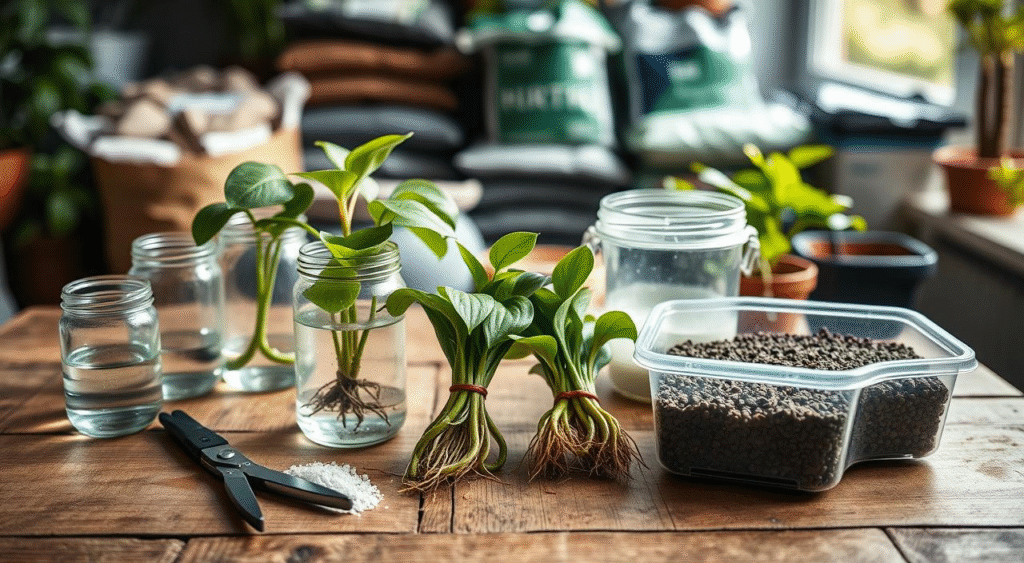
Small but important: Label your cuttings (plant name + date). If you’re comparing methods, labels turn “guessing” into learning.
Method 1: Water propagation (beginner favorite)
Best for: pothos, philodendron, monstera nodes, aglaonema, spider plants—many common houseplants root easily in water. Kew
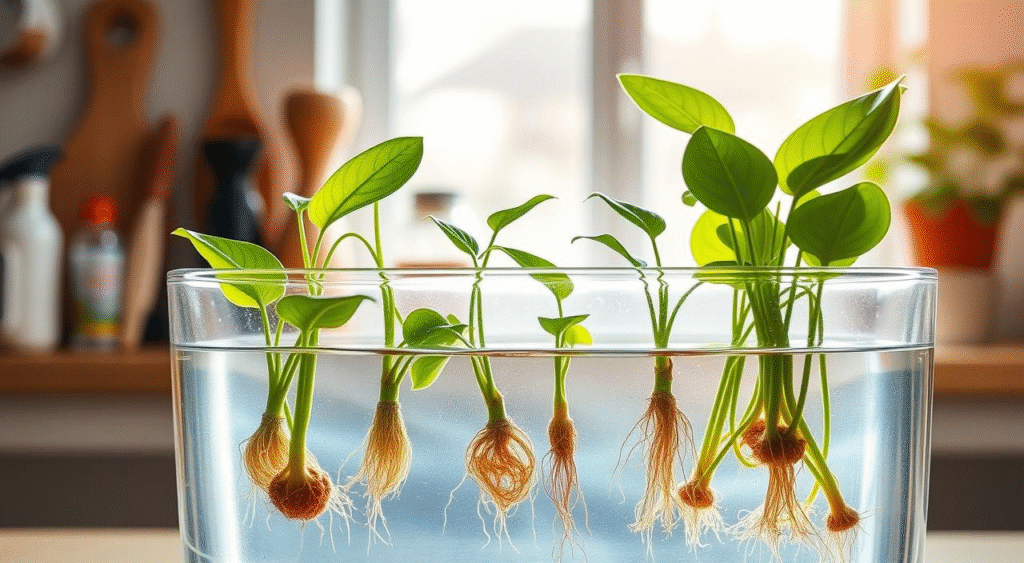
Water method: step-by-step
- Take a cutting just below a node (the bump where a leaf attaches). Kew
- Remove the lowest leaf/leaves so no foliage sits underwater. Kew
- Place the node in a clean jar of water; keep leaves above the waterline.
- Put it in bright, warm light but not direct sun. Kew
- Change water regularly. Kew suggests every couple of days; Iowa State recommends changing water one to two times per week. Kew Iowa State Extension
Water timeline: what to expect
| Time | What you’ll see | What to do |
|---|---|---|
| Days 1–7 | Cut end seals; sometimes tiny white bumps near node | Keep clean water; keep leaves out of water |
| Weeks 2–4 | Roots form; Kew says rooting often takes 3–4 weeks | Don’t rush; keep in bright indirect light Kew |
| Ready to pot | Multiple roots around 2–5cm (Kew) or about 1 inch (Iowa State) | Move to pre-moistened mix; keep evenly moist at first Kew Iowa State Extension |
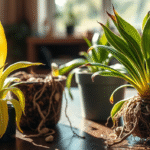
Important reality check: some species root readily in water, but Iowa State notes the roots formed in water can be coarser and not as well adapted to potting soil at first—so mild stress after potting (wilting or leaf drop) can happen. Good, consistent care usually helps them recover. Iowa State Extension
Method 2: Soil propagation (strong roots, less transplant shock)
Best for: cuttings you want to establish fast in a pot, and plants that don’t love sitting wet. Soil propagation is also ideal if you don’t want to “transition” water-roots later.
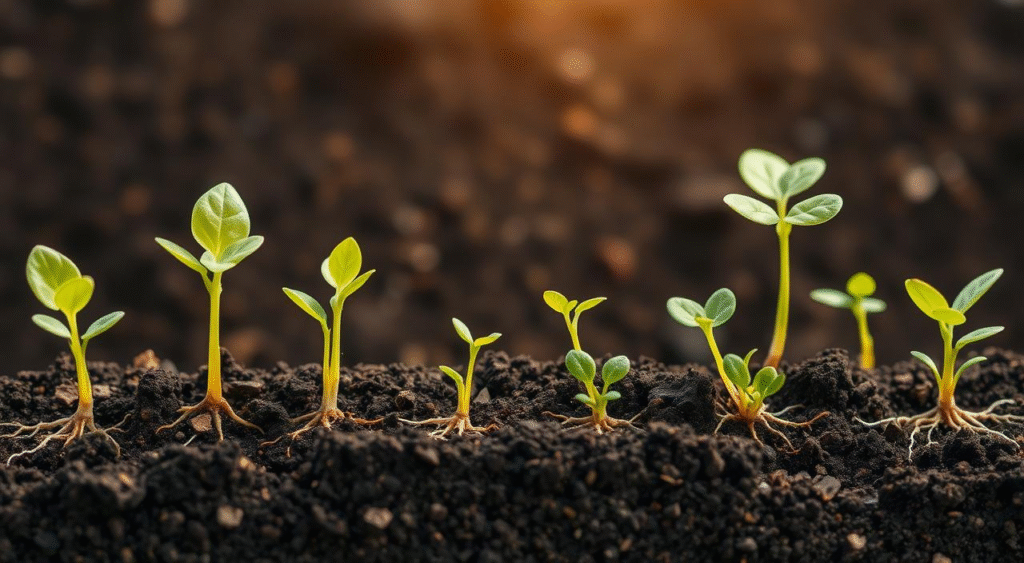
Soil method: the mix beginners should use
Use a light, airy medium (not heavy garden soil). A simple beginner mix:
- 2 parts indoor potting mix
- 1 part perlite
This keeps moisture available while leaving enough oxygen around the cut end (oxygen is what prevents the “soggy = rot” problem).
Soil method: step-by-step
- Take a cutting with at least one healthy node.
- Remove leaves from the lower section that will be inserted.
- Insert the cutting so the node is in the medium. Avoid burying a lot of stem.
- Water to settle, then keep the medium moist but not wet. Clemson Extension calls out moist (not wet) media and maintaining humidity as key. Clemson HGIC
- Cover loosely with a clear bag or dome for humidity (don’t seal airtight). Iowa State notes high humidity is essential and suggests a bag/dome with some air exchange. Iowa State Extension
- Bright indirect light; warm is better than cold for rooting.
Soil timeline: what to expect
| Time | What you’ll see | How to confirm progress |
|---|---|---|
| Weeks 1–2 | Cutting stays firm (or droops then recovers) | Check after 7–14 days by gently tugging for resistance (Clemson) Clemson HGIC |
| Weeks 3–6 | New growth begins; roots expand | Resistance increases; new leaf or shoot is a strong sign |
| Weeks 6–12 | Established cutting | Pot dries a bit faster; plant holds itself upright and pushes growth |
Leaf trimming tip (helps big-leaf cuttings): NC State Extension notes that on large-leafed plants, remaining leaves may be cut in half to reduce moisture loss during rooting. NC State Extension
Method 3: LECA propagation (semi-hydro, clean + airy)
Best for: people who overwater in soil, anyone who wants easy root inspection, and many tropicals that appreciate oxygen around roots. LECA is also useful if you’re fighting fungus gnats in soil setups (because you’re not using organic potting media).
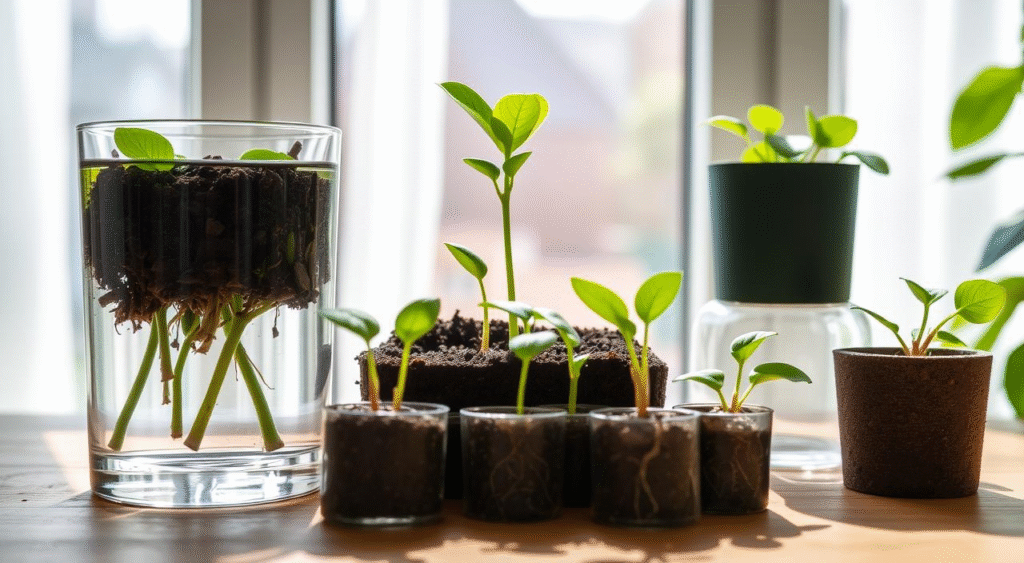
What LECA is (and what it is not)
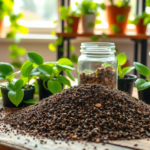
LECA (lightweight expanded clay aggregate) is made by heating clay to create porous pellets. Oklahoma State Extension explains that the pellets’ shape and porosity support a good oxygen/water balance, and that LECA releases almost no nutrients and is roughly pH neutral. Oklahoma State University Extension
Translation: LECA can be great for roots, but it does not “feed” your plant. If you keep a cutting in LECA long-term, you’ll need to provide nutrients in the water.
LECA method: step-by-step (beginner-safe version)
- Rinse LECA thoroughly to remove dust.
- Use a clear cup or net pot inside a cachepot so you can monitor roots and water level.
- Add LECA, place the cutting so at least one node sits among the pellets (not crushed).
- Add water to create a shallow reservoir (aim for the bottom section of the container, not fully submerging the stem). LECA drains and can dry fast, so check levels regularly. Oklahoma State University Extension
- Bright indirect light and warmth speed rooting.
- Once roots are forming well, introduce a very dilute nutrient solution (because LECA contributes almost no nutrients). Oklahoma State University Extension
LECA timeline: what to expect
LECA timelines vary heavily by plant and temperature. In warm, bright conditions, many common cuttings behave similarly to water propagation, but the big difference is oxygen at the root zone.
| Time | What you’ll see | Common mistake to avoid |
|---|---|---|
| Days 1–10 | Cutting stabilizes; node stays firm; tiny root bumps may appear | Water level too high (stem stays constantly wet) |
| Weeks 2–5 | Roots extend through pellets; new growth often starts | Letting the reservoir run dry (LECA can dry quickly) Oklahoma State University Extension |
| Weeks 4–10 | Root system becomes “self-supporting” | Forgetting nutrients if staying in LECA long-term Oklahoma State University Extension |
Method scorecard: which one should you start with?
If you’re truly new, start with water for one fast plant (pothos is perfect), because the feedback loop is immediate. Kew lists devil’s ivy (pothos), spider plant, monstera, and others as good candidates for water propagation. Kew
If you already keep plants alive and want the smoothest long-term result, start with soil (airier mix + humidity cover).
If you’re battling overwatering habits or messy soil, try LECA—but go in knowing it’s a “system” (water level + nutrients), not magic pellets. Oklahoma State University Extension
How to transplant without shock (7-day transition plan)
This is where beginners lose perfectly good propagations—especially from water.
- Pot small. Use a small pot with drainage so the mix doesn’t stay wet for weeks.
- Use airy mix. A light potting mix + perlite is enough for most cuttings.
- Day 1: Pot into pre-moistened mix; water lightly to settle.
- Days 2–7: Keep evenly moist (not soggy). This helps water-roots adapt to soil. Iowa State notes water-rooted cuttings can show stress after potting, so consistent care matters. Iowa State Extension
- After day 7: Start letting the top of the mix dry slightly between waterings (normal routine).
Troubleshooting: rot, slow rooting, and “nothing is happening”
| Problem | Most likely cause | Fix |
|---|---|---|
| Stem turns slimy in water | Leaves submerged, dirty container, water not changed | Recut above the rot, remove submerged leaves, refresh container, change water regularly (Kew; Iowa State) Kew Iowa State Extension |
| Cutting droops in soil | Low humidity or too much leaf area | Add a loose humidity cover; trim large leaves (Iowa State; NC State) Iowa State Extension NC State Extension |
| Soil stays wet, cutting blackens | Mix too dense or pot too large | Switch to airier medium; keep “moist not wet” (Clemson) Clemson HGIC |
| No roots after 6–8 weeks | Too cold, too dark, wrong cutting point (no node), parent plant weak | Move to brighter indirect light, raise warmth, take a new cutting with a clear node (Kew) Kew |
| LECA dries out fast | Reservoir too small or not checked often | Monitor water level; OSU notes expanded clay can drain and dry quickly Oklahoma State University Extension |
Want to level up? Two “next step” propagation methods
If you’re comfortable with cuttings, these are worth learning because they can rescue leggy plants and improve success on harder species.
Air layering (great for tall, leggy houseplants)
Air layering encourages roots on the stem while it’s still attached to the parent plant, which reduces stress. Clemson’s air layering guide highlights using moist sphagnum (damp, not dripping) and keeping the wrap from drying out. Clemson HGIC
Single-node cuttings (efficient for vines)
If you’re short on cutting material, you can propagate many trailing vines one node at a time. NC State Extension describes single node (leaf-bud) cuttings and includes devil’s ivy (pothos) as an example. NC State Extension
FAQs
1) Do I need rooting hormone?
Often, no—many easy houseplants root without it. Rooting hormone can help on slower or woody cuttings, but it can’t compensate for poor conditions (cold, dark, soggy).
2) When should I pot up a water cutting?
A good rule is when you have multiple roots and they’re around 1 inch long (Iowa State) or 2–5cm long (Kew). Iowa State Extension Kew
3) Why did my cutting rot in soil?
Usually because the medium stayed too wet or too compacted. Aim for “moist, but not wet,” and keep humidity high without saturating the pot. Clemson HGIC
4) Can I propagate directly in LECA and keep it there?
Yes, but LECA is a soilless medium that releases almost no nutrients, so long-term growth requires nutrients in the water. Oklahoma State University Extension
About the author
Mohammed zandar (yup.work90) writes practical, research-backed indoor plant guides for real homes. His focus is simple systems that prevent common failures: clean cuts, correct nodes, balanced moisture, and realistic timelines so beginners can propagate with confidence.
Sources
- Royal Botanic Gardens, Kew – How to propagate your houseplants
- Iowa State University Extension – How to Propagate Houseplants by Stem Tip Cuttings
- Clemson University HGIC – Making More: Propagation by Cuttings
- Clemson University HGIC – Air Layering
- NC State Extension – Extension Gardener Handbook: Propagation
- Oklahoma State University Extension – Soilless Growing Mediums (LECA/expanded clay aggregate)