If you’ve ever bought a “low light” plant and still watched it stretch toward a window, you already know the problem: our eyes adjust, but plants don’t. Measuring indoor light (even roughly) removes the guesswork so you can place plants where they actually thrive.
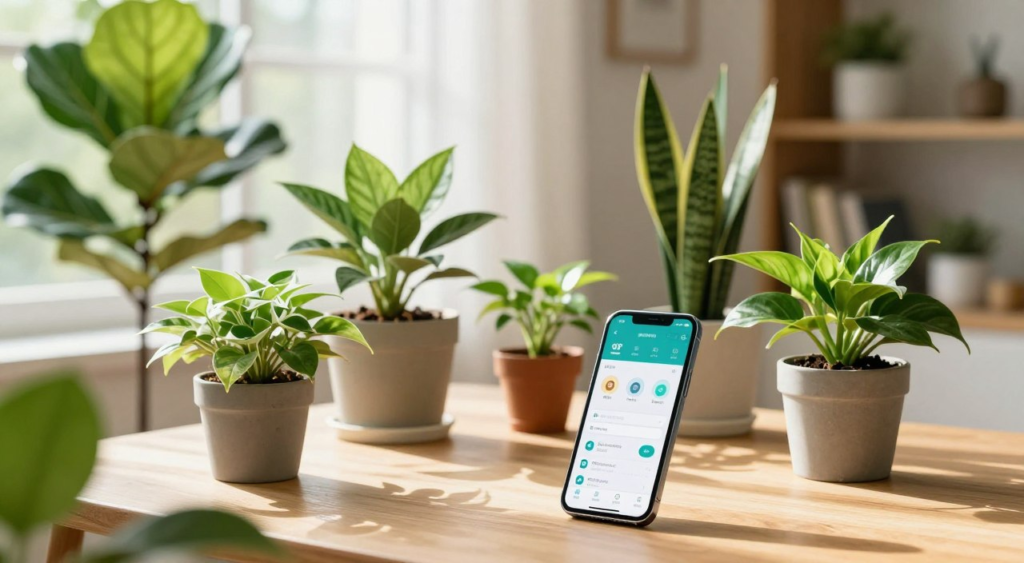
This guide shows you how to measure indoor light for houseplants using your phone, plus a quick calibration routine that makes readings more consistent. You’ll also learn how to interpret results (lux/foot-candles) and turn them into simple actions: move the plant, rotate it, or add a grow light.
Quick calibration in 5 minutes (the “good enough” method)
Phones are not lab meters, but you can make them useful by being consistent and doing a quick sanity-check calibration. Smartphone light sensors are designed for auto-brightness, so accuracy varies by model and app—but they can still be practical for comparing spots in your home when used carefully.
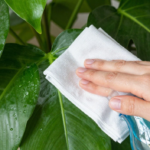
- Clean the sensor area: Wipe the top/front of your phone (where the ambient light sensor usually lives) so dust doesn’t skew readings.
- Disable anything that changes readings: Close camera apps and any “night mode” tools that might be running in the background.
- Pick one unit and stick to it: Use lux if your app supports it (most do). Only convert to foot-candles if you need to match a plant-care chart.
- Do a “window check” baseline: Take a reading right at your brightest window (leaf level, midday if possible), then take a reading in the center of the room. Save both numbers in your notes. You’ll use these as your home’s reference points.
- Optional (recommended): use a diffuser if your app asks for it: Some apps (like Photone) recommend a simple paper diffuser for more accurate readings on certain devices. Follow the app’s instructions if it provides a diffuser guide.
Goal: You’re not trying to get “perfect” lux. You’re building a reliable comparison system for your rooms so you can stop guessing where “bright indirect” actually is.
What your phone measures (and what it doesn’t)
Most phone light meter apps estimate illuminance (lux or foot-candles). That’s light weighted to human vision. Plants care about photons in the PAR range (roughly 400–700 nm), often measured as PPFD. Some advanced apps estimate PPFD, but results depend heavily on calibration, sensor quality, and diffuser use.
| Measurement | What it tells you | Best use at home |
|---|---|---|
| Lux | Brightness (human-weighted) | Comparing plant placement near windows; building a “light map” |
| Foot-candles (fc) | Same idea as lux, different unit | Matching older plant guides that use fc |
| PPFD | Photon intensity for photosynthesis | Dialing in grow lights (best with a dedicated meter, or a carefully calibrated app) |
If you’re using sunlight from windows, lux/foot-candles are usually enough to make better decisions. If you’re optimizing grow lights for shelves or seedlings, PPFD becomes more useful.
Lux ↔ foot-candles conversion (quick and clean)
Some plant charts use foot-candles. Most phone apps show lux. Here’s the only math you need:
- fc = lux ÷ 10.764
- lux = fc × 10.764
Source for the conversion: Foot-candle definition and lux equivalence.
How to measure indoor light with your phone (the repeatable routine)
To make your readings meaningful, measure the same way every time. Here’s the routine I use when placing houseplants:
- Measure at leaf level: Put the phone where the leaves actually sit, not on the floor or the windowsill.
- Match the direction of light: For window light, aim the sensor toward the window (or follow your app’s guidance—some want the sensor facing up).
- Avoid casting a shadow: Step to the side so your body doesn’t block light.
- Take 3 readings per spot: Left side of the pot, center, right side. Average them (or just note the middle value if you’re moving fast).
- Repeat at 2 times of day: Late morning and late afternoon gives you a better picture than a single snapshot.
A simple “light map” you can build in 10 minutes
Create a tiny map of your home once, and plant placement gets much easier. Pick 5–8 common plant spots and record readings.
| Spot | Morning lux | Afternoon lux | Notes |
|---|---|---|---|
| Brightest window (leaf level) | ____ | ____ | Direct sun? Sheer curtain? |
| 1 meter from window | ____ | ____ | Good “bright indirect” test |
| Center of room | ____ | ____ | Often much darker than it looks |
| Shelf (your usual plant shelf) | ____ | ____ | Top vs lower shelf difference |
| Bathroom / hallway | ____ | ____ | Low-light candidates |
Once you have this, you can stop relying on vague labels and start matching plants to actual numbers.
Interpreting results: low, medium, high light (houseplant-friendly ranges)
Different sources define “low/medium/high” slightly differently, but the ranges below work well for most common houseplants when you’re using window light (not intense grow lights). Use them as placement guidelines, then confirm with plant behavior over the next 2–3 weeks.
| Category | Foot-candles (fc) | Approx lux | Plants that usually cope well |
|---|---|---|---|
| Low light | 25–200 | 270–2,150 | Snake plant, ZZ plant, many pothos varieties (slower growth) |
| Medium light | 200–500 | 2,150–5,380 | Peace lily, philodendron, dracaena |
| High light | 500+ | 5,380+ | Most succulents/cacti, many flowering plants (with acclimation) |
Helpful background reading on indoor light terms and typical ranges: University of Maryland Extension: Lighting for indoor plants.
Common mistakes that make phone readings useless
- Measuring only at noon once and calling it done (your plant lives there all day).
- Measuring at the window but placing the plant 2–3 meters back (light drops fast indoors).
- Switching apps mid-process (each app/model combination can read differently).
- Ignoring reflections and curtains (sheers can reduce intensity; white walls can boost bounce light).
- Not acclimating plants (moving from low to high light suddenly can scorch leaves even if the number is “right”).
What to do after you measure (simple fixes that work)
Use your readings to take one clear action per plant:
- If light is too low: move the plant closer to the window, raise it on a stand, or relocate to a brighter room. If that’s not possible, add a small grow light for 10–14 hours/day.
- If light is too high: pull the plant back from the glass, add a sheer curtain, or shift to an east-facing window where sun is gentler.
- If light is uneven: rotate the pot ¼ turn weekly so growth stays balanced.
If you’re supplementing with artificial lighting, it helps to understand PPFD/DLI concepts too (especially for shelves). A clear technical overview is here: Michigan State University Extension: Quantum sensors, PPFD and light measurement.
Recommended light meter apps (what to look for)
I’m not loyal to one app—what matters is consistency. Choose an app that (1) shows lux, (2) lets you save/log readings, and (3) explains how to hold the phone. If an app offers calibration or diffuser instructions, follow them.
- Photone (lux/PPFD features depending on device and setup): iOS | Android
- Any reputable “Lux Meter” app with strong reviews and a clear interface (good for placement mapping).
Why the caution? Sensor quality and accuracy vary across phone models. This is discussed in research on smartphone light sensors and measurement reliability: NIH/PMC review on smartphone light sensors and illuminance measurement.
FAQ
Can I trust my phone’s numbers exactly?
No—treat them as estimates. The real value is comparing one spot to another in your own home with the same device and method.
Should I measure in lux or foot-candles?
Lux is fine (and common in apps). Convert only if the plant guide you’re using is in foot-candles.
Do I need PPFD for houseplants?
Not always. Lux/foot-candles are usually enough for window placement. PPFD becomes more important when you rely heavily on grow lights or want to optimize growth.
Why does my reading change when I tilt the phone?
Angle matters because the sensor receives light differently. Follow one consistent orientation (and follow your app’s instructions). Taking 3 readings and averaging helps.
How often should I re-check light?
At minimum: when seasons change, when you move furniture/curtains, or when you notice plant symptoms (stretching, pale leaves, scorched patches).
About the author
Mohammed Zandar (yup.work90) writes practical, home-tested guides for indoor plant care—focused on simple measurements, low-cost tools, and repeatable routines that help beginners avoid common mistakes.