A snake plant in a dim corner can look fine for weeks, then suddenly show soft yellowing leaves near the base. Because snake plants are known for being tough, the first reaction is often to water more. In low light, that is usually the wrong move. The plant is not always thirsty — often, the soil has stayed wet for too long.
Snake plants (Sansevieria / Dracaena trifasciata) store water in their thick leaves and come from dry, hot regions. In low light they grow slowly, and slow growth means slow water use. The result: soil that stays wet for weeks in a dim room, and roots that quietly rot while the plant above the surface still looks fine. This guide gives you a simple, reliable watering routine for low-light conditions — one that works in real homes without guesswork.
Quick Answer: In low light, a snake plant usually needs water every 4 to 6 weeks, and sometimes even less in winter. Always check the soil first. Water only when the mix is dry all the way to the bottom of the pot, then water thoroughly and let it drain completely.
Best for: Snake plant owners keeping their plant in a dim room, hallway, office, or north-facing spot
Time needed: 2–3 minutes to check, less than 10 minutes to water and drain
Main skills: Testing soil dryness, reading pot weight, preventing overwatering, adjusting for low light
Best method: Check every 14 days, but only water when the soil is dry all the way down
Important: In low light, do not water a snake plant just because the top of the soil looks dry. The lower root zone may still be wet, and watering too early can lead to root rot.
Table of contents
- The simple low-light watering schedule
- What “low light” actually means
- Snake plants and water: the basics
- 3 dryness tests that prevent overwatering
- How often to water in low light
- Seasonal adjustments
- Watering technique
- Pot and soil choices that affect drying time
- Signs of overwatering
- Signs of underwatering
- Safety note for pets
- Final Thoughts on Low-Light Snake Plants
- FAQs
- Sources and further reading
The Simple Low-Light Watering Schedule
If you want one routine that works reliably in a dim room, here it is:
- Set a reminder to check every 14 days — not to water, just to check
- Only water when the soil passes the dryness tests described below
- When you do water, water thoroughly until it drains from the bottom, and never leave the pot sitting in water afterward
As a starting point, most low-light snake plants end up needing water roughly every 3–6 weeks, with the longest gaps in winter. Penn State Extension notes that if you forget to water for a month, a snake plant usually copes far better than if you overwater it. Use the ranges below as a guide, not a rule — your pot size, soil, and room temperature will all shift things.
| Low-light condition | What to do | Typical watering rhythm |
|---|---|---|
| Cool room + low light (north window, hallway, winter) | Wait for deeper dryness before watering | About every 5–8+ weeks |
| Average room + low light (most homes) | Check every 2 weeks, water only when dry | About every 4–6 weeks |
| Warm room + low light (near a radiator or heat vent) | Soil may dry unevenly; rotate the pot occasionally | About every 3–5 weeks |
What “Low Light” Actually Means
Snake plants tolerate low light, but “tolerate” is not the same as “thrive.” In low light, water use drops because growth slows almost to a standstill — and that’s exactly why overwatering becomes so easy to do without realising it.
A practical definition: if you can comfortably read a book in that spot during the day without turning a lamp on, it’s usually medium light. If you’d need a lamp to read, it’s typically low light. In low-light conditions, always rely on soil checks rather than a date on a calendar — the same plant in a dim corner may need watering half as often as it would near a bright window.
Snake Plants and Water: The Basics
Snake plants are drought-tolerant by design. Their thick, fleshy leaves store water, and their origins in hot, dry regions mean they are built to handle long dry spells between rainfall. This is why they do best when the potting mix dries out fully between waterings rather than staying consistently moist.
Missouri Botanical Garden guidance is consistent with most botanic sources: grow snake plants in a well-draining potting mix, water during the growing season, and reduce watering significantly from autumn to late winter. One easy-to-forget note: avoid pouring water into the centre of the rosette, where leaves meet at the base — water sitting there can cause rot at the crown even when the roots are otherwise fine.
3 Dryness Tests That Prevent Overwatering
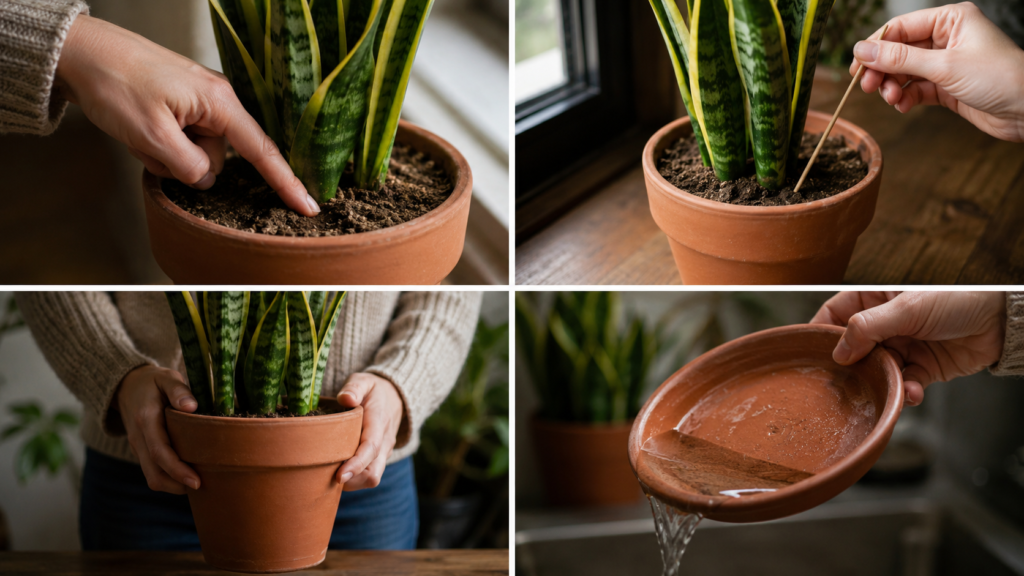
Use at least two of these before each watering. This is the most reliable way to stay consistent, and it works better than any fixed schedule because it responds to your actual home conditions rather than a general estimate.
The finger test (fast and simple)
Push your finger into the soil to about the first knuckle — roughly 2–3 cm deep. If it feels cool or slightly damp, wait. If it feels dry and crumbly all the way down, move on to a second check before deciding to water.
The chopstick test (more accurate for deeper pots)
Insert a wooden chopstick or bamboo skewer all the way to the bottom of the pot. Leave it for ten seconds, then pull it out slowly. If it comes out dark and damp with soil clinging to it, the root zone is still moist. If it comes out mostly clean and dry, the mix is ready. This test is especially useful for larger pots where the surface can fool you — dry on top but still wet below.
The pot-weight test (best once you practise it)
Lift the pot immediately after watering — note how heavy it feels. Then lift it again when the soil is fully dry. The difference is surprisingly obvious once you’ve felt it a few times, and eventually you can tell within seconds whether the plant needs water without digging into the soil at all.
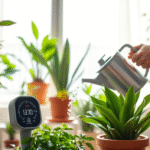
On moisture meters: they can be a helpful second opinion, but don’t treat the reading as absolute truth. Sensor position in the pot, soil type, and battery life all affect accuracy. Always confirm with the feel and weight of the pot.
How Often to Water in Low Light
In low light, the goal isn’t a strict number of days — it’s a reliable cycle: dry potting mix, thorough watering, full drainage, repeat. If you need a number to start from, begin at every 4–6 weeks and adjust based on what the soil tests tell you. Snake plants are far more commonly damaged by too much water than too little, so it’s always safer to wait an extra few days than to water early.
Why the same plant behaves differently in different light
In brighter light, a snake plant uses water faster, grows more actively, and can handle more frequent watering. In low light, that same plant barely grows — so the water you add just sits in the soil longer, and the risk flips from underwatering to root rot. This is why a schedule that works perfectly near a bright window can easily kill the same plant in a dim hallway.
| Light condition | What changes | Watering approach |
|---|---|---|
| Low light | Slow growth, slow drying | Wait longer; confirm deeper dryness before watering |
| Bright indirect light | Faster growth, faster drying | Check more often; still let the mix dry between waterings |
Seasonal Adjustments
Season matters because light levels and indoor temperatures both shift throughout the year, and both affect how quickly soil dries. The general rule is simple: reduce watering from autumn through late winter, and never compensate for low light by watering more often.
Winter
In winter, with shorter days and cooler rooms, a low-light snake plant may only need water every 5–8 weeks or even longer. The Royal Horticultural Society specifically recommends letting the compost dry out completely between waterings during winter — and this is when most beginner mistakes happen, because people assume the plant needs the same care year-round.
Spring and summer
As days lengthen and temperatures rise, growth picks up slightly and soil dries more quickly. Most low-light snake plants settle into a rhythm of roughly every 3–6 weeks in summer. The 14-day check reminder is still useful here — not because you’ll water that often, but because it prevents you from losing track and accidentally neglecting the plant for two months.
Watering Technique
How you water matters almost as much as how often. A few habits that make a real difference:
- Water at soil level, not into the centre of the leaf rosette — pooling water at the base of the leaves is a common cause of crown rot
- Water thoroughly until water flows freely from the drainage hole — this ensures the entire root zone gets wet, not just the top layer
- Empty the saucer or cachepot within 10–15 minutes — a snake plant left standing in pooled water is at risk of root rot regardless of how infrequently you watered
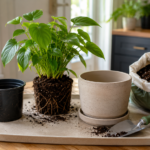
If your decorative pot has no drainage hole, treat it as a cachepot: keep the snake plant in a plain nursery pot inside it, carry it to the sink to water, let it drain completely, and then return it. This one habit removes most of the risk of overwatering in ceramic or glazed pots.
Pot and Soil Choices That Affect Drying Time
This is where “my friend waters monthly and it works fine” starts to make sense — or not. Pot material and soil mix affect drying speed more than most people expect, and a dense mix in a moisture-retaining pot in a dim room is a reliable recipe for root trouble.
Terracotta vs plastic and glazed ceramic
Terracotta is porous — it breathes and dries noticeably faster than plastic or glazed ceramic. If your snake plant is already in low light, a moisture-retaining pot makes it even harder for the soil to dry in time. Terracotta gives you more margin for error, which is useful if you’re still calibrating your watering habits.
Use a free-draining mix
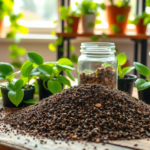
The Royal Horticultural Society recommends a free-draining cactus compost for snake plants. If your current mix stays wet for several weeks after watering, add extra perlite or pumice when you next repot — this improves airflow around roots and helps the mix dry at a reasonable pace even in low light. You don’t need an elaborate recipe: standard indoor potting mix cut with perlite in roughly a 2:1 ratio works well for most people.
Signs of Overwatering
Overwatering is by far the most common way people lose a snake plant, especially in low light where the problem can develop slowly and quietly. Watch for:
- Leaves that feel soft, mushy, or slightly spongy rather than firm — especially near the base
- Yellowing that starts at the base of leaves and spreads upward
- Soil that never seems to dry, or a sour, musty smell coming from the pot
- Leaves collapsing or falling over at the base, which can indicate root rot has reached the crown
Missouri Botanical Garden guidance is direct on this: overwatering is the most frequent cause of decline in snake plants.
How to rescue an overwatered snake plant
- Stop watering immediately and move the plant somewhere with better airflow
- Slide it out of the pot and inspect the roots — healthy roots are firm and pale or cream; rotting roots are dark, soft, and may smell unpleasant
- Trim off any rotten sections with clean scissors, let the cut ends dry for an hour or two, then repot into fresh, dry, free-draining mix
- Wait a few days before watering at all, then return to the dryness-test routine going forward
When to check for other problems
If the leaves are soft, yellowing, or the soil smells sour, compare the symptoms with this houseplant problems and fixes guide before watering again.
Catching it early makes a real difference. A plant with some root rot but healthy upper roots can usually recover fully; one that’s been sitting in soggy soil for months is harder to save.
Signs of Underwatering
Underwatering is slower and easier to fix than overwatering, and it’s less common in low-light conditions. A snake plant can tolerate serious neglect before it shows real distress. When it does need water, you’ll usually notice:
- Slight wrinkling or a soft fold running lengthwise along the leaves — the leaf surface loses its usual firmness
- Soil that has visibly pulled away from the edges of the pot, leaving a visible gap
- A pot that feels noticeably lighter than usual when you pick it up
The fix is straightforward: water thoroughly once until it drains fully, then return to the every-14-days check routine. Don’t try to make up for the dry spell by watering twice in quick succession — the plant will recover on a single proper watering.
Safety Note for Pets
If you have cats or dogs that chew on plants, keep the snake plant out of reach. The ASPCA lists Sansevieria trifasciata as toxic to both cats and dogs — it can cause nausea, vomiting, and digestive upset if chewed or ingested. It’s not typically life-threatening in small amounts, but it’s worth being aware of before choosing where to place it in your home.
Final Thoughts on Low-Light Snake Plants
In low light, the snake plant’s reputation for toughness is real — but it comes with a specific condition. These plants are tough against drought. They are not tough against sitting in wet soil for weeks in a dim room with no way to dry out. That distinction is the whole watering strategy.
Keep the routine simple: check every 14 days, water only when the soil is genuinely dry all the way through, use a draining pot and free-draining mix, and empty the saucer every time. Do those things consistently, and a snake plant in a dim corner can stay healthy for years without any particular fuss.
FAQs
How often should you water a snake plant in low light?
Most low-light snake plants settle into a rhythm of roughly every 3–6 weeks, often stretching to 5–8 weeks or longer in winter. Use those figures as a starting range only — the dryness tests are what should actually trigger each watering. The Royal Horticultural Society recommends letting the compost dry out completely between waterings, especially in the colder months.
How do I know when my snake plant actually needs water?
Confirm it with at least two checks: the finger test (dry and crumbly to the first knuckle), the chopstick test (comes out clean with no damp soil), and the pot-weight test (noticeably lighter than after watering). In low light, don’t rely on drooping or leaf appearance alone — snake plants often look perfectly fine even when the soil is dangerously wet.
Do snake plants prefer wet or dry soil?
Dry, by a significant margin. These are plants from hot, arid regions that evolved to handle long dry spells between waterings. They do best when the mix dries fully between each watering — consistently moist soil, especially in low light, is the most reliable way to cause root rot.
Is tap water fine for snake plants?
In most homes, yes. Snake plants aren’t particularly sensitive to tap water. If you notice white mineral crust building up on the soil surface or around the pot rim, or if brown tips appear on otherwise healthy leaves, try occasional flushing — watering very generously until it drains freely — to wash out accumulated mineral salts. Filtered water or collected rainwater can also help if the issue persists.
Should I mist my snake plant?
Generally no. Snake plants cope well with typical indoor humidity levels and don’t need extra moisture in the air. Misting the leaves doesn’t benefit the plant meaningfully, and water sitting in the leaf rosette can cause more harm than good. The plant cares far more about not sitting in a wet pot than about air humidity.
Can a snake plant recover from root rot?
Often yes, if you catch it early enough. Remove the plant from the pot, trim away any soft, dark, or mushy roots with clean scissors, let the trimmed sections dry briefly, and repot into fresh dry mix. The key is acting quickly — a plant with some rot but healthy remaining roots can bounce back fully within a few weeks. One that has been sitting in soggy soil for months with extensive rot is much harder to save.
Sources and Further Reading
- Royal Horticultural Society (RHS) – Sansevieria growing guide
- Missouri Botanical Garden – Dracaena trifasciata
- Penn State Extension – Snake plants
- ASPCA Animal Poison Control – Toxic plants for cats