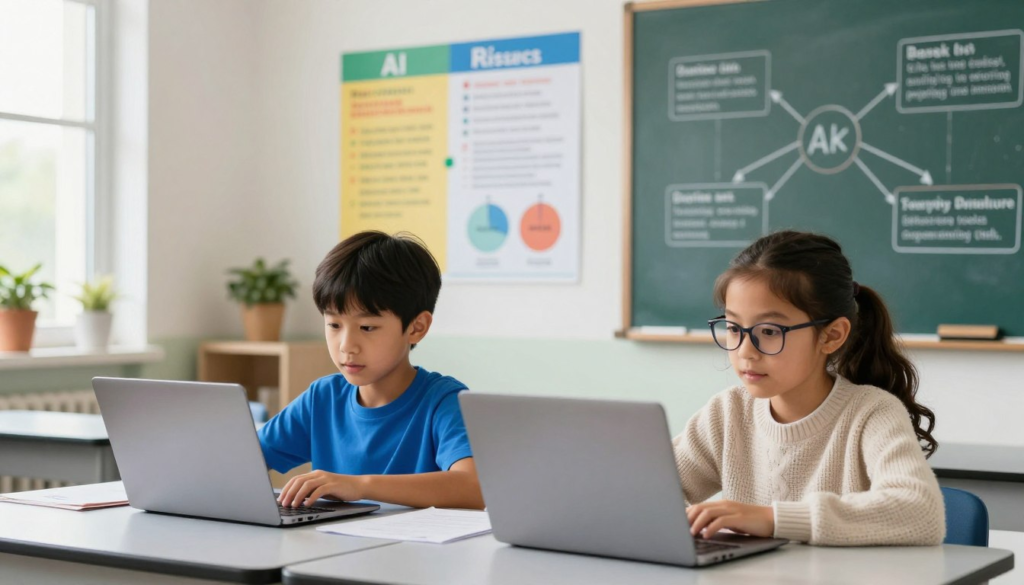
Have you ever thought about how kids can tell real info from fake in today’s digital world? With tech changing fast, it’s key for young ones to learn how to deal with it.
Artificial Intelligence is changing how kids learn and find info. It’s not like old search engines. So, parents and teachers must teach kids to be careful with these new tools.
Knowing the difference between AI answers and regular search results is key. This helps kids think for themselves and make smart choices about what they see online.
In this article, we’ll look at ways to teach kids about digital literacy. You don’t have to be a tech whiz to teach them. Just like teaching them to cross the street, teaching them about digital safety is just as important.
How AI Answers and Search Results Work Differently
AI and search engines work in different ways to give us information. It’s important for kids to know how to check if what they find online is true.
How AI Creates Answers From Patterns and Information
AI models, like ChatGPT, make answers by guessing the most likely words based on what they learned. They don’t check facts. Instead, they create text that sounds smart and sure.
This can lead to wrong answers that sound right. For example, Pragati Awasthi, a teacher at Drexel University, says:
“It means an AI can produce a response that sounds authoritative, reads fluently and is completely wrong all at once.”
This shows why kids should question AI answers. Just because it sounds good, doesn’t mean it’s true.
How Search Engines Help Users Find Sources
Search engines like Google index web pages and help find original sources. When you search, they show links to different websites. This lets users check if a source is trustworthy.
- Search engines show different views.
- They help visit original content for a deeper look.
- Users can judge a source’s reliability based on certain criteria.
By using search engines, kids can learn to spot good and bad information. This skill is key in today’s world, where false info can spread fast.
Why Kids May Trust the Wrong Information
Children often believe what they read or hear, including from AI or search engines. This trust can lead them to accept false facts. It’s important to know why they might do this.
AI answers can seem very sure, even if they’re wrong. Kids might think a well-written response is true because it looks official. This is a big problem because some AI can make up facts or sources that don’t exist. A study found that AI can make up facts 22% to 94% of the time, depending on the situation.
Another reason kids might trust the wrong info is that search results can be unreliable. Not every website is trustworthy. Some might have biased views or old information. Kids might not see that some results are paid for, making them think they’re getting real facts.
To help kids think critically, we need to teach them to doubt what they read online. By teaching them to be skeptical of AI and search results, we can help them learn that not everything online is true. This is key in teaching kids about fact checking AI for kids and improving their AI information accuracy skills.
| Source Type | Trust Level | Common Issues |
|---|---|---|
| AI Answers | High Confidence | Hallucinations, Incorrect Facts |
| Search Results | Variable | Biased Sites, Outdated Info |
| Reliable Sources | High | Peer-Reviewed, Authoritative |
By understanding these issues, kids can learn to be more careful with the information they use. This skill is very important in today’s world, where AI and search engines are big parts of our learning.
AI vs Search Results: What Should Kids Check?

When kids find info from AI or search engines, it’s key to know what to look at. Both can offer useful insights, but need careful checking. Kids must learn online research skills to move through the digital world well.
First, kids should check the source of the info. AI answers often lack real sources. If kids ask an AI for sources, they might get fake-looking references. This is because AI and its makers can’t always say where the info comes from.
To trust the info, kids should find the original source. This is true whether the info comes from an AI chatbot or a search result. Finding the primary source is key to checking if the info is right.
Checking the Source Behind the Information
In today’s digital world, source verification is a must-have skill. Kids can ask themselves:
- Who made this info?
- Is the source reliable?
- Can I find the same info elsewhere?
By asking these questions, kids can judge the info’s trustworthiness better.
Comparing Information From More Than One Place
Another key technique is lateral reading. This method tells kids to open many tabs and compare info from different places. For example, they can use Google or Google Scholar to check AI claims.
By comparing info, kids improve their kids verifying information skills. They learn to look for confirmation from other, trusted sources. This makes online research a fun, detective-like journey.
| Source Type | Verification Method | Key Questions |
|---|---|---|
| AI Responses | Check for citations | Where does this info come from? |
| Search Results | Cross-reference with other sites | Is this source credible? |
| News Articles | Look for author credentials | What is the author’s background? |
By using these methods, kids can get better at checking info. They will not only be better researchers but also more informed in our complex digital world.
A Simple Fact Checking Routine Kids Can Follow

Teaching kids to fact-check is key for their critical thinking skills. It’s important to teach them to pause and think before believing what they hear. This helps them understand the world better.
Two main habits are essential: questioning information and verifying facts. These habits are the foundation of critical thinking.
Stop and Question Before Believing
It’s vital for kids to stop and question what they hear. They should ask themselves: Does this sound right?, Who is saying this?, and Could there be another explanation? This builds critical thinking skills.
Playing the “Catch the AI” game is a fun way to practice. Families ask an AI a question about something they know well. Then, they check if the AI’s answer is correct. This teaches kids about fact-checking and shows AI can make mistakes.
Verify Important Facts Before Using Them
After questioning, kids should verify important facts. Here are some ways to do it:
- Ask the same question in different ways to see if the answers remain consistent.
- Check information against trusted sources, such as library databases or encyclopedias.
- Look for the same fact mentioned in multiple independent places.
These steps improve their fact-checking skills and encourage thorough research. Parents should also model these behaviors. This shows fact-checking is a lifelong skill.
| Technique | Description | Example |
|---|---|---|
| Questioning | Encourage kids to ask critical questions about the information. | “Does this sound right?” |
| Cross-Verification | Check facts against multiple sources. | Finding the same answer in different books. |
| Use Trusted Sources | Refer to reliable resources for confirmation. | Using an encyclopedia or library database. |
Examples of Kids Fact Checking Information

Kids can learn valuable fact-checking skills through relatable examples. These scenarios can help them understand the importance of verifying information. This is true whether it’s for school projects or personal interests.
Researching a School Project
Imagine a fifth-grader researching the American Revolution. They might use an AI tool for quick answers. The AI gives a polished response with sources that seem credible.
But, when the child checks these sources, they might find problems. Some URLs might lead to nowhere, or facts could be made up.
This is a great chance for parents to teach kids research skills. By checking AI outputs against reliable sources, kids learn to verify information. This helps them complete their assignments and builds a strong research foundation.
Answering Curiosity Questions About Hobbies and Interests
Kids often explore their hobbies by asking questions. For example, they might want to learn about their favorite sports team or dinosaurs. These questions are a great way for kids to practice online research skills without the stress of grades.
By comparing AI answers with search results from multiple sources, kids can make more interesting discoveries. This practice also helps them develop a habit of verifying information. Fact-checking becomes a natural part of any inquiry, whether for fun or school.
| Scenario | Initial Source | Verification Method | Outcome |
|---|---|---|---|
| School Project | AI-generated response | Cross-reference with library databases | Identified inaccuracies |
| Hobby Research | AI answer about dinosaurs | Check multiple online sources | More accurate and engaging facts |
| Sports Team History | AI-generated summary | Consult official team website | Confirmed details and added context |
What Parents Should Teach About AI and Search Safety

Parents have a big role in teaching kids about AI and search safety. It’s key to encourage curiosity, not fear. Kids should feel free to explore while knowing the limits.
Getting kids to ask about AI can spark great talks. For instance, parents can say, “How did it know to say that?” or “Let’s see if we can find where this information originally came from.” This not only boosts digital literacy for children but also makes them active learners.
Encouraging Curiosity Instead of Fear
Teaching kids to be curious about AI helps them use technology well. Instead of fearing AI, they can see its good side while being careful. The goal is to use AI better, not less.
As Brian Behe, CTO of RIIG Technology, says,
“The danger is not that AI gets things wrong, it is that it gets things wrong in ways that look right, and people act on them before anyone checks.”
This shows why it’s key to check facts before acting.
Teaching Children When to Ask an Adult
It’s also vital for kids to know when to ask an adult. They should know that some topics, like personal info or health advice, need adult help. Parents can teach them these boundaries.
Creating a safe space for kids to talk about their worries is important. This way, they’ll feel safe to ask for help when they see something odd or unsafe.
| Skill | What to Teach | Example Questions |
|---|---|---|
| Curiosity | Explore AI together | “How does it know that?” |
| Verification | Check sources | “Where did this info come from?” |
| Consultation | Ask adults for help | “Is this safe to use?” |
By teaching these skills, parents can help their kids stay safe and responsible online.
How to Know Your Child Is Becoming a Better Researcher
Watching how your child handles information can show their research skills growing. When they ask, “Where did this information come from?” it’s a sign they’re thinking deeply. This is key because it shows they know every piece of info has a source worth checking out.
It’s important to celebrate these moments. When a child questions the origin of information, it means their critical thinking skills are starting to develop. By acknowledging this, you encourage them to keep looking for trustworthy sources.
They Ask Where Information Came From
Asking about information sources is a big step in a child’s learning. For example, a seven-year-old might notice different facts about dinosaurs from two sources. This curiosity makes them want to explore more and check the facts.
They Compare Answers Instead of Choosing the First Result
Another sign of growth is when kids compare different answers. Instead of just taking the first thing they see, they look at various viewpoints. A teenager might doubt an AI’s summary of history and look for original sources to confirm it.
These actions show that kids verifying information is now a natural part of their learning. Parents can support this by asking questions and verifying information themselves. By doing this, you help build a family culture that values learning and inquiry.
Conclusion
In today’s world, it’s key to teach kids to question and verify information. They need to learn to think critically when they see AI answers and search results. Both can be helpful, but they don’t make checking facts unnecessary.
Parents and teachers are vital in teaching kids to fact-check. This skill helps them sort out true from false. It also makes them more confident and independent.
Experts say AI’s challenges are similar to those of human behavior. Teaching kids to research helps them face misinformation. It’s about learning to question and think critically.
It’s easy to teach kids to question information in daily life. Talking about news or helping with homework are great chances to practice. Families already know how to spot unreliable information.
Seeing teaching research skills as a lifelong journey helps parents raise informed kids. AI and search engines can help, but they shouldn’t replace critical thinking. Kids will need this skill for the rest of their lives.
FAQ
What is the difference between AI-generated answers and search engine results?
AI answers come from patterns in data and might not always be right. Search engines, on the other hand, point to original sources. This lets users check facts.
How can I help my child develop critical thinking skills when using AI or search engines?
Teach your child to question what they find online. Ask them to think about who wrote it and where it came from. This builds skepticism and fact-checking habits.
Why might children trust AI-generated information more than they should?
Kids might trust AI answers because they sound official. This can make them accept wrong information without doubt.
What strategies can children use to verify information from AI and search engines?
Kids should check the source of the info and look for citations. They should also compare answers from different trusted sources to ensure they’re accurate.
How can I make fact-checking a fun activity for my child?
Play games like “Catch the AI” with your child. It’s a fun way to teach them to spot wrong information.
What should I do if my child encounters sensitive topics online?
Teach your child to talk to a trusted adult about sensitive topics. This shows them it’s okay to discuss personal issues with someone who cares.
How can I tell if my child is becoming more skilled at research?
Look for signs like your child asking about sources or comparing answers. This shows they’re learning to verify information.
What role do parents play in fostering digital literacy in children?
Parents should talk to their kids about AI and search engines. Encourage curiosity and show them how to verify information by example.
How can I teach my child to safely navigate the internet?
Teach your child when to ask for help from an adult online. Also, teach them to browse safely by not sharing personal info.